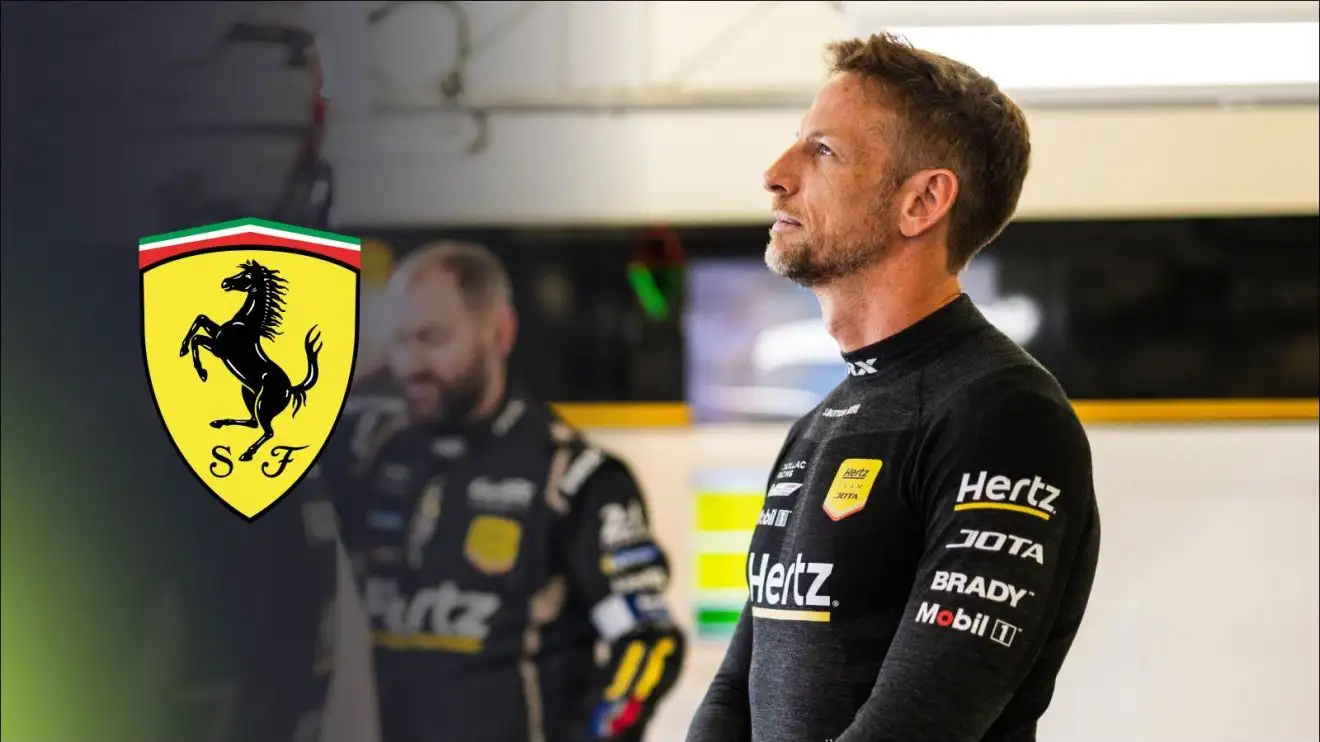
Jenson Button Advises Ferrari Boss After 'Lead By Example' Comment
Ferrari chairman John Elkann publicly criticized his drivers after a double DNF, urging them to "talk less." F1 champion Jenson Button advised Elkann to "lead by example," emphasizing the unique pressures at Ferrari and advocating for private, constructive communication over public admonishment to foster trust and improve team performance.
Ferrari chairman John Elkann publicly criticized his drivers after a double DNF at the Sao Paulo Grand Prix, encouraging them to "focus on driving and talk less." This drew a sharp response from 2009 F1 World Champion Jenson Button, who initially commented on social media that Elkann should "lead by example." Button has now elaborated on the unique pressures at Ferrari and suggested a more private approach to driver feedback.
Why it matters:
Ferrari's ongoing quest for a consistent championship challenge is often hampered by internal and external pressures. Public criticism from the chairman risks demoralizing drivers and staff, potentially exacerbating existing issues rather than resolving them. Effective leadership, especially within a high-stakes environment like F1, often hinges on discreet and constructive communication rather than public admonishment.
The Details:
- Elkann's Public Comments: Following a disastrous double DNF at the Sao Paulo Grand Prix, where neither Lewis Hamilton nor Charles Leclerc finished, John Elkann spoke at an event in Milan.
- He stated, while exempting mechanics and engineers, that "the rest is not up to par." He added, "We have drivers who need to focus on driving, talk less, and we have important races ahead of us."
- Button's Initial Reaction: Jenson Button responded to these comments on Instagram, saying, "Maybe John should lead by example."
- Elaborated Advice: Speaking on Sky's The F1 Show, Button explained the immense pressure on Ferrari drivers and the importance of direct, private communication.
- He emphasized that while all F1 teams face pressure, it is particularly intense for Ferrari, with "the whole of Italy wanting Ferrari to win races."
- Button suggested that with only two drivers, it would be "very easy to find your racing driver and go and talk to him" privately to address concerns or discuss team conduct.
- He highlighted that drivers like Hamilton and Leclerc have significant experience and insights, making open, direct communication crucial for moving the team forward.
Between the lines:
Button's comments underscore a fundamental aspect of team management in elite sports: the method of delivering feedback. While Elkann's intention might have been to galvanize the team, delivering such pointed criticism publicly can be counterproductive, potentially eroding trust and creating an 'us vs. them' dynamic. Private conversations allow for a more nuanced discussion, fostering understanding and collaborative problem-solving, which is essential for a team as complex and storied as Ferrari.
What's next:
Ferrari faces ongoing challenges to consolidate its position and mount a stronger championship bid. How the team's leadership integrates feedback and handles internal communications will be critical. The effectiveness of their approach will likely be reflected in driver morale, on-track performance, and their ability to challenge rivals like Red Bull in upcoming seasons.