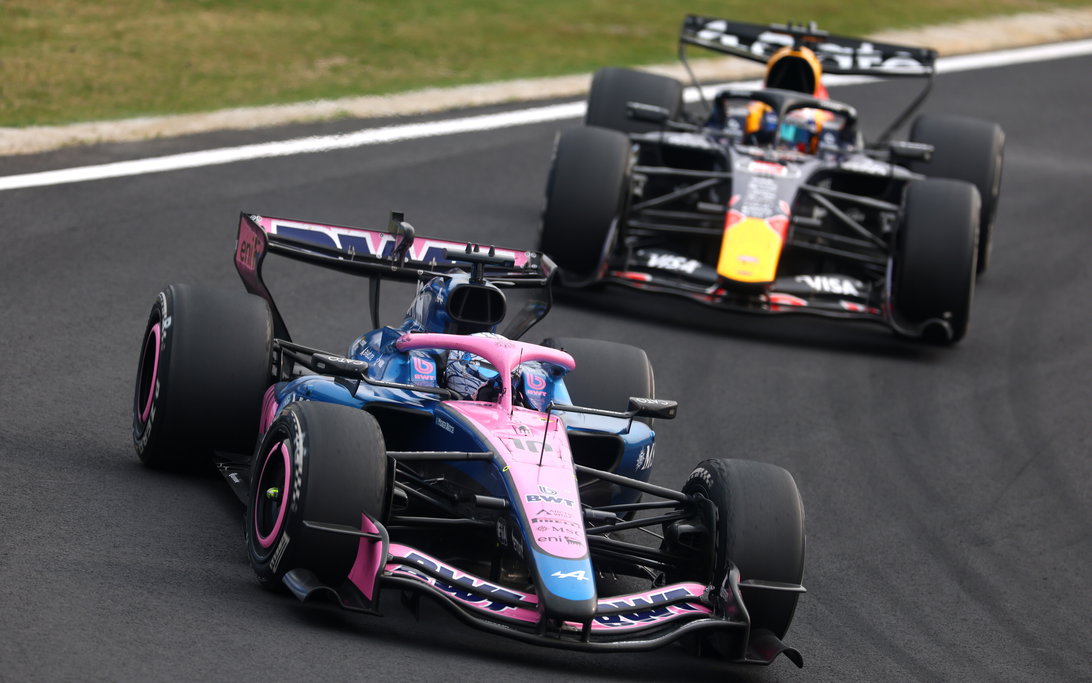
The 2026 F1 Compromise: When Energy Recovery Steals the Driver's Soul
Ex-F1 racer Johnny Herbert argues the 2026 cars' energy recovery systems have degraded the sport by removing late-braking opportunities and creating artificial overtaking. While praising improved wheel-to-wheel battling, he calls for more linear power delivery to restore a purer driving challenge.
The 2026 Formula 1 regulations were supposed to be a renaissance. Lighter cars, nimbler handling, a return to the visceral thrill of man versus machine. Yet, according to former driver Johnny Herbert, the reality is a machine that has begun to override the man. His recent critique isn't just about lap times; it's a warning siren that the sport is prioritizing system management over driver skill, a path that leads away from racing's heart and toward a sterile, predictable simulation. As a technical analyst, I hear that siren loud and clear. This isn't a simple software bug; it's a fundamental philosophical flaw in how we define competition in the hybrid era.
The Lost Art of the Late Brake: From Driver to Systems Manager
Herbert’s most poignant observation cuts to the core of what makes a racing driver great: the art of the late-braking maneuver. He specifically cites iconic challenges like Suzuka's 130R chicane and Melbourne's Turn 9-10 complex, where the dance of braking, turning, and accelerating is a pure test of nerve and car control. The 2026 energy deployment system, he argues, has erased this.
"that late braking is gone... and it shouldn't be that."
This statement is a technical indictment. What Herbert describes is the driver being forced to harvest energy into a corner, rather than attack it. The car's software, governed by the mandate to recover a set amount of energy per lap, is dictating the racing line and the driver's inputs. The tactical advantage gained by out-braking an opponent—a skill that separates the good from the great—is neutered by a pre-programmed energy budget.
This is where my skepticism for modern "advancements" flares. We've become obsessed with harvesting every last joule of energy, layering complex software maps over the raw mechanical connection. I constantly compare this to the 1990s Williams FW14B. That car was a technological marvel with its active suspension, but its genius was in enhancing mechanical grip and driver confidence, not in creating a power delivery puzzle. The driver was the undisputed master. Today, we have a situation where a driver's ability to extract a lap time is secondary to his ability to manage a battery's state of charge. It's a shift from athlete to systems operator, and it devalues the very spectacle we're trying to promote.
Artificial Overtaking and the Illusion of Competition
Herbert’s second major criticism is equally damning: the creation of artificial overtaking. He compares the use of the overtake button to the much-maligned DRS, stating it doesn't constitute "proper overtaking." This creates a repetitive, predictable pattern—a scripted moment of drama rather than an emergent battle of skill.
This critique aligns perfectly with my belief that mechanical grip and tire management are criminally undervalued. True, wheel-to-wheel racing has improved, as Herbert admits: "You can actually race each other. You can have a bit of a side-to-side battle." But this is largely a function of revised aerodynamics that make the cars less sensitive to dirty air. The actual pass is now often executed not by a superior line or better tire preservation, but by a temporary software-enabled power boost. It’s a digital joust, not a physical duel.
The core technical issue Herbert identifies is non-linear power delivery. Drivers are losing significant speed at the end of straights as the battery depletes. This isn't just an engineering challenge; it's a racecraft nightmare. It disrupts the rhythm of a lap and turns every straight into a calculation of energy debt. How can we celebrate driver skill when the car's performance curve is a sawtooth wave of deployment and harvesting? It reminds me of the current debate around certain dominant drivers. One could argue that Max Verstappen's perceived dominance is often overrated because it's the product of a perfectly harmonized machine—a chassis and aerodynamic package from Red Bull that provides a stable, predictable platform. The 2026 rules risk making this the norm for everyone: a race won by whose software engineers wrote the best deployment code, not whose driver possessed the greatest courage or race intelligence.
The Path Forward: Simplicity or Silicon?
Herbert believes the solution is refinement: making power delivery "more linear" and exploring increased battery capacity within weight limits. The FIA and teams will, as he says, continue to "tinker with it." But I see this as treating a symptom, not the disease.
We are at a crossroads. The relentless push for efficiency and technological showcase is colliding with the sport's soul. My prediction is that this tension will only grow. Within five years, by 2028, I believe F1 will be forced to adopt AI-controlled active aerodynamics. The complexity of managing energy, tires, and overtaking will become too great for human drivers to optimize. An AI system could seamlessly adjust wing angles for optimal drag reduction without a DRS zone, creating chaotic, unpredictable races. It would solve the "overtaking problem" but at the cost of the driver's central role.
Is that the future we want? A sport where the drama comes from silicon decisions, not human ones? Johnny Herbert’s critique is a vital wake-up call from a man who felt a car through his fingertips, not through a dashboard display. The 2026 regulations have given us better racing cars, but they are in danger of creating worse racing. The solution isn't just more linear power delivery. It's a fundamental re-evaluation: do we want a sport that celebrates the most efficient system, or the most skilled driver? The clock is ticking, and the battery is draining.