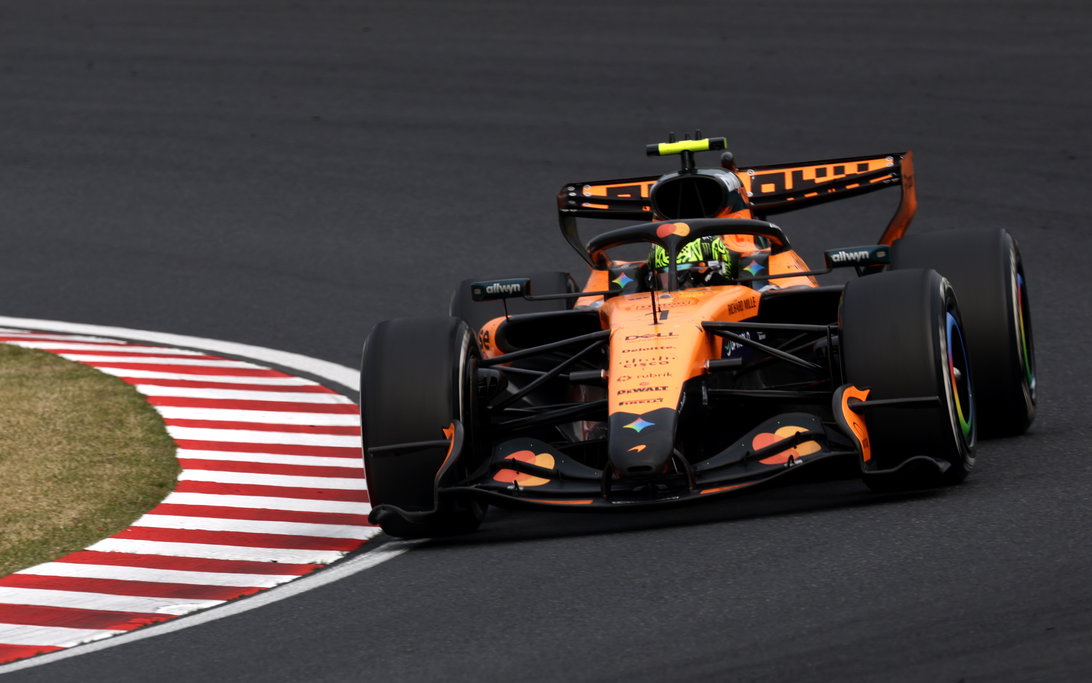
Lando Norris criticizes new F1 power unit rules after Hamilton battle
Lando Norris slammed F1's new power unit rules after the Japanese GP, stating he didn't even want to overtake Lewis Hamilton because the mandatory battery deployment would leave him defenseless on the next straight. He argues the regulations create artificial 'yo-yo' racing and strip drivers of strategic control, calling the situation fundamentally at odds with genuine competition.
Lando Norris has publicly criticized Formula 1's new power unit regulations, revealing he was hesitant to overtake Lewis Hamilton during the Japanese Grand Prix because the subsequent battery depletion would immediately hand the position back. His comments highlight a growing driver consensus that the 2026-spec energy management rules are creating artificial and frustrating racing scenarios, undermining competitive battles on track.
Why it matters:
The core issue strikes at the heart of racing purity: driver agency. When competitors feel they cannot strategically deploy their car's performance for fear of an automatic penalty—like a drained battery—it transforms a skill-based duel into a predetermined energy management exercise. This criticism from a top driver like Norris adds significant weight to concerns that the new technical formula, intended to promote sustainability and closer racing, may be having the opposite effect by making overtakes feel pointless and uncontrollable.
The details:
- Norris described a "yo-yo" effect during his fight with Hamilton, where using battery deployment to pass left him vulnerable to an immediate re-pass.
- He stated drivers are "at the mercy of what the power unit delivers" and lack sufficient control over energy deployment, arguing "the drivers should be in control of it, at least, and we’re not."
- The McLaren driver connected the regulations to safety, referencing the crash involving Oliver Bearman and Franco Colapinto, which some attribute to dramatic closing speeds caused by different power unit modes.
- His frustration was palpable as he concluded, "This is not racing."
What's next:
Norris's blunt assessment adds to a chorus of driver complaints early in this regulatory cycle. The FIA and Formula 1 will be under pressure to review and potentially adjust the energy deployment parameters if the 'yo-yo' effect and safety concerns persist. The governing bodies must balance their ambitious sustainability goals with the fundamental need for the sport to remain a credible and engaging driver-versus-driver competition, or risk alienating both competitors and fans.
Don't miss the next lap
Get the deep dives and technical analysis from the world of F1 delivered to your inbox twice a week.
Zero spam. Only high-octane analysis. Unsubscribe anytime.
Join the inner circle
Get the deep dives and technical analysis from the world of F1 delivered to your inbox twice a week.
Zero spam. Only high-octane analysis. Unsubscribe anytime.
Continue Reading
View More News