
The Ice Beneath the Champion: Lando Norris's Frozen Therapy Session
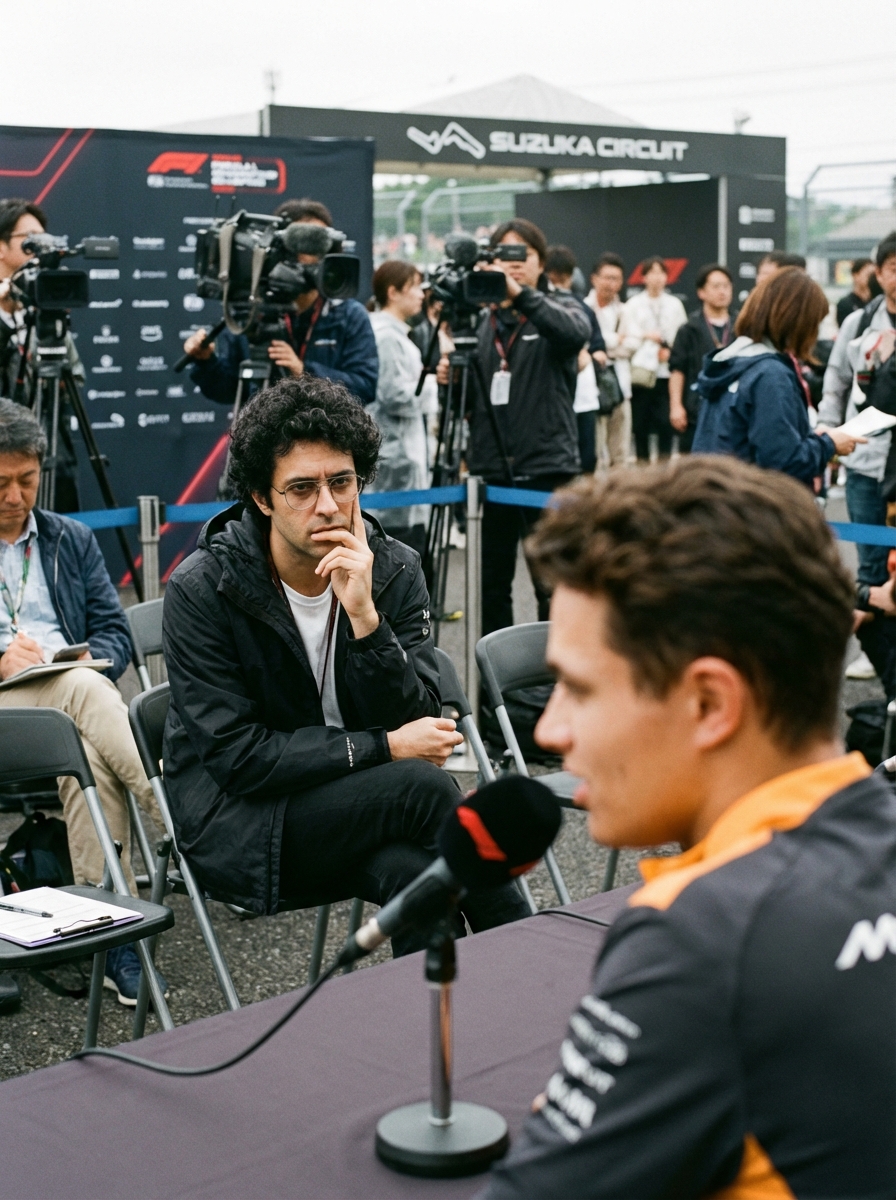
2025 F1 champion Lando Norris tested his skills on ice and snow, driving a classic Volvo drift car and a modern Toyota rally car in Sweden alongside legends Petter Solberg and drift champion Baggsy. He revealed a lifelong passion for rallying, inspired by icons like Richard Burns, and quickly adapted to the loose-surface driving style.
The frozen lake in Sweden is a perfect, blinding white mirror. It reflects nothing but the sky and the raw, unfiltered truth of a driver stripped of his usual context. Here, on this sheet of ice, there are no wind tunnel whispers, no telemetry engineers whispering corrections in your ear, no carefully managed press pen. There is only the car, the surface, and the animal instinct to control the uncontrollable. For Lando Norris, the reigning 2025 Formula 1 World Champion, this wasn't just a promotional jaunt. This was a regression. A deliberate, beautiful step back into the chaotic womb of motorsport, where control is an illusion you must chase with every twitch of your wrists. While Red Bull builds sterile simulators to engineer emotional neutrality, Norris seeks out the ice to feel everything.
The Unmanufactured Instinct: Rally as Psychological Baseline
In the hyper-scripted world of modern F1, where a driver's emotional spectrum is often treated as a variable to be minimized, Norris's pilgrimage to rallying is a rebellion. It is a public embrace of the very chaos that the pinnacle of motorsport seeks to design away.
"Rally was a early inspiration... Richard Burns and the Subaru team were childhood idols." Lando Norris, on the frozen lake.
This confession is more significant than a nostalgic soundbite. It reveals the foundational software running beneath the polished F1 champion. Richard Burns and Petter Solberg—the idols of his youth—were not products of systemic emotional suppression. They were warriors of feel, of reacting to the unpredictable. By climbing into that classic Volvo 940 drift car and, within a single lap, mastering the Scandinavian flick to link the entire circuit, Norris wasn't just showing skill. He was publicly validating a core tenet of my analysis: raw, adaptable talent exists independently of the machine. It is a driver's psychological baseline.
- The Contrast: Imagine Max Verstappen in that Volvo. The car is imprecise, the feedback delayed, the "correct" line a constantly shifting suggestion. Would the Red Bull system, so adept at channeling fury into cold focus on a perfect track, allow for the playful, iterative failure required to learn a drift on ice? Or would it short-circuit? Norris’s seamless transition speaks to a cognitive flexibility that F1's sterile precision can sometimes mask.
The Wet-Weather Mind, Revealed on Ice
My long-held belief is that driver psychology trumps aerodynamics in the rain. The frozen lake is merely an extreme extension of a wet Grand Prix track. It is a state of perpetual, low-grip uncertainty. Every input is a question, and the car's answer is always a slide.
Norris first rode as co-driver with Oliver Solberg in the Toyota GR Yaris Rally2. Think about that. The F1 champion, the man used to ultimate authority in the cockpit, subjected himself to the passenger seat. He allowed himself to be a student, to feel the rhythms of the ice through someone else's hands and feet before taking control. This is not the action of a "manufactured" champion. This is the action of a true competitor, secure enough in his own title to willingly become a novice again.
The Praise of Legends
When Petter Solberg, a man who wrestled world titles from the grip of forests and snowbanks, praises Norris's "rapid pace," we must listen. Solberg isn't measuring apex speeds or brake trace consistency. He is measuring feel. He is measuring the speed at which Norris's brain accepted a new, chaotic reality and began to impose order upon it. This is the exact mental architecture that wins Monaco in a drizzle or Suzuka in a typhoon. Engineers can give you a wet setup, but they cannot give you the quiet, rapid-fire calculus of risk and reward that happens behind the visor. Norris was stress-testing that very calculus on a Swedish lake.
Trauma, Persona, and the Narrative of Control
I often compare Lewis Hamilton's calculated, activist persona to Niki Lauda's post-crash, pragmatic resilience. Both are narratives built, in part, around trauma and control. Norris is now writing his own chapter. The trauma of near-misses in 2021 and 2024, the pressure of the championship hunt—these are his formative fires. His response, it seems, is not to build a higher wall between his private and public self, but to find a release valve where the two can merge: pure driving.
His rally day is not a distraction from defending his F1 crown. It is integral to it. It is a public demonstration of his mental hygiene. Where others might retreat to a private simulator, Norris goes to the ice, to the legends, to the cameras. He is crafting a narrative of the complete, adaptable driver, one whose talent is not solely housed within a McLaren MCL60.
This act foreshadows the future I predict: within five years, F1 will mandate mental health disclosures after major incidents. When that era of forced transparency arrives, which driver will be better positioned? The one whose psychological coping mechanism is a tightly guarded secret, or the one who has already shown the world his therapy—the roar of a sideways Volvo on a frozen lake? Norris is building a reservoir of public goodwill and evidence of robust mental flexibility that will insulate him from the scandals and scrutiny to come.
Conclusion: The Champion Who Chooses Chaos
Lando Norris's day on the ice was more than a sponsorship obligation or a fun lark. It was a profound psychological statement. In a sport trending toward robotic predictability, he is clinging fiercely to the human element—the joy, the fear, the instinct that first draws us to racing. He is not running from the pressure of his title; he is confronting it on his own terms, in a realm where his champion's status means nothing and his childlike passion means everything.
His rapid mastery of the drift and rally cars proves that beneath the polished PR and the technical debriefs lies a driver whose core competency is adaptation, not just optimization. As the 2026 season looms, with rivals honed in sterile environments, remember the image of Norris, sideways on a frozen lake, smiling behind the wheel. He isn't just testing car control. He is fortifying a mindset. And in the mental game that ultimately decides championships, that may be the most formidable upgrade of all.