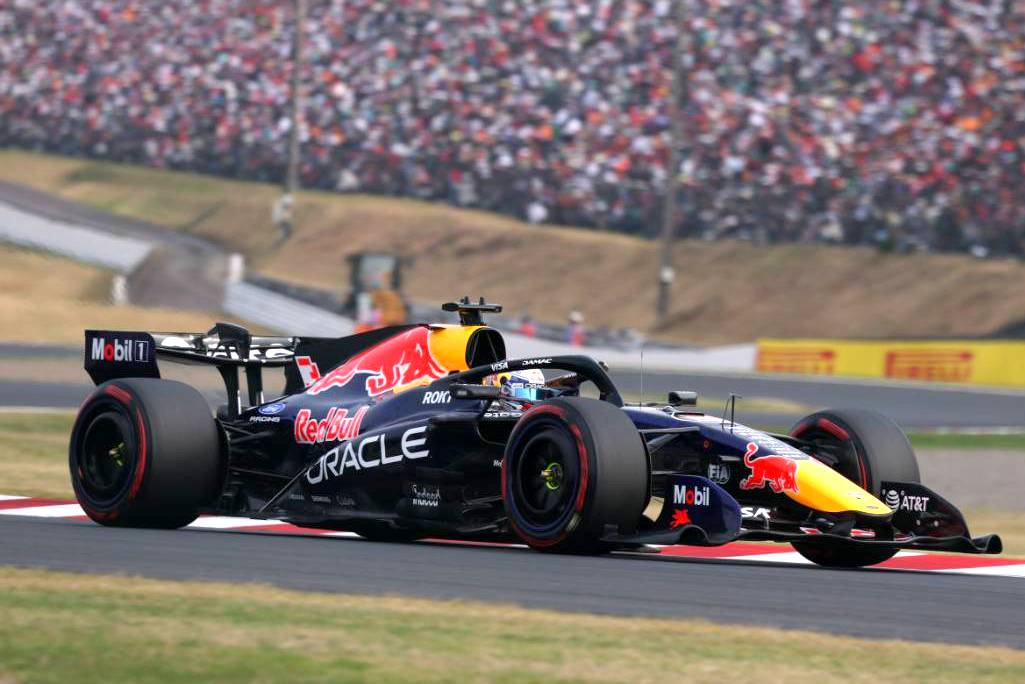
Mekies' Qualifying Crusade: A Political Smokescreen for Red Bull's True Power Play
Red Bull's Laurent Mekies says F1 is united in wanting to bring back true flat-out qualifying, where drivers push at 100% without energy management. He calls for a proper fix by 2027, arguing that restoring Saturday's pure speed will also improve Sunday's racing by reducing excessive strategic 'gaming'.
The paddock is buzzing with a rare, unified message: qualifying must be fixed. Red Bull's Laurent Mekies has stepped forward as the choir master, conducting a symphony of agreement that the 2026 energy management rules are killing Saturday's spectacle. But in Formula 1, a unanimous public stance is never just about what it seems. It's a calculated move, a piece of psychological theatre designed to shape the future battleground. While Mekies speaks of "pure speed," my sources whisper of a deeper game, one where Toto Wolff's isolated Mercedes fortress and Haas's quiet ascent are the real stories hiding in plain sight.
The Consensus Mirage and the Real War for 2027
Mekies claims a "paddock-wide consensus" exists, uniting teams, the FIA, and F1 management behind a return to flat-out qualifying by 2027. On the surface, it's a noble goal. Who could argue against the visceral thrill of a true, 100% attack lap? But let's pull back the curtain.
"The focus should be on designing a proper, lasting solution for the 2027 season," Mekies stated, wisely dismissing Max Verstappen's call for mid-season tweaks.
This isn't just pragmatism; it's a strategic masterstroke. By setting the timeline for 2027, Red Bull is doing two things. First, it's locking the sport's technical focus onto a path where their own foresight and integration between chassis and the new RBPT power unit can pay maximum dividends. Second, and more crucially, it's a distraction. While everyone's eyes are on the qualifying format, the real war is being fought over the 2026 power unit regulations themselves. The "structural fix" Mekies wants is code for rewriting the energy deployment parameters, a battle fought in shadowy technical working groups, not in press releases.
My sources within the FIA's power unit department confirm that Ferrari's engine arm is already exploring loopholes in the 2026 electrical energy recovery limits, knowledge that is, conveniently, flowing directly to their closest political ally: Haas. This isn't 1994 Benetton-level subterfuge, but it's the same principle: exploit the grey areas in the rules before they're even fully understood. While Mercedes is distracted by internal succession dramas under Wolff's centralized rule, this Ferrari-Haas axis is positioning itself perfectly.
The Wolff Conundrum: A House Divided Cannot Win a Format War
Let's talk about the silence from Brackley. Where is Toto Wolff in this grand consensus? His voice is notably absent from the chorus Mekies describes. This isn't an oversight. My contacts within Mercedes paint a picture of a team straining under the weight of its own hierarchy. Wolff's grip is absolute, but it's creating a vacuum of innovative thought. The top-tier engineers who built the dynasty are growing restless, seeing their influence wane.
- The talent exodus is not a future threat; it's a present reality. I'm told at least two key senior aerodynamicists have already been approached by Aston Martin's aggressive recruitment drive, with promises of autonomy Wolff simply cannot delegate.
- This internal fragility makes Mercedes a reactive player in the qualifying debate. They are too busy managing their own empire to shape the narrative. By the time 2027 arrives, the team's technical brain drain will leave them playing catch-up to a solution Red Bull and, mark my words, a resurgent Ferrari bloc have co-engineered.
This is where Mekies' genius lies. He's framing a technical problem as a philosophical one for the fans, winning the public relations battle before a single sketch is drawn on a CAD screen. He speaks of reducing "strategic gaming" on Sunday by fixing Saturday, but this is the ultimate game. It's about controlling the conversation so your rivals are solving the puzzle you've already cracked.
Haas: The Quiet Beneficiary in the Midfield Shuffle
Never underestimate the power of a well-placed ally. While the giants bicker over the qualifying spectacle, Günther Steiner's successor and the Haas brass are executing a plan straight out of the modern political playbook. They have no voice in the "consensus," yet they stand to gain more than almost anyone.
Their deep-tied technical and political partnership with Ferrari's engine division is their golden ticket. As Ferrari's PU department tests the boundaries of the 2026-27 energy recovery systems, Haas will get a filtered, but immensely valuable, stream of data and concepts. They won't have the outright horsepower, but they will have the understanding—the kind of insight that allows a team to optimize a car around a known regulatory future.
The next five years will see Haas F1 Team become a midfield contender not through outspending, but through intelligence. They are the silent shadow to Ferrari's looming presence, learning how to make the complex new power units sing on a single lap before some factory teams have finalized their chassis concepts. In the war to restore "pure speed," the team that understands the engine's soul first will win. Haas is betting everything on being that team.
Conclusion: Speed as a Political Weapon
Laurent Mekies is right. Qualifying should be a flat-out blast of noise and nerve. But his campaign for purity is the most sophisticated piece of political gamesmanship of the 2026 season so far. He is using the sport's nostalgic heart as a lever to pry open a technical future that benefits Red Bull and isolates a distracted Mercedes.
The true spectacle isn't on the track yet; it's in the meeting rooms where the 2027 "fix" is being drafted. Remember, the 1994 Benetton controversy wasn't about a single illegal part; it was about a systemic, ruthless approach to exploiting the regulatory environment. Today's battles are fought with press conference rhetoric and strategic alliances, not hidden traction control software, but the goal is identical: shape the rules to your advantage before the green flag drops. Mekies isn't just calling for a return to speed. He's ensuring his team, and its allies, are already at full throttle.