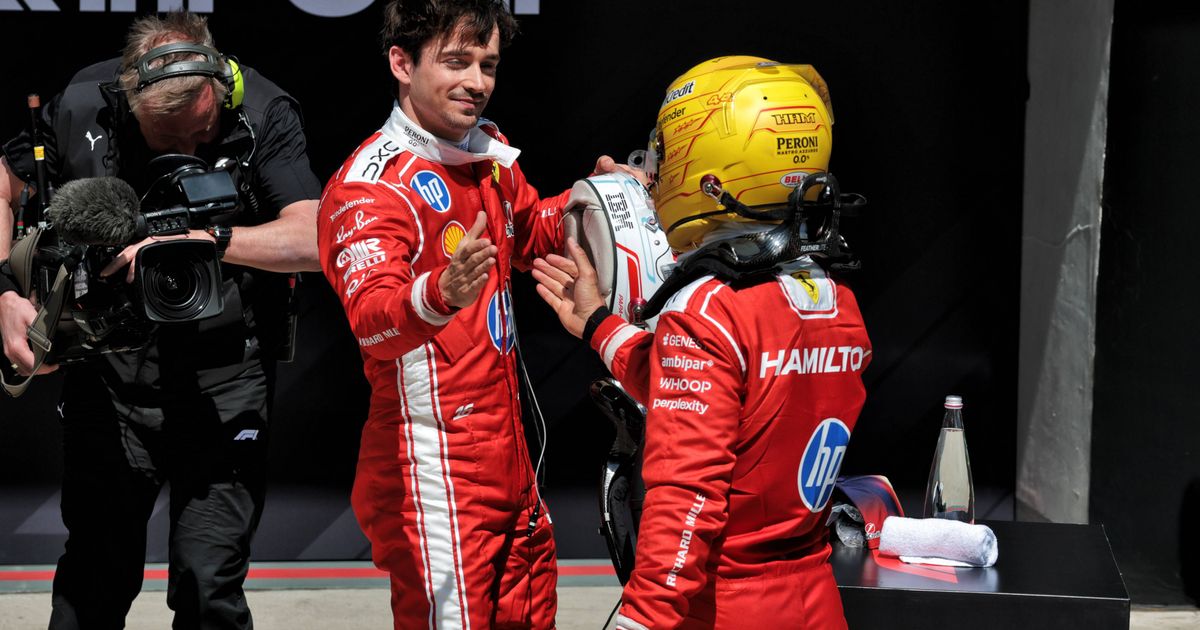
Leclerc defends 'not artificial' 2026 F1 racing after intense Hamilton battle
Ferrari's Charles Leclerc offers a contrasting view on F1's 2026 regulations, defending the racing as engaging and "not artificial" after a thrilling battle with teammate Lewis Hamilton in China. While other drivers criticize the new energy management rules, Leclerc praised the complex in-cockpit tactics they create.
Charles Leclerc has pushed back against widespread criticism of Formula 1's 2026 regulations, arguing the racing "doesn't feel so artificial" from the cockpit following an epic multi-lap duel with Ferrari teammate Lewis Hamilton for the final podium spot in China. While rivals like Max Verstappen have likened the new energy management-focused racing to 'Mario Kart,' Leclerc described the Shanghai fight as "actually quite fun" and highlighted the complex in-cockpit tactics it enables.
Why it matters:
The stark divide in driver opinion on the 2026 rules highlights a central tension in F1's future: balancing advanced, sustainable technology with authentic sporting competition. As the first season under the new power unit and chassis regulations approaches, driver feedback is crucial for the FIA and FOM to assess if the spectacle meets its goals or requires adjustment.
The details:
- Leclerc acknowledged some overtakes can seem artificial, specifically when a driver makes a battery management error and suffers a massive speed deficit.
- However, he contends the field is quickly learning optimal energy deployment strategies, which is creating "very interesting overtaking places" based on risk and reward, as demonstrated in Shanghai.
- His battle with Hamilton involved unorthodox overtaking zones, early braking into the final corner, and constant energy management mind games, which Leclerc called a "very fair, hard but fair battle."
- Hamilton's milestone: The duel secured Hamilton his first podium finish for Ferrari, ending a drought since the 2024 Las Vegas GP and boosting his confidence that a first win with the team is "more in sight than ever before."
The big picture:
The 2026 regulations, emphasizing a 50/50 split between internal combustion and electrical power with manual driver deployment, were designed to promote closer racing and overtaking. The early criticism from some drivers suggests the learning curve is steep and the "yo-yo" effect of battery deployment is pronounced. Leclerc's more positive take indicates that the experience may improve as teams and drivers master the new systems.
What's next:
The debate over the 2026 racing product is set to continue as teams develop their cars and drivers gain more experience. The Chinese Grand Prix provided a compelling, if divisive, case study. If more drivers come to share Leclerc's view that the racing can be tactically engaging and fun, the regulatory shift will be deemed a success. If not, pressure will mount on the governing bodies to refine the rules before the new era fully begins.
Don't miss the next lap
Get the deep dives and technical analysis from the world of F1 delivered to your inbox twice a week.
Zero spam. Only high-octane analysis. Unsubscribe anytime.
Join the inner circle
Get the deep dives and technical analysis from the world of F1 delivered to your inbox twice a week.
Zero spam. Only high-octane analysis. Unsubscribe anytime.
Continue Reading
View More News