11 November 2025Racingnews365AnalysisRace reportReactions
Liam Lawson Reveals Strategy Change That Saved His Brazilian GP
Liam Lawson's Brazilian Grand Prix was saved by a last-minute strategic switch to a one-stop race, defying initial plans that favored his teammate. Despite starting as the second car, Lawson impressively managed a massive DRS train and secured a crucial P7 finish, highlighting his race craft and the team's adaptive decision-making under pressure.
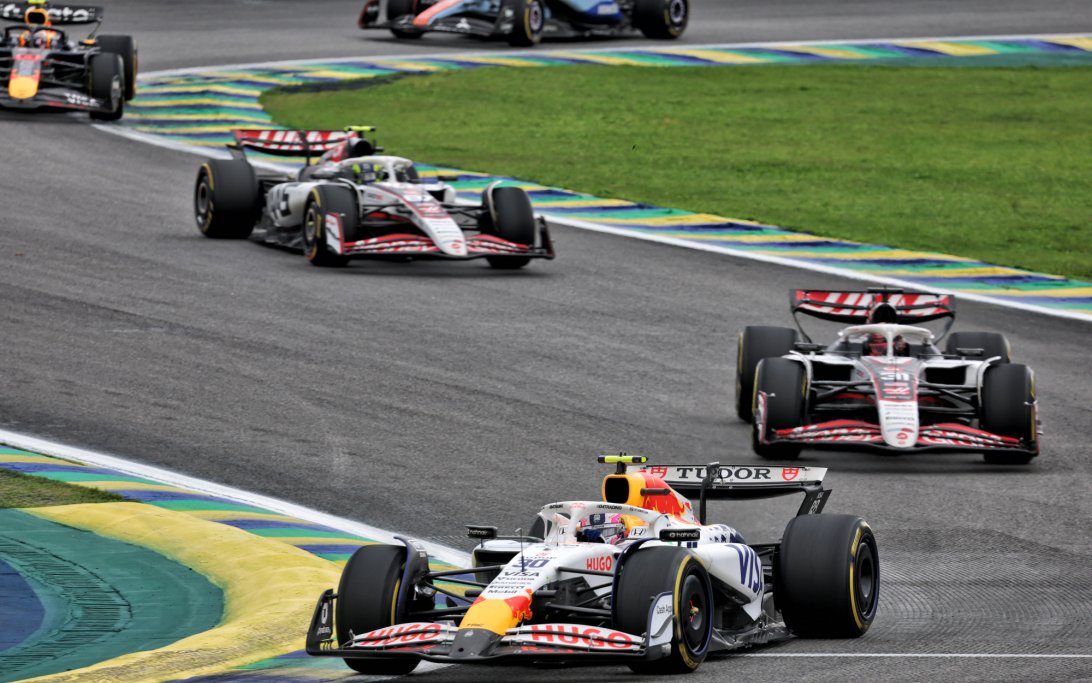
Liam Lawson has detailed how his Racing Bulls team elected to change strategies on the fly helped to save his Brazilian Grand Prix result.
Why it matters:
- In a sport where pre-determined strategies often dictate outcomes, Lawson's account highlights the critical impact of real-time decision-making in high-pressure F1 races.
- This strategic flexibility allowed him to secure a strong seventh-place finish, showcasing the team's ability to adapt and maximize performance even when a driver isn't designated as the primary car.
- Lawson's performance, marked by his sixth points finish, further solidifies his standing as a promising talent in Formula 1.
The Details:
- Lawson, who qualified P7, was initially slated to follow a two-stop strategy, putting him at a disadvantage as the second car behind teammate Isack Hadjar (who qualified P5 and was on the preferential strategy).
- Mid-Race Strategy Shift: The team opted to switch Lawson to a one-stop strategy during the race. This unconventional move, though not the fastest theoretically, was crucial for gaining and maintaining track position.
- DRS Train Management: In the closing stages, Lawson found himself leading a massive DRS train of nearly half the field, stretching back to Fernando Alonso in 14th.
- He successfully managed his tires and energy while defending his position, demonstrating impressive race craft under immense pressure.
- Teammate Battle: Lawson briefly made contact with Hadjar on the final lap, underscoring the intensity of their battle for position, with Lawson ultimately finishing ahead.
Between the Lines:
- Lawson's explanation reveals the inherent challenges of being the "second car" in a team, where strategic priorities often favor the designated lead driver.
- The decision to pivot to a one-stop strategy indicates a calculated risk by Racing Bulls, prioritizing track position over raw pace in specific race conditions.
- His ability to manage the DRS train and secure seventh place, just 3.124s ahead of 14th, highlights his skill in tire management and defensive driving, turning a potentially difficult race into a successful points finish.
What's Next:
- Lawson's consistent points finishes and adaptability under pressure could bolster his case for a permanent F1 seat, especially given the ongoing driver market discussions.
- This performance also gives Racing Bulls valuable data on strategic flexibility and driver performance under varying conditions, which will be crucial for optimizing future race weekends.
- The team will undoubtedly analyze the intra-team battle and the effectiveness of their on-the-fly strategy change to refine their approach in upcoming races.