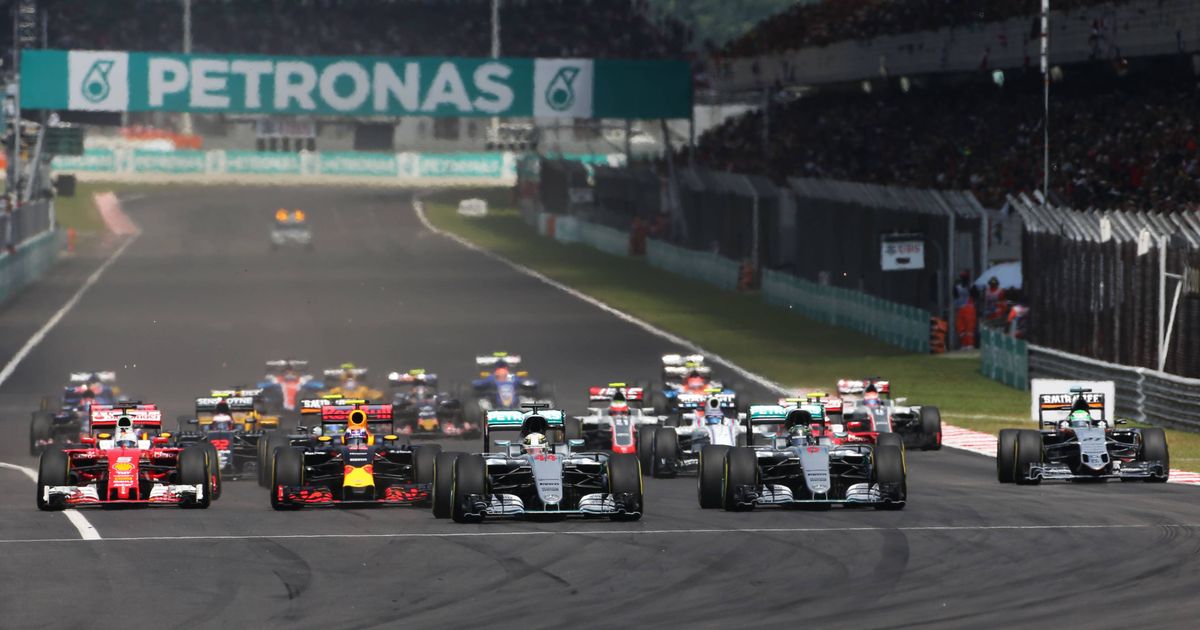
Malaysian GP Return 'Not Impossible' Despite Government Rejection
Despite the Malaysian government's financial refusal, Sepang International Circuit's CEO remains hopeful for a future Formula 1 return, acknowledging current financial hurdles and fierce global competition for race slots. The circuit, which last hosted F1 in 2017, believes a return is "not impossible" with the right corporate backing.
Despite the Malaysian government's refusal to provide financial support, Sepang International Circuit's CEO Azhan Shafriman Hanif remains optimistic about Formula 1's eventual return to Malaysia, even if not in the immediate future. The circuit last hosted an F1 Grand Prix in 2017 and faces stiff competition from other aspiring host nations.
Why it matters:
Malaysia's potential return to the F1 calendar could reinvigorate Formula 1's presence in Southeast Asia, a region with a passionate fanbase. However, the high hosting fees and lack of government funding present significant hurdles, highlighting the financial realities that dictate race locations in modern F1.
The details:
- Government Stance: The Malaysian government has explicitly stated it will not fund the return of the Malaysian Grand Prix, prioritizing public needs over multi-million dollar F1 hosting fees, reportedly around $70 million.
- Sepang's Position: Sepang International Circuit CEO Azhan Shafriman Hanif considers the 2017 departure a "mistake" and believes F1 will "come back someday," but acknowledges it's "not now" due to financial constraints.
- Private Funding Hope: Shafriman suggests that a return without government burden is "not impossible" if the "right partner" from the corporate sector can be secured to cover the substantial costs.
- Readiness: The circuit maintains its readiness to host F1, requiring only minor tweaks to facilities and track homologation, indicating that the infrastructure is largely in place.
The big picture:
Since Liberty Media took over F1, there's been a clear push for commercially viable races with record attendances globally. This has led to a highly competitive landscape for calendar slots. Iconic moments like the 'Multi-21' incident and Lewis Hamilton's 2016 engine failure cemented Malaysia's place in F1 history, but nostalgic appeal alone isn't enough to secure a spot today.
What's next:
Calendar slots are expected to open up after the 2026 season, with Zandvoort leaving and Spa-Francorchamps rotating. However, countries like Rwanda, Argentina, and Thailand (with a $1.2 billion street race proposal for Bangkok) are aggressively pursuing these opportunities.
- Sepang's immediate focus remains on hosting MotoGP and other international races.
- For F1 to return to Malaysia, a strong corporate sponsor would need to emerge to shoulder the significant financial commitment, offering a clear return on investment to justify the high hosting fees without burdening government funds. The fierce competition for calendar places means Malaysia will need a compelling and financially robust proposal to stand a chance.