The Ghost in the Machine: Carlos Sainz and the Psychology of the Dead End
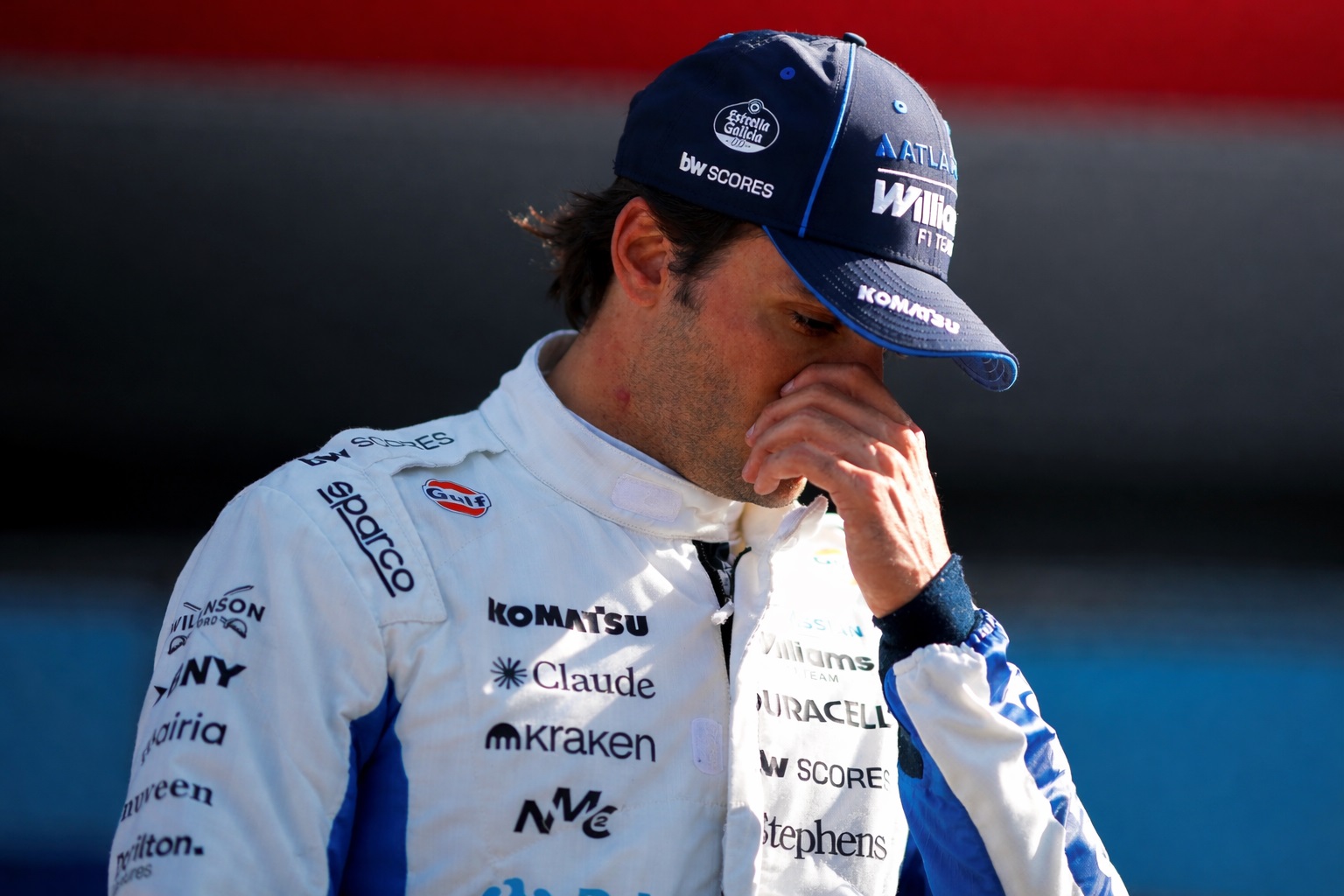
F1 analyst Martin Brundle suggests Carlos Sainz is in a career bind at Williams, with few options to move to a competitive team. Having already driven for Ferrari, McLaren, and Red Bull-affiliated teams, Sainz's extensive experience may now limit his future prospects as he waits for Williams' long-term rebuild.
The most dangerous corner in Formula 1 isn't a sequence of asphalt and kerbs. It's a psychological one: the point where a driver's rearview mirror becomes clearer than his windshield. Where the past—the teams he's driven for, the contracts he's signed, the podiums he's stood on—looms larger than any future on the horizon. Carlos Sainz Jr., the consummate professional, the adaptable racer, the fighter, is now staring into that abyss. According to Martin Brundle, his move to Williams is not a stepping stone but a potential terminus. But this isn't just about seats and contracts. This is a case study in the human psyche when the narrative of a career stalls, and the driver is left alone with the echo of his own ambition.
The Paradox of the Proven Pedigree
Brundle’s analysis is a cold, hard read of the market: Sainz has been at McLaren, Red Bull, Ferrari, Renault, and now Williams. The spreadsheet says there’s nowhere left to go. But this practical assessment misses the deeper, more corrosive psychological truth. For a driver like Sainz, each team change was a chapter in a story of relentless ascent. Ferrari was meant to be the climax. Instead, it became a plot twist, his tenure ending not with a championship but with a replacement notice.
Now, at Williams, the story has stopped. The multi-year deal, a bet on the new regulations, has backfired catastrophically with failed crash tests and an overweight car. The brutal reality is this: Sainz’s greatest asset—his extensive, top-team experience—has been psychologically reframed as a liability. It’s no longer a resume; it’s a checklist of burned bridges and closed doors. The mind, in such a state, doesn't calculate options. It replays memories.
"Where would Carlos go? He's been at McLaren, he's been at Red Bull... He's been at Ferrari and Williams. There's no room at Mercedes. He's obviously done a stint at Renault as well... It's difficult to know where he'd go to get something better."
Brundle’s quote isn't just analysis; it's a verbalization of the trap. It’s the external world confirming the internal fear. For an athlete whose entire existence is predicated on forward momentum, on the next lap, the next session, the next race, this static state is a form of torture. Is this where the story ends? Not with a crash, but with a whimper?
The Tier Just Below: A Psychological No-Man's Land
Brundle touched the third rail of driver analysis, praising Sainz’s "outstanding" race wins and fighting spirit while placing him just below the absolute top tier. This is the most dangerous psychological space in Formula 1. It’s where talent is undeniable, but the final, mythic something—the Verstappenian ruthlessness, the Hamiltonian narrative force—is perceived to be absent.
But let's dissect that "top tier." Max Verstappen’s dominance isn't just born of talent; it's a product of a system that meticulously engineered his emotional volatility into a cold, relentless efficiency. His psyche was treated as another aerodynamic element to be optimized. Lewis Hamilton transformed trauma and adversity into a pillar of his brand, a calculated persona of resilience that overshadows the raw speed. Sainz? He is pure, unvarnished competitor. There is no manufactured chill, no overarching mythos—just the work. And in the modern F1 landscape, that can read as a lack of the singular, marketable edge. His psychology is his own, not a team-managed asset, and in this moment, it leaves him exposed.
The Waiting Game: A Test of Mental Architecture
So, what’s next? Brundle sees only a dramatic vacancy—a Red Bull seat suddenly opening—as a lifeline. Barring that miracle, Sainz is tethered to Williams. This is where we move from career management to profound psychological endurance.
His task is no longer to fight for wins. It is to fight irrelevance. To find meaning in P14. To push a subpar machine with the same vigor he pushed a Ferrari, while the world watches his "prime competitive window" fog over. This is where we see what a driver is truly made of, far from the champagne. In wet conditions, we always say the driver makes the difference, because the car's limits are obscured and core personality takes over. Sainz is now in a perpetual psychological rainstorm. The certainty of a competitive car is gone. All that's left is his decision-making under this crushing uncertainty.
Does he become a team leader, a culture builder, a martyr to the long-term project? Or does the frustration simmer, the body language slump, the radio messages curdle into a public diary of despair? Every session becomes a Rorschach test for his mental state.
The Coming Storm: Transparency as Scrutiny
This situation is a precursor to the future I foresee. Within five years, the sport will mandate mental health disclosures after major incidents. But what about the slow, grinding trauma of a career in stasis? If Sainz’s performance wavers under the weight of this dead end, how will we frame it? As a simple lack of pace, or as the understandable corrosion of a brilliant mind trapped in a hopeless situation?
The new era of transparency won't just be for crashes. It will expose these quiet, career-long crises. Sainz’s bind at Williams is a test case for how little the sport currently understands—or chooses to see—the mental marathon its athletes run.
Conclusion: The Narrative is the Only Escape Route
Carlos Sainz’s path forward is no longer just about lap times. It’s about narrative control. He cannot design a new front wing, but he can attempt to author a new chapter. He must do what Hamilton and Lauda mastered: transform his predicament into a story of resilience so compelling it overshadows the mediocre machinery.
He must make us believe that wrestling the Williams into Q2 is a act of heroism. He must use his platform to become the undeniable, vocal heart of a team's revival, so that if the results don't come, his legacy is that of a leader, not a stranded talent. The alternative is to become a ghost, a talented specter haunting the back of the grid, his career a cautionary tale about timing and the brutal economics of speed. The checkered flag hasn't fallen on Carlos Sainz. But the race for his soul, for the story that will define his career's end, has begun. And it is the hardest race of his life.