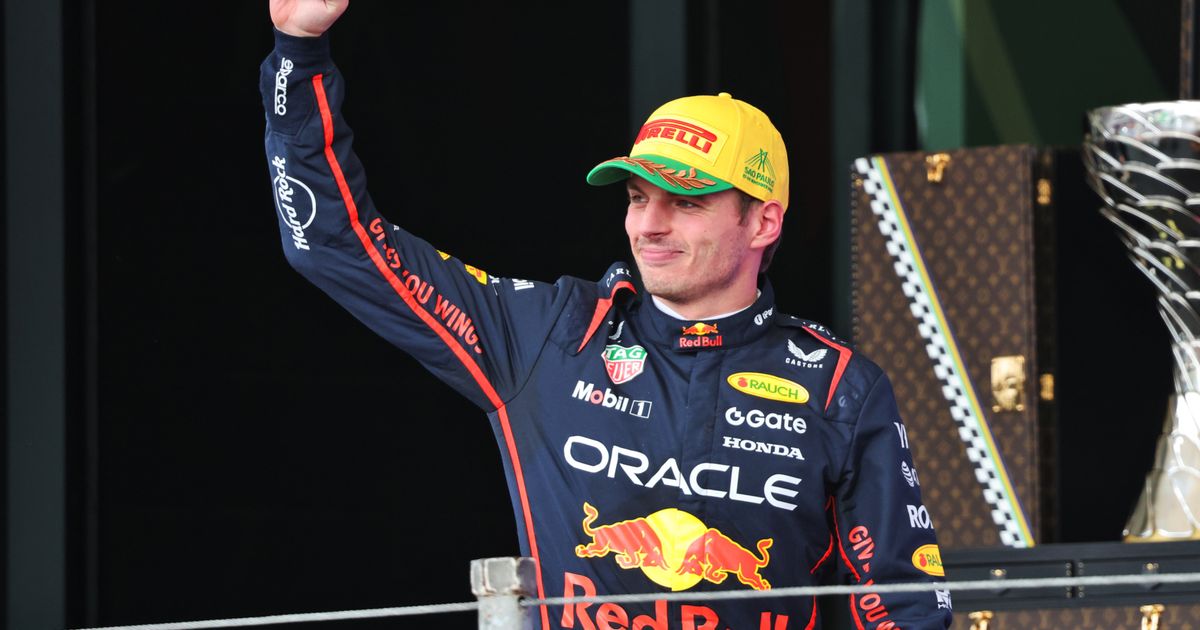
McLaren Chief on Verstappen's Dominance: 'He Has a Much Bigger Vision'
McLaren's Tony Kanaan attributes Max Verstappen's F1 success to a "much bigger vision" beyond just luck or talent, likening his influence at Red Bull to that of Schumacher, Senna, and Hamilton at their respective teams. Kanaan emphasizes Verstappen's unique ability to mold his team and car around his precise needs, cementing his status as a true F1 legend who even prompted an FIA rule change.
Arrow McLaren's IndyCar team principal, Tony Kanaan, asserts that Max Verstappen's unparalleled success in Formula 1 stems not merely from luck or raw talent, but from a profound vision that sets him apart. Kanaan believes Verstappen's unique ability to mold his team and car around his driving style mirrors the legacies of F1 greats like Schumacher, Senna, and Hamilton.
Why it matters:
Verstappen's current dominance is one of the most compelling narratives in modern F1. Understanding the underlying factors, beyond just driving skill, provides crucial insight into what makes a true champion. Kanaan's perspective, coming from a respected figure in motorsport, highlights the strategic and leadership qualities that transform a fast driver into an era-defining talent.
The Details:
- Beyond Talent and Luck: Tony Kanaan explicitly dismisses luck or pure driving talent as the sole reasons for Verstappen's success, stating, "It's not luck, it's not just pure talent. The guy has a much bigger vision than just like 'I know how to drive a race car.'"
- Team and Car Integration: Kanaan emphasizes Verstappen's unique ability to effectively integrate with and influence his team, explaining, "He captivates the team, builds the car that he needs for himself, for himself. Doesn't take his teammate's opinion, doesn't care. It's just 'I'm here to do my job.'"
- Echoes of F1 Legends: Kanaan draws parallels between Verstappen's impact at Red Bull Racing and the legacies of past F1 legends, noting, "Schumacher when he went to Ferrari, then Senna when he was at McLaren, and Hamilton at Mercedes." This comparison underlines Verstappen's rare capacity to shape a team's direction.
- FIA Regulation Impact: Laurent Mekies, a prominent figure in F1, previously revealed that Verstappen's debut at 17 years old directly prompted the FIA to overhaul its super license system, introducing a minimum age and a new points structure. This shows the significant, even systemic, influence Verstappen has had on the sport from an early age.
The Big Picture:
Verstappen's journey, from being the youngest F1 debutant to a multi-time world champion, showcases a blend of precocious talent and strategic acumen. Kanaan's comments underscore that sustained success at the pinnacle of F1 requires more than just speed; it demands a holistic vision that encompasses team dynamics, car development, and an unyielding focus on one's own objectives, even at the expense of a teammate's input. This 'bigger vision' is what allows drivers to transcend mere performance and become instrumental in their team's long-term dominance.
What's next:
Verstappen's continued influence within Red Bull Racing and his relentless pursuit of perfection suggest his era of dominance is far from over. As the sport moves towards new regulations and competitive cycles, his ability to adapt and steer his team will be crucial. The discussion around his unique approach will undoubtedly continue to be a focal point for fans and pundits alike, further cementing his status as one of F1's most impactful figures.