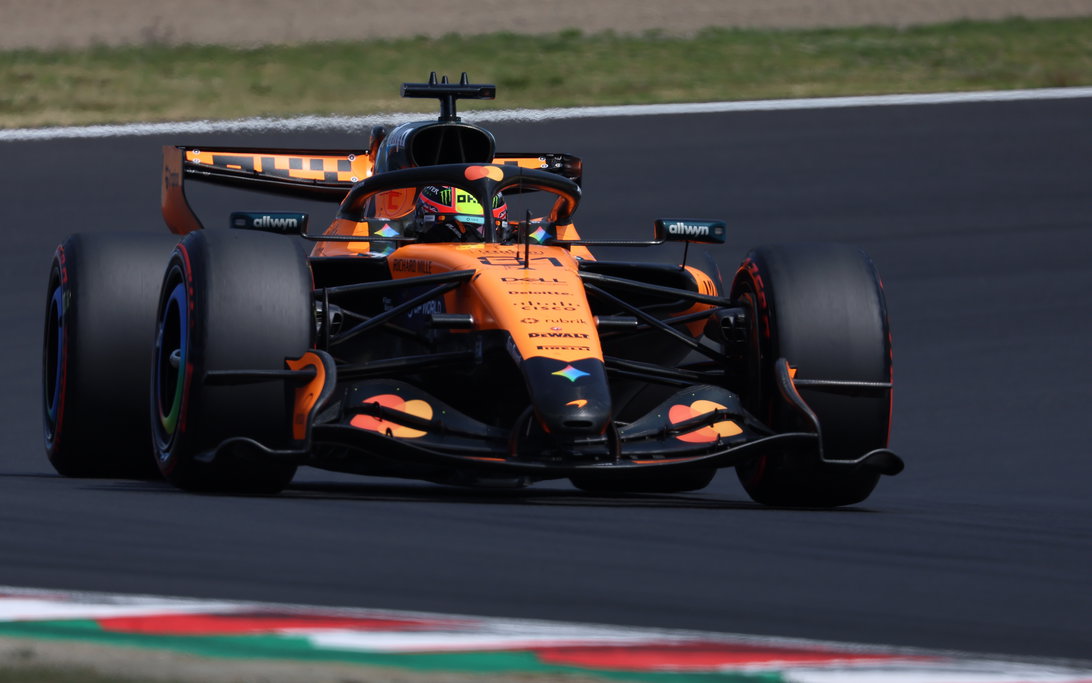
McLaren demands F1 rule changes after Bearman's 50G crash
McLaren's Andrea Stella demands urgent F1 rule changes following Oliver Bearman's 50G crash in Japan, caused by dangerous speed differences when cars harvest versus deploy energy. Stella, who warned of this exact risk in testing, says the FIA has a responsibility to act before a more serious incident occurs.
McLaren Team Principal Andrea Stella has intensified calls for immediate Formula 1 rule changes, citing Oliver Bearman's high-speed crash in Japan as a direct consequence of the dangerous closing speeds between cars harvesting and deploying energy. Stella argues the FIA has a clear "responsibility" to act before a more serious incident occurs, having warned of this exact scenario during pre-season testing.
Why it matters:
Safety regulations are only validated when they prevent real-world incidents. Bearman's 50G impact—from which he escaped with only bruising—serves as a stark warning that current rules allow for a hazardous speed differential, estimated at around 30 mph in this case. Proactively addressing this known risk is critical to driver safety and the sport's integrity, moving beyond reactive measures after a tragedy.
The details:
- The incident occurred when Haas rookie Oliver Bearman, on a deployment phase, rapidly approached the Alpine of Franco Colapinto, who was lifting and harvesting energy.
- The sudden closing speed caused Bearman to lose control, spinning and hitting the barriers with a recorded impact of 50G.
- Stella had explicitly raised concerns about this specific danger during pre-season testing, stating the issue should be "on the agenda of the FIA" for the 2026 regulations.
- His post-incident comments emphasize a preventative philosophy: "We don't want to wait for things to happen to put actions in place, and [in Japan], something happened."
- The core technical issue lies in the hybrid power unit rules, which allow one car to be decelerating significantly (harvesting) while another is accelerating aggressively (deploying), creating unpredictable and extreme speed differences on track.
What's next:
Pressure is mounting on the FIA to implement corrective measures during the current April break in the F1 calendar.
- Stella's public stance, backed by a dramatic real-world example, will likely accelerate technical discussions among teams and the governing body.
- Short-term solutions could involve adjustments to energy deployment rules or driver warning systems, while a more comprehensive fix is expected to be integrated into the 2026 technical regulations.
- The sport now faces a clear test of its ability to respond swiftly to a identified and demonstrated safety flaw.
Don't miss the next lap
Get the deep dives and technical analysis from the world of F1 delivered to your inbox twice a week.
Zero spam. Only high-octane analysis. Unsubscribe anytime.
Join the inner circle
Get the deep dives and technical analysis from the world of F1 delivered to your inbox twice a week.
Zero spam. Only high-octane analysis. Unsubscribe anytime.
Continue Reading
View More News