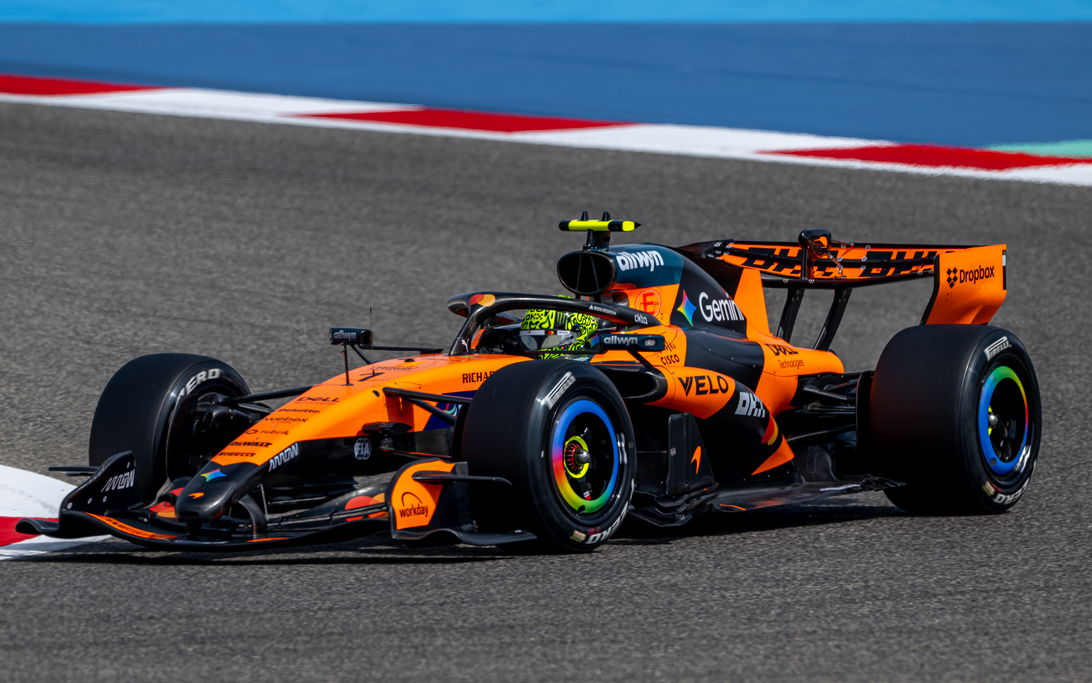
McLaren outlines radical setup shift for F1's 2026 active aero era
McLaren technical director Mark Temple explains how F1's 2026 active aero rules will revolutionize car setup. The new 'straight mode' allowing both wings to open means high-speed tracks like Monza may require larger rear wings for cornering grip, flipping the current low-drag approach on its head and creating two distinct car personalities based on circuit layout.
McLaren's technical leadership predicts a fundamental shift in how Formula 1 cars will be set up for different circuits starting in 2026, driven by the new 'straight mode' active aerodynamics rules that will allow both front and rear wings to open and close. The significant drag reduction potential means teams may opt for larger rear wings at some tracks to maximize downforce in cornering mode, a complete reversal of the current low-drag philosophy at high-speed venues.
Why it matters:
The 2026 regulations introduce a more powerful form of active aerodynamics than the current DRS, fundamentally altering the aerodynamic trade-off teams have managed for decades. This changes the core philosophy of car setup, where efficiency and low drag were paramount. Circuits will now be categorized by how much time is spent in 'straight mode,' forcing teams to develop two distinct aerodynamic personalities for their cars within a single weekend.
The Details:
- The 2026 'straight mode' will see both front and rear wings open to dump drag and boost top speed on straights before closing for 'corner mode.'
- McLaren Performance Director Mark Temple explained that while aerodynamic efficiency remains crucial, the equation shifts: it becomes a balance of downforce in corner mode versus drag in straight mode.
- This creates a new strategic dimension for setup. At tracks dominated by long straights, like Monza, teams might run a larger rear wing than they would today.
- The logic: With straight mode drastically cutting drag on straights, the penalty of a bigger wing is reduced, allowing the car to benefit from its higher downforce in the corners.
- Conversely, at more flowing circuits like Spa-Francorchamps, where certain high-speed sections like the climb to the Bus Stop chicane will remain in corner mode, traditional low-drag setups will likely persist.
What's next:
The 2026 season will effectively split the calendar into 'straight-mode' and 'corner-mode' circuits, demanding greater setup divergence from teams. This regulatory shift rewards teams that can most effectively optimize their car for these two distinct states and accurately predict the operational split at each track. McLaren's analysis suggests the classic low-drag Monza special could become a high-downforce package, symbolizing one of the most radical philosophical changes in modern F1 car design.
Don't miss the next lap
Get the deep dives and technical analysis from the world of F1 delivered to your inbox twice a week.
Zero spam. Only high-octane analysis. Unsubscribe anytime.
Join the inner circle
Get the deep dives and technical analysis from the world of F1 delivered to your inbox twice a week.
Zero spam. Only high-octane analysis. Unsubscribe anytime.
Continue Reading
View More News