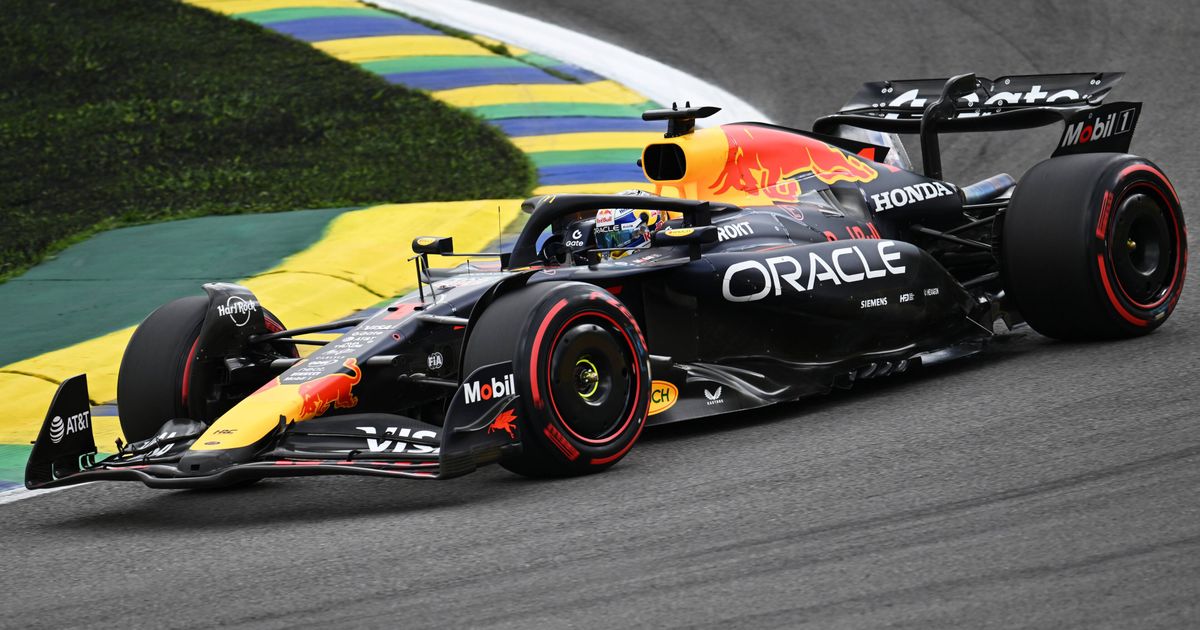
McLaren Questions Red Bull's Cost Cap After Verstappen's Brazil PU Change
McLaren team principal Andrea Stella questioned if Max Verstappen's new power unit in Brazil, which helped him to a P3 finish, fell under the F1 cost cap. GPblog confirmed that these costs are indeed included, emphasizing that performance-driven component changes carry financial implications for teams.
After the São Paulo Grand Prix, McLaren team principal Andrea Stella questioned whether the cost of Max Verstappen's newly fitted power unit, which aided his charge to P3, was included in Red Bull's cost cap. GPblog has confirmed that, contrary to some beliefs, these costs are indeed included.
Why it matters:
Cost cap adherence is a cornerstone of Formula 1's financial regulations, designed to level the playing field. Any perceived loophole or ambiguity around expensive component changes, especially for performance gains, can spark controversy and raise concerns about fairness among competitors. McLaren's direct query highlights the scrutiny teams place on rivals' financial compliance.
The Details:
- Following a challenging qualifying session at the São Paulo Grand Prix, Max Verstappen's Red Bull RB21 was removed from Parc Fermé.
- Red Bull opted to fit a new power unit, resulting in Verstappen starting the Sprint from the pit lane.
- The new, fresh power unit contributed to Verstappen's strong recovery drive, culminating in a third-place finish.
- Andrea Stella publicly speculated whether the cost of this extra power unit was accounted for within the F1 cost cap, noting that some teams believe replacement power units for failures are exempt.
- Performance-Driven Change: Red Bull made no secret that the power unit change was driven by a desire for enhanced performance rather than a failure.
- GPblog Confirmation: GPblog investigated Stella's query and received confirmation that the costs of such power unit changes are included in the team's overall cost cap.
Between the lines:
This clarification underscores that teams cannot simply swap out power units for performance benefits without financial implications. Red Bull's decision to incur this cost, even for a P3 finish, reflects a strategic calculation where the potential on-track gain outweighed the financial expenditure within their overall budget. It also highlights the ongoing tension and vigilance among rival teams regarding the interpretation and enforcement of F1's complex financial regulations.
What's next:
While the immediate question about Red Bull's cost cap has been answered, the broader discussion about how teams manage their power unit allowances and expenditures within the cost cap is likely to continue. Teams will remain watchful of their rivals' strategic component changes, especially as the season progresses and the budget constraints become tighter.