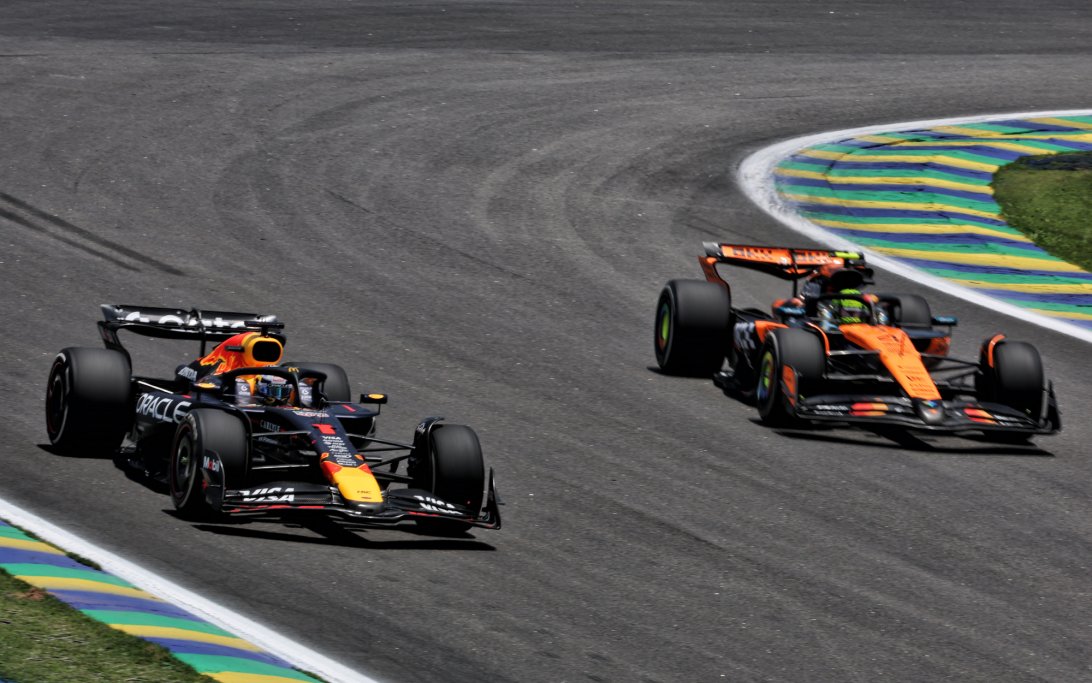
McLaren Questions Red Bull's Engine Change Strategy for Verstappen
Max Verstappen's impressive third-place finish at the São Paulo Grand Prix, after starting from the pit lane with a new engine, has sparked debate among F1 teams. McLaren's Andrea Stella questioned Red Bull's engine change, highlighting concerns over whether such performance-driven swaps should be accounted for under the sport's strict cost cap, influencing strategic decisions and financial compliance.
Max Verstappen's remarkable drive from the pit lane to third place at the São Paulo Grand Prix has ignited debate among F1 teams, particularly McLaren, regarding Red Bull's strategic use of power unit changes and their implications for the cost cap.
Why it matters:
Red Bull's decision to fit a new power unit to Verstappen's car after a poor qualifying session, allowing him to charge through the field, highlights differing team philosophies on engine management and penalty acceptance. It also brings the sport's strict budget cap into sharp focus, as rival teams question the financial implications of such strategic moves and whether they fall within regulatory limits.
The details:
- Verstappen's Comeback: After being eliminated in Q1, Red Bull installed a new power unit in Verstappen's car, leading to a pit lane start. Despite an early puncture, Verstappen recovered to finish third.
- McLaren's Concerns: Andrea Stella, McLaren's Team Principal, openly questioned the rationale behind Red Bull's engine change, particularly if it was for performance reasons. Stella stated that McLaren would not undertake such a change due to its significant impact on the $135 million cost cap.
- Engine Degradation: Stella noted that modern F1 engines generally do not exhibit substantial performance degradation with mileage, implying that a performance-based engine swap might not offer enough benefit to offset a grid penalty.
- Cost Cap Implications: A key point of contention for Stella is whether the cost of a new engine, if changed for performance, should be accounted for within the cost cap. He expressed interest in understanding how Honda's power unit degradation works and how Red Bull's engine change is accounted for under the financial regulations.
- McLaren's position is that if an engine is changed for performance, its cost should be included in the cap, which would deter them from making such a move.
Between the lines:
This incident underscores the constant tension between on-track performance optimization and compliance with F1's complex financial regulations. Red Bull's aggressive strategy, while yielding a strong result, has prompted rivals to scrutinize the interpretation and enforcement of the cost cap rules regarding power unit usage. The differing approaches reveal how teams navigate the intricate balance of technical regulations and financial constraints to gain a competitive edge.
What's next:
While Red Bull's specific accounting for the engine change remains internal, this discussion could prompt further clarification or scrutiny from the FIA regarding how power unit changes for strategic reasons are managed under the cost cap. Other teams will likely be observing closely to ensure fair play and consistent application of the rules across the grid, potentially influencing future strategic decisions on engine usage and penalties.