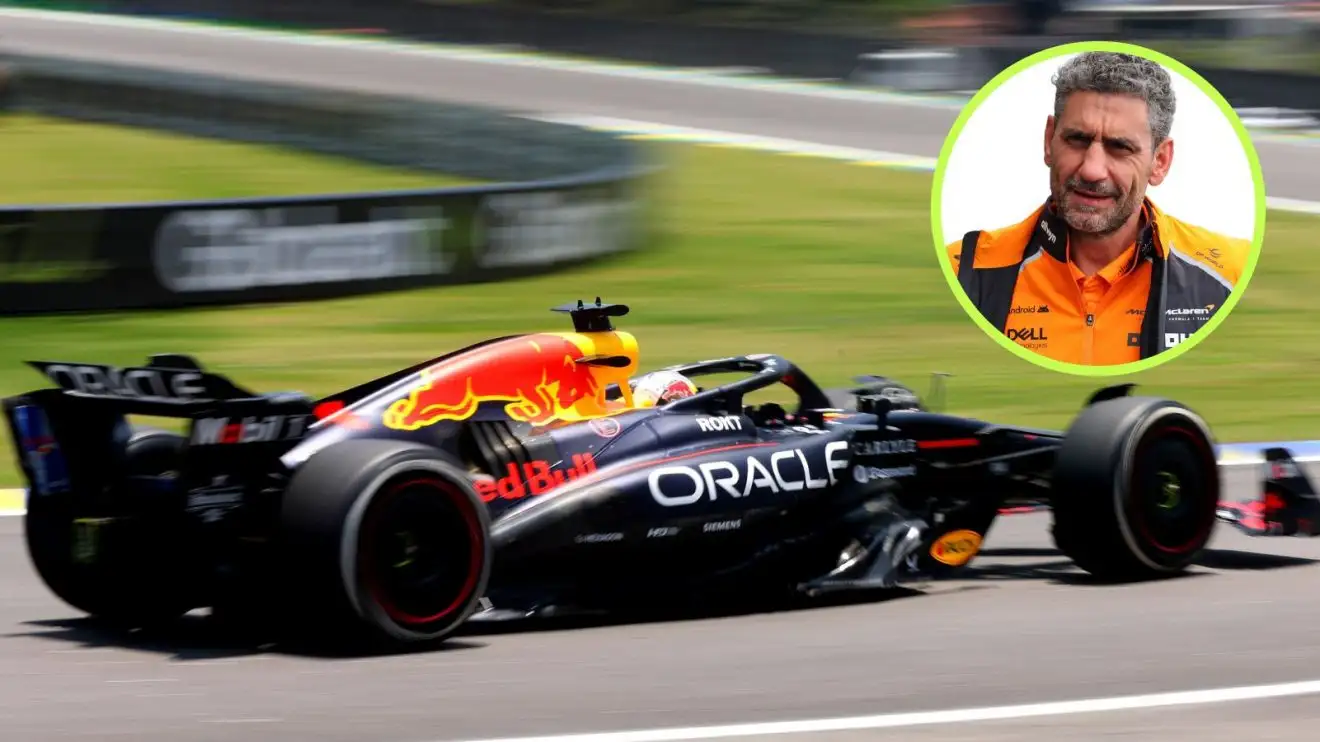
McLaren Questions Red Bull's Engine Change and F1 Cost Cap Implications
McLaren team principal Andrea Stella has raised questions about Red Bull's engine change for Max Verstappen at the Sao Paulo Grand Prix, particularly regarding how the new power unit's cost will be accounted for under F1's budget cap. Verstappen's remarkable drive from the pit lane to third place, facilitated by a new engine and setup changes, has put a spotlight on the regulations surrounding performance versus reliability-related component changes and their financial implications in a cost-capped era.
McLaren team principal Andrea Stella is "interested" to understand whether the new engine Max Verstappen took at the Sao Paulo Grand Prix will count against Red Bull's allowance under the terms of the F1 cost cap. Verstappen's new power unit, introduced after a shock Q1 exit, fueled a remarkable charge from the pit lane to third place, prompting questions about the nature of the engine change and its financial implications within the sport's regulations.
Why it matters:
- The F1 cost cap, introduced in 2021, is designed to level the playing field by limiting team expenditure. Any ambiguity in its application, especially concerning significant components like a power unit, can have far-reaching competitive and financial implications for all teams.
- Stella's inquiry highlights a potential loophole or grey area in the regulations, specifically regarding the distinction between performance-related and reliability-related engine changes and how they are accounted for under the cap.
- Red Bull's decision to introduce a full new power unit for Verstappen, combined with setup changes that broke parc ferme, allowed for a dramatic recovery drive, raising questions about whether such strategic moves should be fully cost-capped.
The Details:
- Max Verstappen suffered a surprise Q1 exit at the Sao Paulo Grand Prix due to a lack of pure pace, marking a rare occurrence in his F1 career.
- Following this, Red Bull made significant setup changes to Verstappen's RB21, incurring a penalty that forced him to start from the pit lane due to parc ferme breaches.
- Crucially, Red Bull also introduced a full new power unit, including a new Internal Combustion Engine (ICE), Turbocharger (TC), Motor Generator Unit-Heat (MGU-H), Motor Generator Unit-Kinetic (MGU-K), Energy Store (ES), and Control Electronics (CE).
- McLaren's Andrea Stella expressed his interest in understanding if "the cost of this engine now goes in the cost cap or not."
- Stella suggested that "If the engine was changed for performance reasons, it should go in the cost cap," implying a regulatory distinction between changes made for performance gain versus those for reliability.
- Verstappen ultimately charged from the pit lane to a third-place finish, showcasing significant pace, which he attributed to a combination of the new PU, setup changes, and cooler temperatures.
- The performance gain from a new PU, in general, is not considered substantial enough to justify positional penalties, according to Stella, further intensifying the debate around Red Bull's justification.
The big picture:
- The incident underscores the ongoing challenges and complexities of enforcing the F1 cost cap, a system that requires meticulous oversight to ensure fair competition.
- Red Bull's strategic choices at Sao Paulo allowed Verstappen to overcome a disastrous qualifying, demonstrating the effectiveness of aggressive tactical decisions when combined with a powerful car and driver.
- The performance in Brazil was vital for Red Bull's Constructors' Championship aspirations, moving them to third place, four points ahead of Ferrari and 32 behind Mercedes, with three rounds remaining.
What's next:
- The FIA will likely need to clarify the specifics of how engine changes, particularly those made under circumstances similar to Verstappen's, are assessed against the cost cap to maintain transparency and fairness among teams.
- Teams like McLaren will continue to scrutinize competitors' expenditures, pushing for stringent enforcement of the financial regulations to prevent any team from gaining an unfair advantage.
- The discussion around this engine change could influence future interpretations or adjustments to the cost cap regulations, especially concerning strategic component replacements and their financial reporting.