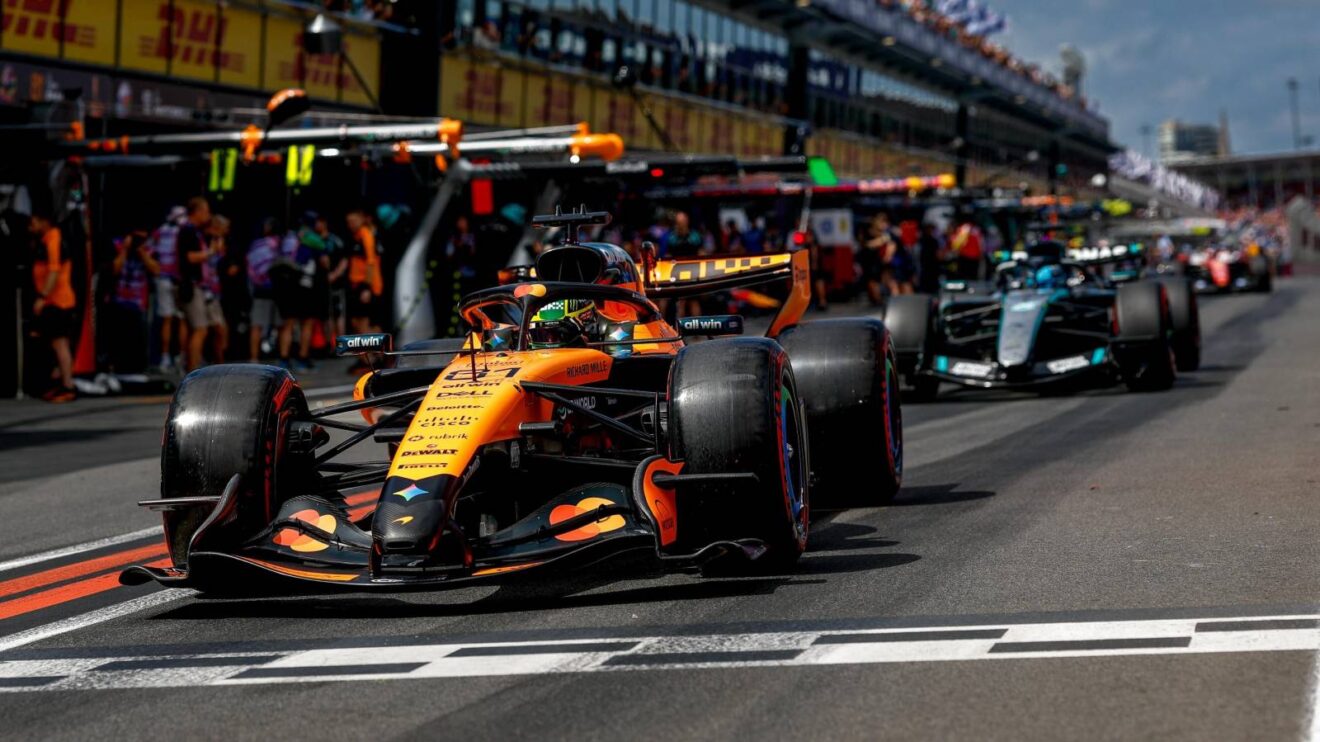
McLaren seeks deeper Mercedes HPP collaboration amid power unit information gap
McLaren admits it cannot match the Mercedes works team's exploitation of their shared power unit, creating a performance deficit and prompting urgent talks for more technical information. Team principal Andrea Stella calls it the first time the reigning champions have felt disadvantaged as a customer, highlighting a key challenge of the 2026 regulations.
McLaren team principal Andrea Stella has revealed his team is struggling to extract the same performance from the Mercedes power unit as the works team, marking the first time the reigning champions have felt at a disadvantage as a customer. Talks with Mercedes High Performance Powertrains (HPP) to gain more information have been ongoing for weeks, as McLaren finds itself reacting to on-track data rather than simulating and predicting performance—a fundamental shift in their Formula 1 operations.
Why it matters:
The performance gap highlights a significant and growing challenge in the new 2026 regulatory era, where the integration and exploitation of the complex hybrid power unit are more critical than ever. For a top team like McLaren, falling behind in understanding the PU could jeopardize its ability to defend its titles, while also exposing the inherent tension between a manufacturer's works team and its customers in a hyper-competitive environment.
The details:
- Performance Discrepancy: Data analysis shows a clear speed deficit for McLaren cars compared to the Mercedes works team using the same power unit, with Stella estimating the current gap to be between half a second and one second per lap.
- A Shared Customer Struggle: Williams team principal James Vowles confirmed a similar issue, admitting he was "a little bit shocked" by Mercedes's performance level and that his team also lacks the "inherent knowledge" and technical sophistication to match it, despite having access to the same hardware.
- The Works Team Advantage: Mercedes HPP boss Hywel Thomas previously acknowledged the natural advantage for the works team, which is listened to most closely regarding PU development and usage. Stella concedes the works team and HPP have a long-standing collaboration that customer teams cannot instantly replicate.
- A New Operational Reality: Stella emphasized that the 2026 regulations have made everything "very sensitive," where a small change in one corner affects energy deployment across the entire lap. This has increased reliance on advanced simulation tools, which McLaren currently lacks sufficient data to use effectively.
- Historical Context: Stella stated this is the first time since becoming a Mercedes customer team in 2021 (and a customer team overall since 2018) that McLaren has felt "on the back foot" in terms of predicting car behavior and planning upgrades.
What's next:
McLaren's immediate plan is to intensify its collaboration with Mercedes HPP to find what Stella calls "low-hanging fruit" in PU exploitation. However, major car upgrades to address the aerodynamic grip shortfall are still a few races away. The coming races, starting with the first Sprint weekend in Shanghai, will be about maximizing the current package while the team accelerates its learning curve. The situation puts pressure on the governing body and power unit manufacturers to ensure the principle of equal supply does not get undermined by a knowledge and tooling gap that customers cannot bridge.