McLaren Unveils MCL40, Tackling 2026's Radical F1 Rule Changes
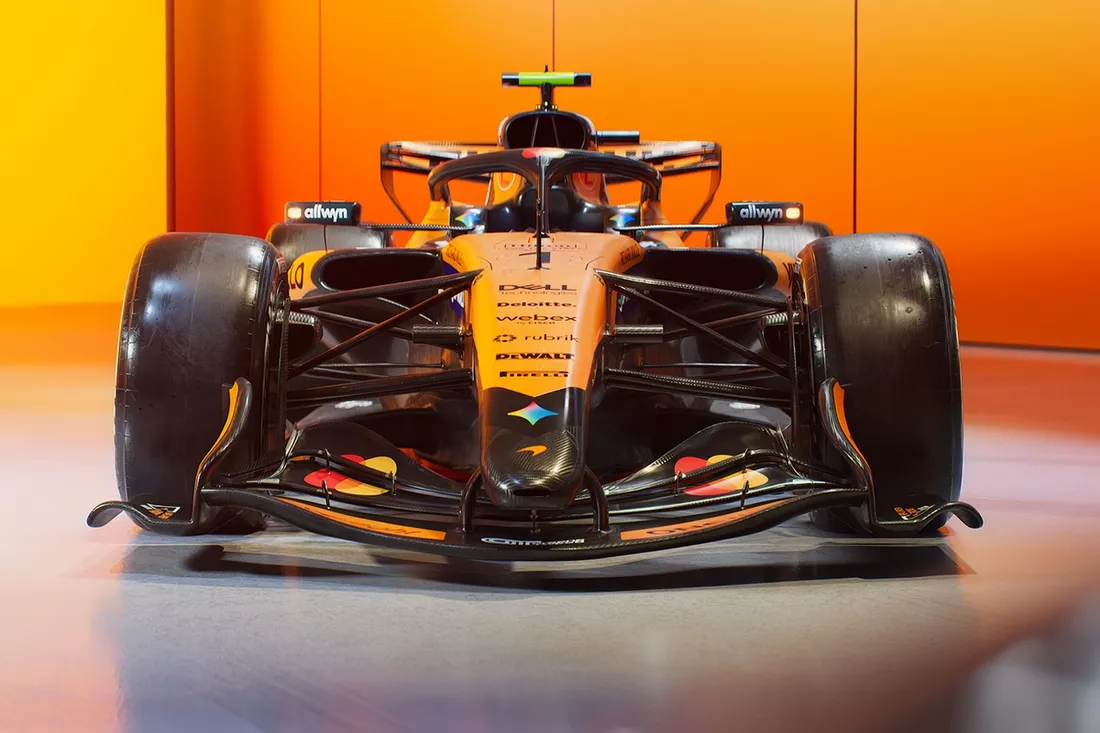
McLaren has taken the wraps off its 2026 F1 challenger, the MCL40, designed around radically smaller dimensions and tougher safety rules. Chief Designer Rob Marshall explained the significant packaging challenges and "brutal" new crash tests, while detailing the team's approach to the new active aerodynamic systems that define the new technical era.
McLaren has revealed its MCL40, the first car built under Formula 1's transformative 2026 technical regulations, showcasing a significantly shorter and narrower package designed to meet new safety and aerodynamic challenges. Chief Designer Rob Marshall detailed the immense packaging difficulties and "brutal" new crash tests that have defined the design process for this new era of cars.
Why it matters:
The 2026 regulations represent the most significant technical reset in over a decade, forcing every team to start from a near-blank slate. How a team like McLaren interprets these new rules—balancing extreme safety demands with performance in a much smaller chassis—could set the competitive order for the next several seasons, making their initial design philosophy critical.
The Details:
- Radical Resizing: The MCL40 is 200mm shorter in wheelbase and 100mm narrower than its predecessor, with a minimum weight reduced to 768kg. This created a major challenge in finding space for components like radiators and electrical boxes, partially alleviated by a smaller fuel tank.
- "Brutal" Safety Overhaul: New frontal crash structures must remain functional even after a primary impact that destroys the front wing, complicating nose design. Marshall described the chassis homologation requirements and crash tests as "quite brutal," requiring extensive research to ensure the car can withstand them.
- Active Aerodynamics: The rules introduce active front and rear wings that work in conjunction. The front wing features a lower, broader footplate and moves like "old DRS" to reduce drag in a straight-line mode, a system with considerable design freedom that will vary across the grid.
- Rear Wing Evolution: The rear wing maintains a similar profile to 2025 but is now mounted on two pylons and will be actuated in sync with the front wing for optimized drag reduction.
What's next:
The MCL40's launch is just the first glimpse of how teams have interpreted the 2026 rules. The true performance hierarchy will only become clear during pre-season testing and the opening races, as teams unlock the potential—and manage the reliability—of their radically new packages. McLaren's early focus on surviving the stringent new crash tests suggests a design prioritizing a robust foundation from which to develop performance.
Don't miss the next lap
Get the deep dives and technical analysis from the world of F1 delivered to your inbox twice a week.
Zero spam. Only high-octane analysis. Unsubscribe anytime.
Join the inner circle
Get the deep dives and technical analysis from the world of F1 delivered to your inbox twice a week.
Zero spam. Only high-octane analysis. Unsubscribe anytime.
Continue Reading
View More News