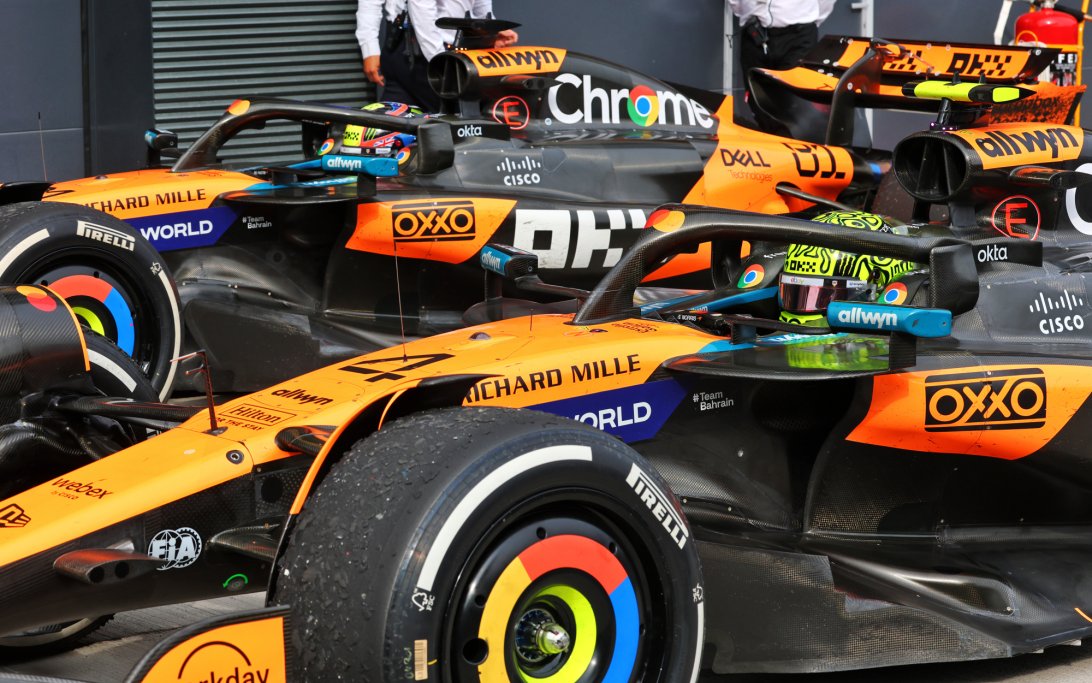
McLaren utilizes simulators to master 2026 energy management 'cat and mouse' game
McLaren is leveraging its simulator to help drivers navigate the complex energy deployment demands of the 2026 regulations, turning power management into a strategic "cat and mouse" game.
McLaren is relying on its driver-in-the-loop simulator to decode the complexities of the 2026 regulations, where electrical power nearly triples to 350kW. With the new rules mandating an equal 50-50 power split between the internal combustion engine and the battery, the team views the simulator as its "most powerful tool" to master the resulting "cat and mouse" strategic game.
Why it matters:
The drastic increase in electrical energy fundamentally alters the racing dynamic. The fear of running out of battery mid-straight and reverting to ICE power alone creates a high-stakes environment where energy management becomes as vital as raw pace. This shift moves the competitive advantage toward teams that can best train their drivers to intelligently harvest and deploy power while managing tire degradation and race pace simultaneously.
The details:
- Power Evolution: The leap from 120kW to 350kW of battery power means the electrical unit matches the combustion engine in output, requiring a complete rethink of driving styles.
- Simulator Integration: Performance Technical Director Mark Temple emphasizes that while engineers can brief drivers, the simulator is essential for internalizing the new principles. McLaren is working closely with Mercedes HPP to replicate these behaviors for tracks like Australia and Bahrain.
- Tactical Racing: The new regulations eliminate the simplicity of DRS-assisted overtaking. Drivers must now actively manage energy reserves during attacks and defenses.
- Track Specifics: Circuits with consecutive long straights, such as Bahrain's sector from Turn 13 to Turn 4, will present unique challenges. Drivers must calculate how much energy to expend on each straight without leaving themselves vulnerable to a counter-attack.
- Unpredictable Variables: The "cat and mouse" element lies in predicting a rival's energy status. If a driver attacks, they must guess if the defender has enough reserve to respond, adding a psychological layer to the wheel-to-wheel combat.
What's next:
As development intensifies, the focus will shift from theoretical simulation to on-track validation. The teams that can most accurately model the unpredictable nature of wheel-to-wheel energy warfare in the simulator will likely start the 2026 season with a significant edge.
Don't miss the next lap
Get the deep dives and technical analysis from the world of F1 delivered to your inbox twice a week.
Zero spam. Only high-octane analysis. Unsubscribe anytime.
Join the inner circle
Get the deep dives and technical analysis from the world of F1 delivered to your inbox twice a week.
Zero spam. Only high-octane analysis. Unsubscribe anytime.
Continue Reading
View More News