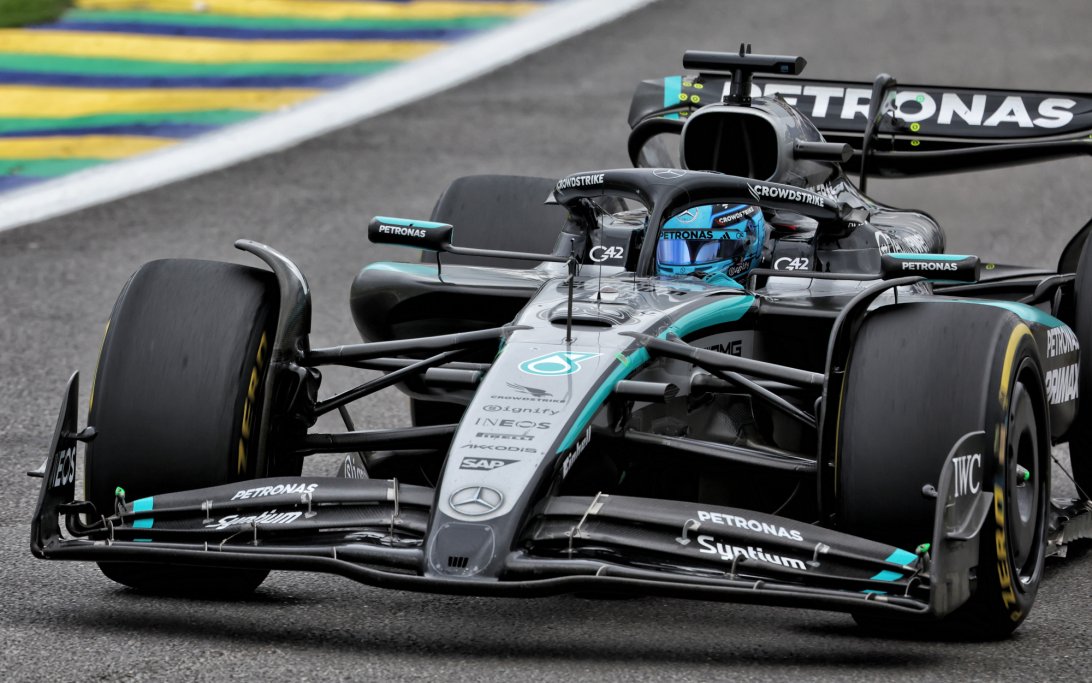
Mercedes' Candid Admission: Acknowledging F1 Ground Effect Mistakes
Mercedes has made a frank assessment of its struggles with F1's ground effect regulations, admitting it "didn't do a good enough job" after a radical W13 design failed to deliver. Despite an eight-year championship winning streak, the team faced significant challenges, including the 'zero-pod' concept, which was ultimately abandoned. Now, as the current rules cycle concludes, Mercedes reflects on the lessons learned, believing the experience has forged "better engineers" and is optimistic about returning to the front in the next era.
Mercedes has openly admitted its struggles in adapting to Formula 1's ground effect regulations, conceding it "simply didn't do a good enough job" as this rule cycle nears its conclusion. After an unprecedented run of eight consecutive constructors' championships, the team fell to a distant third in 2022, securing only one victory.
Why it matters:
- Mercedes' candid self-assessment highlights the immense challenge even top-tier teams face when new regulations fundamentally alter car design and performance.
- Their inability to quickly adapt after years of dominance underscores the competitive nature of F1 and the critical importance of a correct design philosophy from the outset.
- This reflection offers insight into how a team as successful as Mercedes learns from significant setbacks, which could be crucial for their approach to the upcoming 2026 regulations.
The details:
- Radical W13 Design: Mercedes introduced the 'zero-pod' concept with its W13 in 2022, aiming for an innovative aerodynamic advantage.
- Design Flaws: This aggressive design, coupled with other fundamental mistakes, ultimately doomed the project, leading to severe 'porpoising' and a lack of performance.
- Abandonment of Concept: The 'zero-pod' concept was definitively abandoned at the 2023 Monaco Grand Prix, where a more conventional car was introduced.
- Limited Success: In the ground effect era (2022-present), Mercedes has secured only seven Grand Prix victories.
- Positive Outlook for 2025: Despite past struggles, the team is currently on track to secure second place in the 2025 Constructors' Championship, sitting 32 points clear of Red Bull and 36 ahead of Ferrari with three rounds remaining.
- Learning Experience: Trackside Engineering Director Andrew Shovlin stated the experience "has made us better engineers" and that the team has learned significantly from having to acknowledge their shortcomings.
- Retrospective Decisions: Shovlin admitted that with hindsight, many subsequent design decisions would have been handled "quite differently" if given the chance again.
What's next:
Mercedes is now looking forward to the next challenge posed by the 2026 regulations, aiming to apply the hard-learned lessons from the ground effect era. The team's current strong performance suggests they are ending this cycle on a high note, potentially building momentum towards future success. Getting Mercedes "back to the front" is clearly the team's unwavering objective.