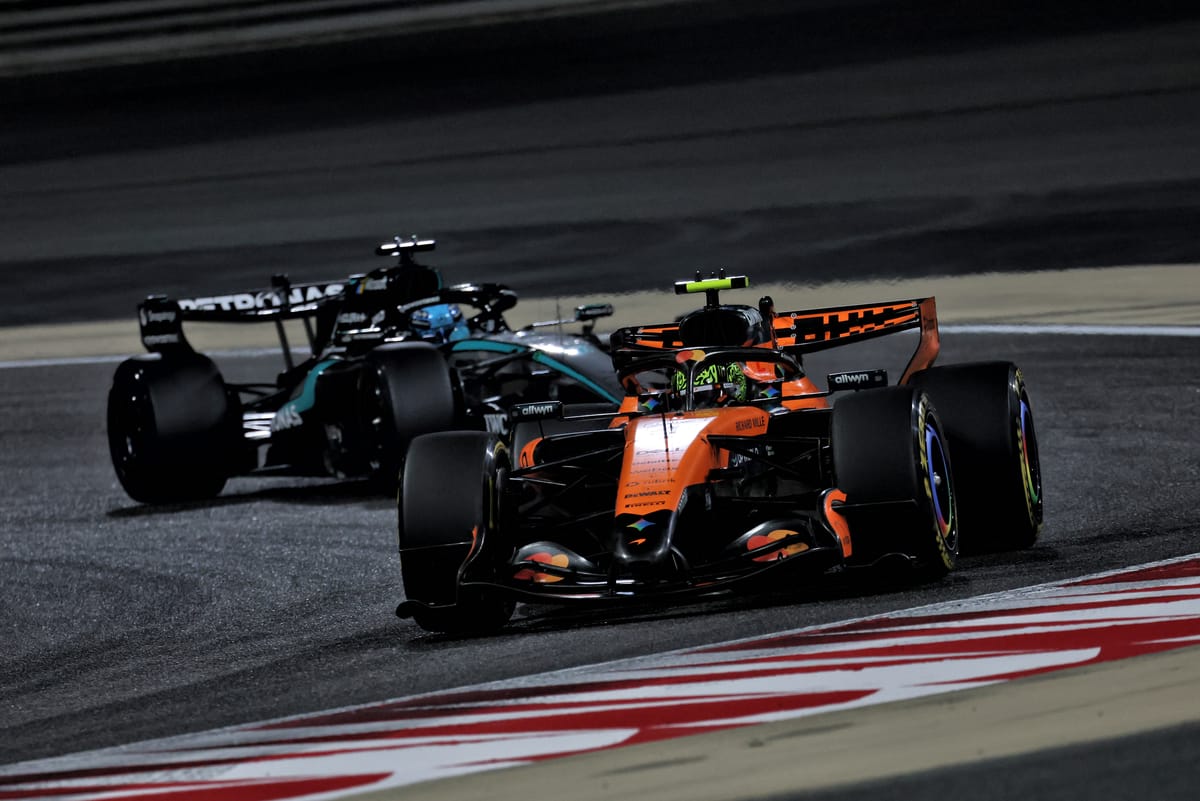
Mercedes customer teams to receive performance boost for Australian GP
McLaren, Alpine, and Williams will get a performance boost in Australia by switching to the same latest-spec Mercedes power unit used by the factory team. During testing, customers ran a slightly older engine for reliability, but F1 rules require full parity once the season starts, meaning all four Mercedes-powered teams will be on equal hardware from the first race.
Mercedes' customer teams—McLaren, Alpine, and Williams—are set for a performance uplift at the season-opening Australian Grand Prix as they receive the latest race-specification power unit for the first time. During pre-season testing, the works Mercedes team exclusively ran a more advanced development version of its engine, while customers used a proven but slightly older spec to ensure reliability and smooth testing programs. Formula 1 regulations mandate that customer teams must receive identical hardware to the works team once the season begins, locking in this upgrade for Melbourne.
Why it matters:
This engine parity rule is a cornerstone of F1's sporting fairness, ensuring customer teams are not at a fundamental performance disadvantage. For teams like McLaren, which showed strong pace in testing, receiving the latest Mercedes power unit could be the final piece needed to transform testing promise into real points-scoring potential right from the first race. It also validates Mercedes' complex logistical strategy to manage a four-team supply chain while finalizing its definitive 2026-spec engine.
The details:
- Dual-Specification Testing: To manage the immense challenge of supplying four teams with all-new power units under fresh regulations, Mercedes employed a two-pronged testing strategy. The works team ran the latest development version of the M17 E Performance engine, while customer teams used a slightly older, proven specification.
- Strategic Rationale: This approach allowed customer teams to focus entirely on their chassis and reliability programs without potential engine teething issues. For Mercedes, it simplified the logistics of manufacturing and validating the final race-spec parts for just one team before homologation.
- Regulatory Mandate: The technical regulations are explicit about parity. Appendix 4 states a manufacturer must submit one homologation dossier for all customers, and all power units must be "identical," "operated in the same way," and "run with identical software for PU control."
- Team Perspective: McLaren Team Principal Andrea Stella acknowledged the strategy, emphasizing reliability during testing was paramount. "The power unit we had during this test behaved extremely reliably and gave us the opportunity to do all the tests that we wanted to do," he stated, deferring detailed comment on hardware specs to Mercedes.
- Limited Variables: The only permitted differences between works and customer cars are fuel and engine oil specifications (if a customer prefers a different supplier) and power unit wiring loom design.
What's next:
All eyes will be on the performance data in Melbourne to see the tangible effect of the unified engine specification. For McLaren, Alpine, and Williams, the Australian GP weekend will be the first true benchmark of their 2026 packages with full factory-equivalent power. The successful execution of this phased introduction also sets a precedent for how Mercedes might manage its substantial customer supply chain throughout a season where in-season power unit development is heavily restricted.