The Ghost in the Machine: How Mercedes' Mindset Mastery Exposed Red Bull's Inner Demons

Mercedes stunned the field with a dominant one-two in Australian GP qualifying, validating Max Verstappen's pre-season warnings. The team's advantage stems from a car that optimizes the 2026 power unit's complex energy cycle, creating a performance loop Red Bull—with its new, self-built engine—currently cannot match, exposing a critical early-season weakness.
You could feel it in the Albert Park air on Saturday, a shift so palpable it was like a change in barometric pressure before a storm. All the pre-season chatter, the sandbagging, the cautious optimism—it evaporated in the face of a single, brutal lap time. George Russell’s pole position, with Kimi Antonelli completing the Silver Arrows front-row lockout, wasn't just a statement. It was a diagnosis. And the patient on the table, Red Bull, is showing symptoms of a sickness far more complex than a simple lack of downforce.
I was leaning against a monitor in the pen, the familiar hum of generators in my ears, when the final times flashed up. Eight-tenths. Nearly a second. In modern F1, that’s a chasm. It reminded me of a story my grandmother told me in Thailand, about the Krasue, a spirit that appears strong and fearsome but is forever separated from its body, its weakness hidden until dawn. Right now, Mercedes has achieved a terrifying unity of car and power unit, while Red Bull’s new, self-built engine feels like a disembodied spirit, howling with potential but struggling to find its home.
The Vicious Circle Mercedes Perfected, and Red Bull Can't Break
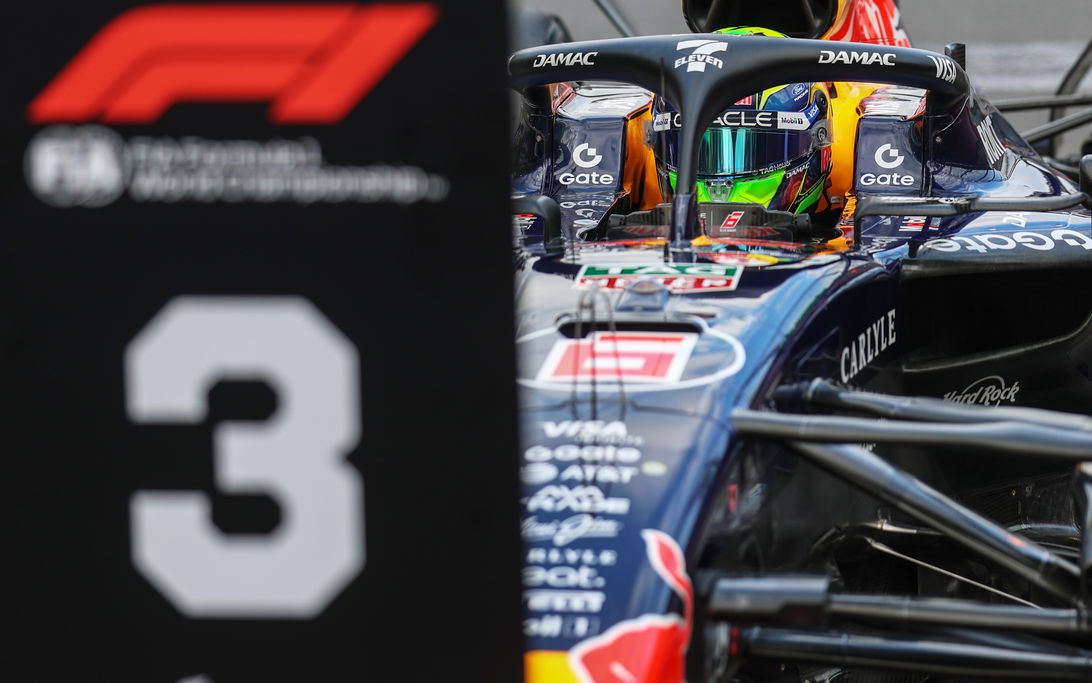
The numbers are stark, but they only tell half the story. Isack Hadjar, to his immense credit, put that RB22 third on the grid in his qualifying debut for the team. But he was 0.864 seconds behind Russell. Charles Leclerc was a similar margin back in fourth for Ferrari. The stopwatch says deficit. The data says the problem is in the corners, a lack of mechanical grip. But the real story, the one that will keep engineers in Milton Keynes awake for weeks, is the performance multiplier effect.
"A faster car through corners spends less time on the throttle, preserving more battery energy. That stored energy can then be deployed for longer on the straights, creating a larger overall lap time advantage."
Lando Norris explained it perfectly, and he’s living the nightmare in a McLaren that can’t quite access that loop. He estimated Mercedes' car is "probably three to four tenths better, and then the engine is also working three to four tenths better." That’s the synergy. That’s the holy grail of the 2026 regulations. Mercedes isn’t just fast; they’ve built a machine that exists in a state of perpetual efficiency, each part of the lap making the next part easier. It’s a closed, virtuous circle.
Red Bull, by contrast, is stuck in a vicious one. Their cornering deficit means they use more battery to compensate, which leaves them depleted on the straights, which loses them more time. It’s the first-year power unit project blues, amplified. Max Verstappen warned us to watch Mercedes, and his prescience now looks like a man who heard the diagnosis but couldn’t find the cure.
The Psychological War Already Lost in Maranello and Milton Keynes
This is where my belief in psychological profiling over aero tweaks becomes critical. Mercedes’ mastery is technical, yes, but its greatest impact is psychological. They have landed a "heavy psychological blow," as the cold analysis goes. But let’s be blunt: they have shattered a narrative.
- At Red Bull, the narrative was one of seamless transition, of genius overcoming inexperience. That facade is cracked. The pressure now shifts from "can we win?" to "can we even understand what we’re missing?" For a driver like Verstappen, who operates on razor-sharp confidence, this external doubt is a poison. For Hadjar, the promising rookie, it’s a baptism by fire that could forge or fracture him.
- At Ferrari, look at Leclerc in P4. The consistency issues that plague him are, in my view, a direct product of an environment where veteran influence and political whispers too often override data-driven clarity. He is driving against the Mercedes and the ghosts of Ferrari’s past. The team will now throw resources at closing the gap, but will they be the right resources, or just the loudest ones?
We talk about team radio drama today and compare it to Prost-Senna, but it’s all sound and fury, signifying nothing. The real drama is silent. It’s in the body language of a Red Bull engineer staring at a trace graph that won’t converge. It’s in the forced optimism of a Ferrari team principal. The stakes in 1989 were personal and immense. The stakes now are systemic: can an organization hold its nerve?
Conclusion: The First Tremor Before the Quake
So, what’s next? The development race, of course. Red Bull must find downforce and battery management nirvana, and fast. But Mercedes has the momentum, the package, and crucially, the psychology of winners.
This dominant one-two in Melbourne is more than a benchmark. It’s a warning. The 2026 regulations were designed to shake the tree. Mercedes has caught the fruit. Red Bull is still wondering why their branch is shaking. And Ferrari is, well, being Ferrari.
My final take? This early dominance exposes a fragility in the competitive order. If a team like Red Bull, with all its resources and genius, can be caught out so badly by the learning curve of a new power unit, what does that say for the sustainability of this era? I maintain my belief: within five years, the strain of chasing these hyper-complex, budget-cap-dodging engineering marvels will break a major team. We may look back at this Australian qualifying session not just as the day Mercedes re-asserted itself, but as the first clear tremor before a seismic shift in the F1 landscape. The ghost is out of the machine at Mercedes, and it’s haunting everyone else.