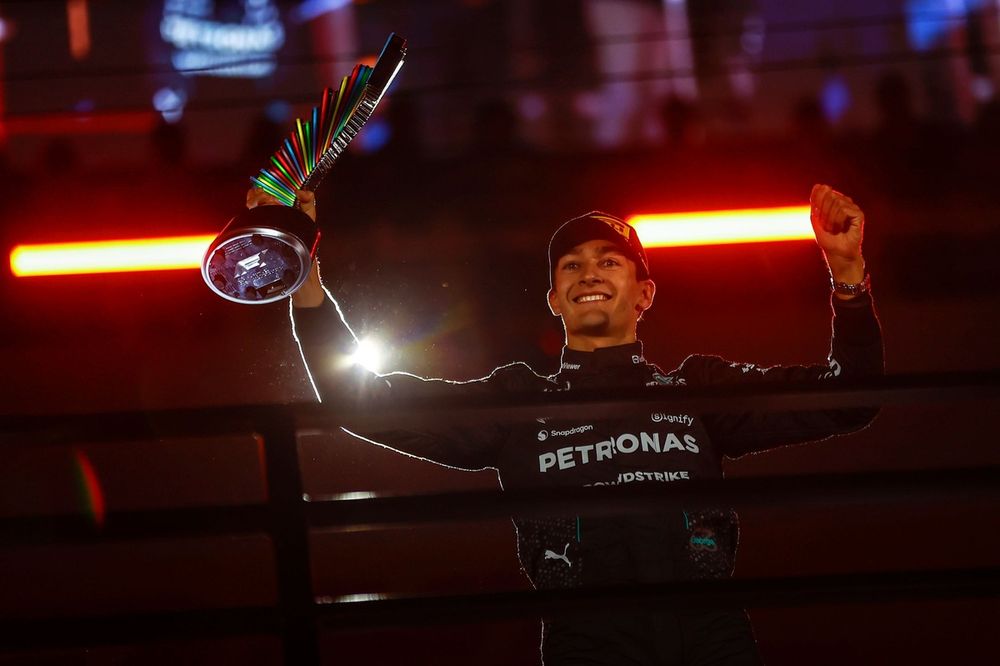
Mercedes downplays chances of repeat Las Vegas GP win
Mercedes is tempering expectations for a repeat victory at the Las Vegas Grand Prix, despite a dominant 1-2 finish last year. Team principal Toto Wolff and Deputy Technical Director Simone Resta cite key differences in this year's W16 car and potentially warmer race conditions as reasons for their cautious outlook, emphasizing the need for an open-minded approach rather than relying on past success.
Mercedes is downplaying expectations for a repeat of their dominant 1-2 finish at last year's Formula 1 Las Vegas Grand Prix. Despite George Russell and Lewis Hamilton's strong performance in 2023, team boss Toto Wolff and Deputy Technical Director Simone Resta caution that this year's W16 car has different characteristics and the unique conditions that favored them last year might not align as perfectly in 2024.
Why it matters:
Mercedes' cautious outlook highlights the unpredictable nature of modern F1, where minor changes in car design, track conditions, or ambient temperatures can significantly alter performance. For a team that has struggled with consistency in the ground-effect era, managing expectations is key to navigating races where their car's strengths may or may not align with the circuit's demands.
The Details:
- Last Year's Success Factors: The W15 performed exceptionally well in Las Vegas due to the smooth track surface and the chilly November night temperatures (14C at lights-out). These conditions mitigated the W15's rear suspension compliance issues and its tendency to overheat tires.
- Track Characteristics: The Las Vegas street circuit's layout—long straights followed by relatively slow corners—cools tires down, preventing them from reaching optimal operating temperature, a factor that Mercedes capitalized on last year.
- Changes for 2024: This year, the race start is two hours earlier (8 PM local time instead of 10 PM), meaning potentially higher ambient temperatures, which could reduce the advantage Mercedes had with tire cooling.
- W16's Different Performance Envelope: The W16, Mercedes' 2024 challenger, underwent fundamental alterations to address slow-corner understeer and generate more consistent downforce at higher ride heights. This has resulted in a different performance profile, making it difficult to predict strong circuits based on past results.
- A new rear-suspension geometry, trialed in Imola, had to be removed later in the season, indicating ongoing development challenges.
- Inconsistent Season Performance: Deputy Technical Director Simone Resta noted, "if you look at last year and this year, we won in all different races between last year and this year." This inconsistency makes direct comparisons or predictions for Las Vegas challenging.
Between the lines:
Mercedes' cautious rhetoric reflects their struggles to consistently adapt their cars to various track types and conditions since the start of the ground-effect era. While last year's Las Vegas victory showcased the W15's strengths under specific circumstances, the W16 has proven to be a different beast, making it harder for the team to pinpoint where it will genuinely excel.
What's next:
Mercedes will approach the Las Vegas Grand Prix with an open mind, focusing on maximizing performance on a new weekend rather than relying on past glories. The team's ability to quickly adapt the W16 to the unique, potentially warmer conditions will be critical in determining whether they can challenge at the front or face another challenging weekend on the F1 calendar.