Mercedes Drivers Calm 2026 F1 Power Harvesting Concerns
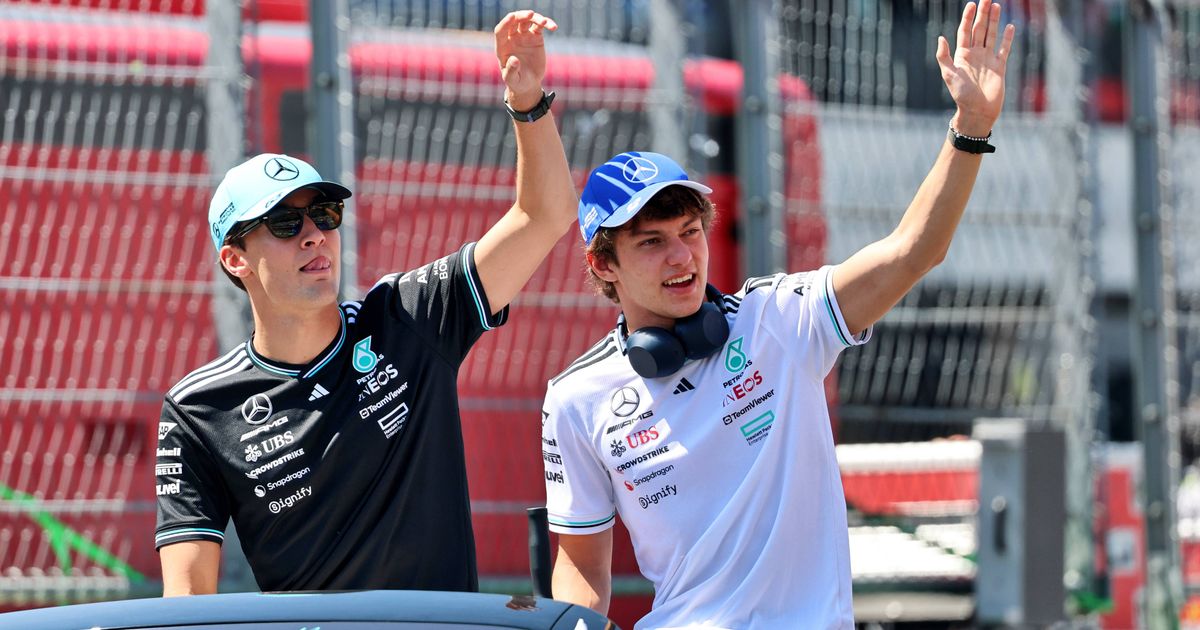
Mercedes F1 drivers George Russell and Kimi Antonelli have reassured that the much-discussed energy harvesting on straights for the 2026 cars feels manageable. Russell likened it to driving a car uphill, while Antonelli noted its circuit-dependent impact on overtaking, suggesting drivers will adapt to the new challenge.
Mercedes drivers George Russell and Kimi Antonelli have downplayed concerns about the dramatic harvesting of electrical energy on the straights in Formula 1's 2026 cars, describing the sensation as manageable and not particularly abnormal from the cockpit.
Why it matters:
Ahead of the major 2026 technical regulation overhaul, driver feedback is crucial in shaping the final rules and calming fears about potential negative impacts on the racing spectacle. Positive initial reactions from experienced drivers like Russell suggest the new power unit philosophy may be less disruptive to the driving experience than simulations indicated, which is vital for stakeholder and fan acceptance.
The details:
- Russell's Analogy: George Russell compared the feeling of harvesting energy under full throttle to driving a road car uphill. "You're still going flat out, but you're losing a bit of speed, and you may just downshift to give you a bit of extra revs to get up that hill," he explained. He noted the sensation felt "more bizarre in the simulator than it did in reality."
- Circuit Dependency: Rookie Kimi Antonelli echoed his teammate's overall view but highlighted that the effect will vary significantly by circuit. He used the Barcelona test as an example, where the subsequent energy boost was "extremely powerful," creating a "quite drastic" closing speed on the car ahead.
- Overtaking Consideration: Antonelli stressed that drivers will need to account for the system, especially during overtaking maneuvers on tracks where the speed differential from the boost is large. "You just need to be a bit more careful... because the closing speed with the boost being so powerful can be very big," he concluded.
The big picture:
The drivers' comments provide a critical, real-world counterpoint to theoretical concerns about the 2026 cars. Their feedback suggests that while the power delivery will be a new challenge requiring adaptation, it is not an insurmountable or dangerously unnatural element. This aligns with the FIA's goal to create more engaging racing through a pronounced manual deployment of a powerful electrical boost, making overtaking a more tactical maneuver.
Don't miss the next lap
Get the deep dives and technical analysis from the world of F1 delivered to your inbox twice a week.
Zero spam. Only high-octane analysis. Unsubscribe anytime.
Join the inner circle
Get the deep dives and technical analysis from the world of F1 delivered to your inbox twice a week.
Zero spam. Only high-octane analysis. Unsubscribe anytime.
Continue Reading
View More News