Mercedes Reveals Innovative 'Four-Element' Rear Wing in Bahrain F1 Testing
Mercedes debuted a clever 'four-element' rear wing design in Bahrain testing, using a small extension on the outer section to better manage airflow and reduce drag. This innovation exploits a regulatory gray area and could provide a performance advantage in balancing cornering downforce with straight-line speed.
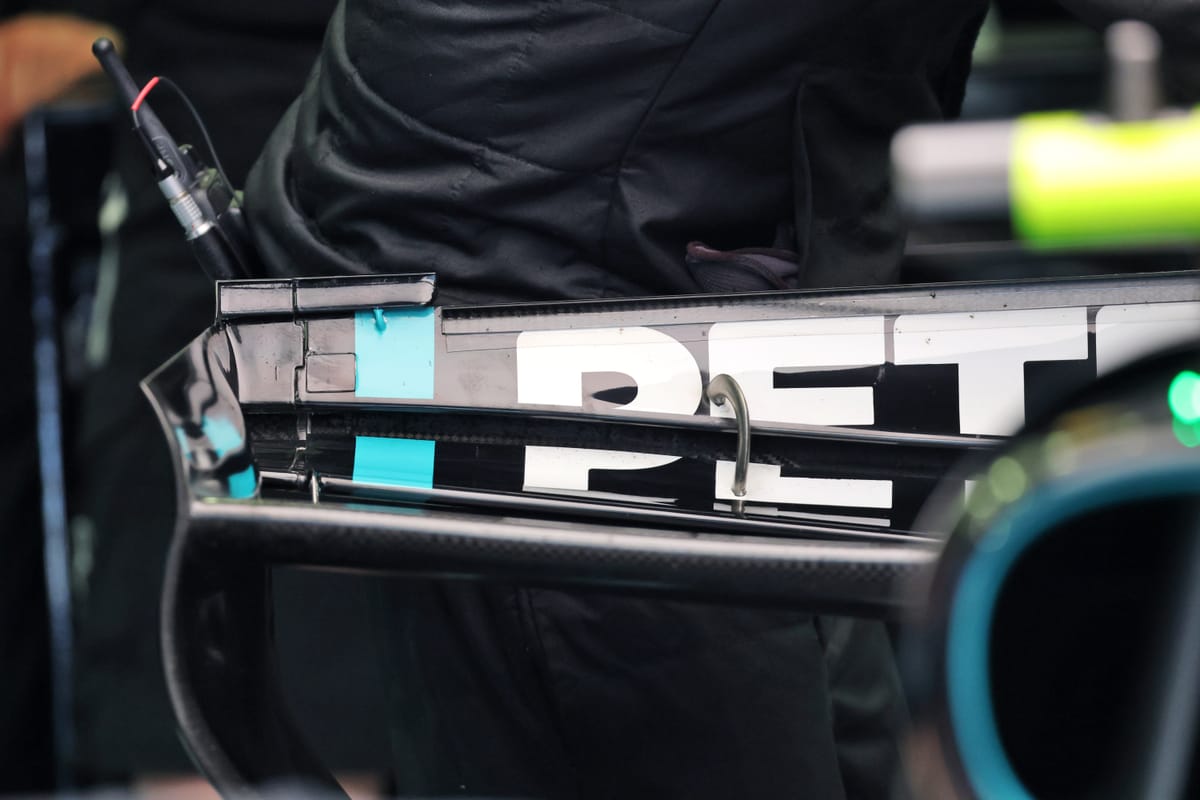
Mercedes unveiled a novel rear wing design on the final day of pre-season testing in Bahrain, featuring a small additional section that effectively creates a 'four-element' aerodynamic profile. This development aims to optimize downforce in corners while maximizing drag reduction on straights, representing a clever interpretation of the current technical regulations.
Why it matters:
In the relentless pursuit of marginal gains in Formula 1, aerodynamic efficiency is paramount. Mercedes's innovative approach to the rear wing—a critical component for both downforce and straight-line speed—signals an aggressive development push. If successful, this concept could provide a tangible performance advantage, especially on tracks requiring a compromise between cornering grip and top speed, and may prompt other teams to explore similar regulatory gray areas.
The Details:
- The new component appeared on the W17 on the third and final day of testing, after the car ran with a conventional wing for the first two days.
- The small extension is positioned on the outer section of the rear wing, an area prone to creating inefficient drag and airflow separation due to differing air speeds under the wing and inside the endplate.
- Aerodynamic Function: The design addresses the 'rooster tail' vortex, a rotating flow of air that creates drag without producing downforce. The new element helps manage this airflow, reducing separation risks in high-downforce cornering mode.
- Dual-Mode Benefit: In cornering configuration, the wing works to increase overall assembly performance by keeping airflow attached. When the wing's upper elements are flattened for straight-line speed (DRS mode), this specific section allows for a greater dump of drag, enhancing the car's top speed potential.
- Regulatory Context: While F1 rules stipulate a maximum of three main elements, the design likely exploits allowances for endplate detailing. The addition features a visible slot gap and a staggered Gurney flap along its trailing edge, technically categorizing it as part of the endplate structure rather than a primary wing element.
- Surprising Dimension: Analysts noted the rear wing's increased height, pushing the boundaries of the regulation box that defines maximum dimensions, indicating a confident and aggressive design philosophy from the team.
What's next:
The true efficacy of this design will be measured at the season-opening Bahrain Grand Prix. Teams will be scrutinizing its performance closely, and the FIA may be called upon to give a formal ruling on its legality if rivals challenge the interpretation. This innovation marks the opening salvo in the 2026 technical development war, with Mercedes signaling it is willing to explore bold concepts to regain a competitive edge.