Mercedes unveils innovative rear wing design in final F1 test
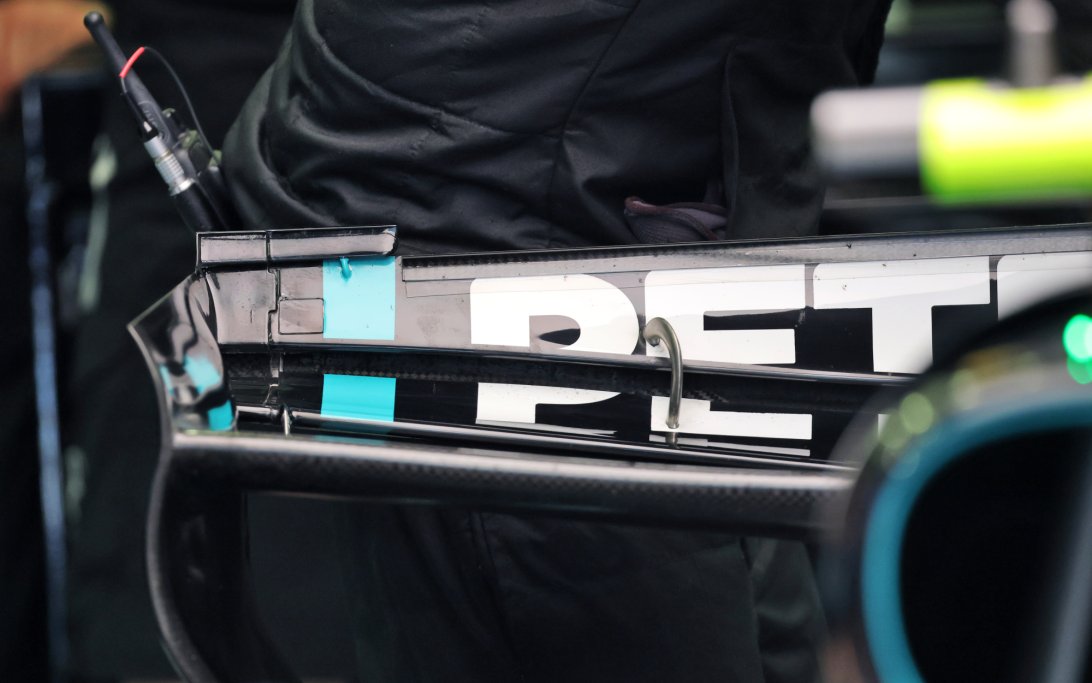
Mercedes revealed a sophisticated new rear wing on the final day of pre-season testing, featuring uniquely curved endplates and a small aerodynamic tab. The design aims to seamlessly manage the switch between low-drag and high-downforce modes, showcasing the team's focus on detailed aerodynamic gains for the 2025 F1 campaign.
Mercedes concluded Formula 1 pre-season testing by introducing a novel rear wing design on the W17, featuring sinuous endplates and a small aerodynamic tab. This intricate update is focused on refining the car's aerodynamic behavior during the crucial transition between its low-drag and high-downforce configurations, hinting at the team's technical direction for the 2025 season.
Why it matters:
After a period of performance fluctuations, Mercedes' late-testing innovation signals a proactive and detailed approach to car development. A refined rear wing that manages airflow more effectively can provide a tangible performance advantage, affecting straight-line speed, cornering stability, and tire management. This move demonstrates Mercedes' commitment to leaving no stone unturned in its quest to return to the front of the grid.
The Details:
- The updated specification, run by Kimi Antonelli, includes redesigned endplates with a pronounced outward flare on the upper edge.
- This sinuous design aims to improve airflow management around the fixed outer section of the flap, near the pivots of the car's active aerodynamics system.
- A key addition is a small, approximately two-centimeter-high aerodynamic tab positioned between the fixed flap and the movable element.
- This tab is fitted with a Gurney flap on its trailing edge, a small vertical lip used to manipulate airflow and pressure.
- The primary objective is twofold: to ensure stable drag reduction on straights and to create a smoother, less abrupt increase in rear downforce when the wing flap closes for corners.
- Mercedes confirmed that all new elements, despite their complex shapes, remain fully within the FIA's prescribed aerodynamic volume regulations, similar to a separate innovative wing design shown by Ferrari during testing.
What's next:
The true test of this development will come at the season-opening Bahrain Grand Prix, where its impact on lap time and drivability will be measured in direct competition. If successful, this rear wing could become a staple of Mercedes' 2025 package, representing a clever exploitation of the current regulations. It also sets an early benchmark for in-season aerodynamic development, as teams scrutinize and potentially iterate on this concept.
Don't miss the next lap
Get the deep dives and technical analysis from the world of F1 delivered to your inbox twice a week.
Zero spam. Only high-octane analysis. Unsubscribe anytime.
Join the inner circle
Get the deep dives and technical analysis from the world of F1 delivered to your inbox twice a week.
Zero spam. Only high-octane analysis. Unsubscribe anytime.
Continue Reading
View More News