Mercedes W17's Rear Slot Design Explained: Why It Complies with 2026 Regulations
The Mercedes W17's controversial rear slot is legal under 2026 regulations. It functions as a diffuser channel narrowing rather than a prohibited hole, aiding downforce with the return of rake.
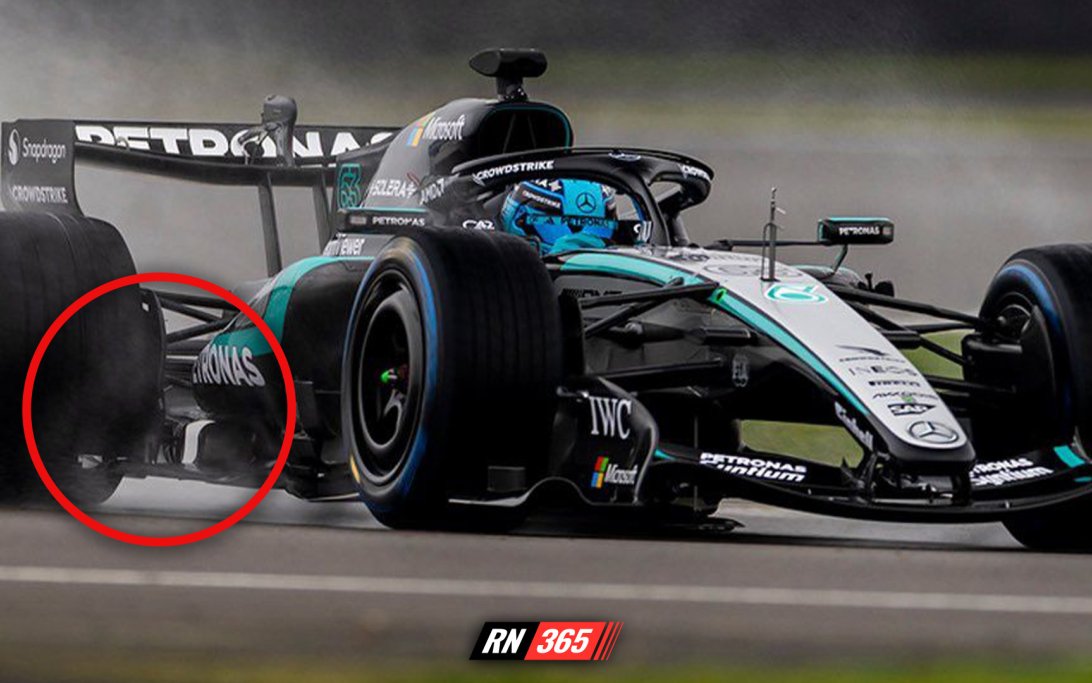
The intense debate regarding the legality of the Mercedes W17’s eye-catching rear vertical slot has been resolved: the design is entirely legal under the 2026 technical regulations. This feature is not a prohibited hole but a sophisticated aerodynamic manipulation that complies with the strict rules governing floor bodywork, specifically designed to optimize performance for the return of high-rake configurations.
Why it matters:
The 2026 regulatory shift marks a departure from the current ground effects era, where downforce relied on keeping the entire floor as low as possible. The return of "rake"—angling the car so the rear floor sits higher than the front—necessitates new solutions to manage airflow. Mercedes' solution provides a crucial method to channel and accelerate air through the diffuser, boosting downforce without falling foul of the FIA's stringent definitions regarding bodywork integrity.
The details:
- The "Dark" Floor Rule: Article 3.5 of the technical regulations dictates that the floor must have no holes when viewed from below. It must fully obscure internal reference volumes like the RS-Floor-Body and RV-DIFF, essentially appearing as a solid, "dark" surface to the scrutineer.
- Geometric Loophole: The Mercedes design circumvents the hole prohibition by creating a curvature in the edge of the diffuser. While it may look like a slot from certain angles, it does not pass through the vertical axis of the surface. It is effectively a narrowing of the diffuser channel.
- Functional Benefit: By mimicking the slot concepts seen in 2025, this feature speeds up the airflow passing centrally through the diffuser. This is essential for the 2026 cars, which require efficient airflow management to compensate for the higher rear stance mandated by the new rules.
The bottom line:
Mercedes has demonstrated a sharp interpretation of the 2026 rulebook by transforming a potential violation into a legal aerodynamic advantage. By defining the slot as a geometric curvature rather than a penetrating hole, the team has secured a potentially pivotal design concept for the upcoming season.
Don't miss the next lap
Get the deep dives and technical analysis from the world of F1 delivered to your inbox twice a week.
Zero spam. Only high-octane analysis. Unsubscribe anytime.
Join the inner circle
Get the deep dives and technical analysis from the world of F1 delivered to your inbox twice a week.
Zero spam. Only high-octane analysis. Unsubscribe anytime.
Continue Reading
View More News