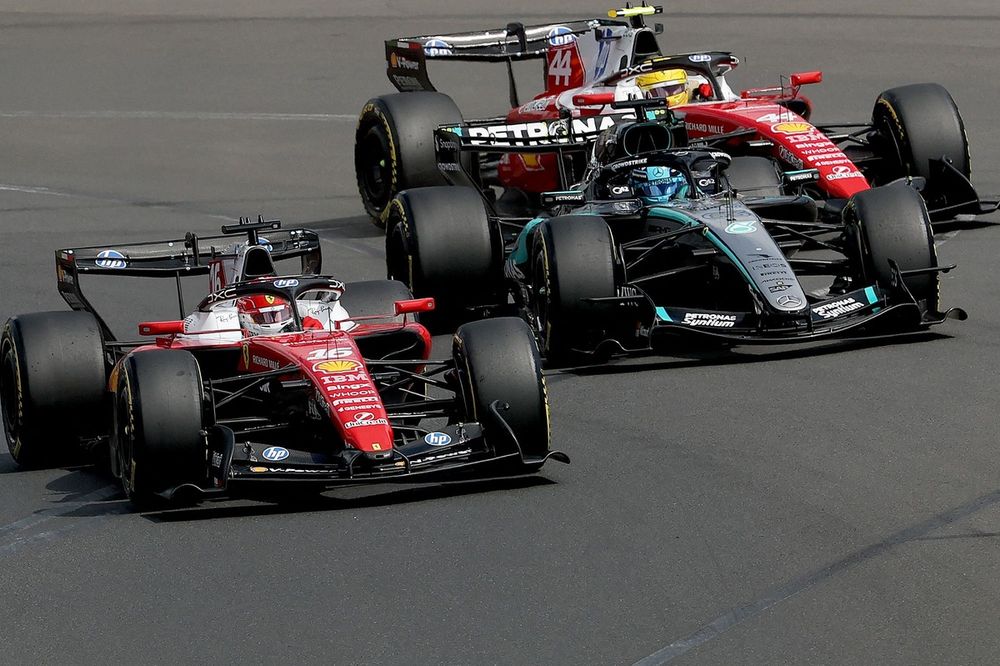
Montoya criticizes Ferrari's 'missed' VSC strategy in Australia
Juan Pablo Montoya slammed Ferrari's choice to not pit under Virtual Safety Car conditions in Australia, labeling it a familiar strategic blunder. Despite Charles Leclerc's lead from a great start, the call allowed pitting rivals to gain an advantage, though Ferrari still finished 3rd and 4th.
Former F1 driver Juan Pablo Montoya has sharply criticized Ferrari's decision not to pit either Charles Leclerc or Lewis Hamilton during Virtual Safety Car periods at the Australian Grand Prix, calling it a recurring strategic error. Despite a strong start that saw Leclerc take the lead, the choice to stay out while rivals pitted cost the team potential track position, though they ultimately secured a solid third and fourth-place finish.
Why it matters:
Ferrari's strategic decisions have been a point of intense scrutiny for years, often cited as a weakness compared to rivals like Mercedes and Red Bull. This latest incident, highlighted by a respected former driver, underscores the persistent pressure on the team's race operations to match the performance of their car and drivers, which is critical for converting strong qualifying results into race wins and mounting a championship challenge.
The details:
- Strong Start, Lost Opportunity: Leclerc made a brilliant start from fourth to take the lead from George Russell, with Hamilton climbing from seventh to third. The Ferraris were competitive early, with Leclerc battling Russell closely.
- The Critical VSC Moments: The race hinged on two Virtual Safety Car deployments. First for Isack Hadjar's stoppage and later for Valtteri Bottas's retirement. Most of the grid, including direct rivals, pitted for a cheap stop. Ferrari left both Leclerc and Hamilton out on track.
- Montoya's Frustration: Montoya, commentating for F1 TV, was blunt in his assessment. "Surprised but not surprised at Ferrari with the strategy," he said, suggesting they should have at least split strategies by pitting one car. He contrasted this with Mercedes, which he praised for clear and well-executed planning.
- A Recurring Theme: The Colombian driver connected the decision to past criticisms. "We always complained last year that Ferrari was never aggressive enough and they always missed a strategy, and in my opinion, they did again."
- Questioning the Logic: Montoya expressed disbelief that Ferrari could believe every other team was wrong. "At some point there's got to be somebody going, 'Are we really the odd man out?'... You have 10 smart teams and one missing it."
The big picture:
While the race ended with a double podium finish for the Scuderia—a strong result on paper—the strategic debate highlights the fine margins in modern F1. Mercedes's George Russell, who pitted under the first VSC, ultimately won the race. The incident shows that even with a fast car and exceptional drivers, operational decisions can be the difference between winning and settling for a 'good' points haul. For Ferrari, closing this perceived gap is as important as car development.
What's next:
The focus shifts to Suzuka for the Japanese Grand Prix, a high-degradation circuit where strategic flexibility and pit wall decisions are paramount. Ferrari will aim to build on the clear pace shown by the SF-24 in Melbourne while demonstrating more proactive and adaptable race management to silence critics and maximize their results.