Norris dismisses Verstappen's F1 rule criticism: 'He can retire if he wants'
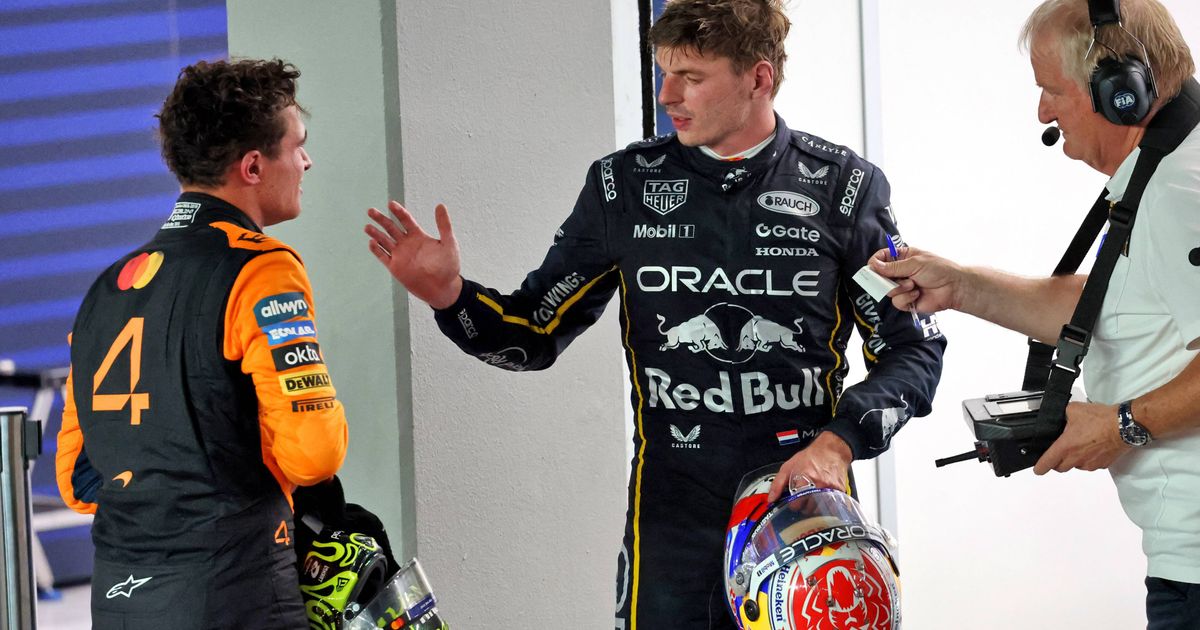
Lando Norris countered Max Verstappen's criticism of F1's 2026 rules, stating drivers are paid too well to complain and are free to retire if dissatisfied. He views adapting to new regulations as a fundamental and enjoyable challenge of the sport, highlighting a clear philosophical divide with the reigning champion over F1's future direction.
Lando Norris has bluntly dismissed Max Verstappen's criticism of Formula 1's upcoming 2026 regulations, suggesting the reigning champion is free to leave the sport if he's unhappy. The McLaren driver countered Verstappen's complaints by highlighting the privilege and challenge of their profession, framing adaptation to new rules as a core part of the job.
Why it matters:
This public exchange between two of the sport's top drivers reveals a fundamental philosophical split regarding F1's future direction. Verstappen, a purist vocal about driver enjoyment, represents a faction wary of technical evolution that may dilute the raw driving experience. Norris's pragmatic, 'adapt or leave' stance highlights a generational or team-based acceptance of the sport's constant state of flux, where engineering puzzles are part of the appeal. Their disagreement underscores a larger tension within F1 between entertainment, sustainability, and sporting purity.
The details:
- Norris's retort came in response to Verstappen labeling the 2026 cars "Formula E on steroids," criticizing them as less fun to drive and misaligned with his vision for F1.
- The McLaren champion firmly placed the onus on individual drivers, stating, "If he wants to retire, he can retire. Formula One changes all the time."
- He justified his position by pointing to the immense financial rewards, noting, "We get paid a stupid amount of money to drive, so you can't really complain at the end of the day."
- Norris reframed the regulatory challenge positively, calling it a "good, fun challenge for the engineers and for the drivers" that requires new approaches to driving style and energy management.
- While acknowledging the need to adapt, he concluded that the core benefits—driving fast cars and global travel—remain unchanged and are not worthy of complaint.
What's next:
The 2026 season will be the ultimate arbiter of this debate. Verstappen's continued participation hinges on whether Red Bull can build a competitive car that also meets his driver-centric criteria. Norris's stance will be tested as McLaren develops its own 2026 challenger. This public divergence sets the stage for a compelling narrative over the next two years: will the new regulations push a legendary talent towards an early exit, or will the competitive fire and engineering challenge, as Norris suggests, keep everyone invested in the evolving game? The driver market for 2026 and beyond will be the first concrete indicator of where the grid's loyalties lie.
Don't miss the next lap
Get the deep dives and technical analysis from the world of F1 delivered to your inbox twice a week.
Zero spam. Only high-octane analysis. Unsubscribe anytime.
Join the inner circle
Get the deep dives and technical analysis from the world of F1 delivered to your inbox twice a week.
Zero spam. Only high-octane analysis. Unsubscribe anytime.
Continue Reading
View More News