Oliver Bearman criticizes F1's qualifying energy rule change for Japanese GP
Haas F1 rookie Oliver Bearman has questioned the effectiveness of the FIA's new energy limit for qualifying in Japan, stating it slows the cars down. He argues for technical tweaks, like increasing the 'super clipping' harvest limit, and highlights how the current software-dependent systems punish drivers for pushing too hard, forcing an unnatural, conservative style in qualifying.
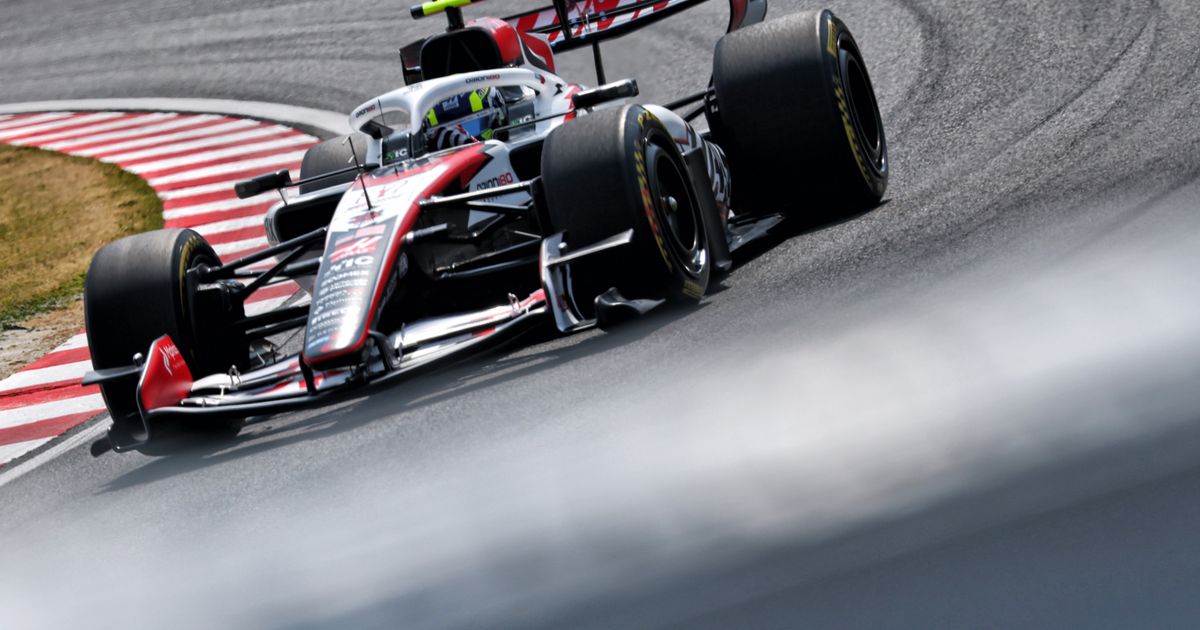
Haas driver Oliver Bearman has criticized the FIA's last-minute energy rule change for qualifying at the Japanese Grand Prix, arguing it makes the cars slower and that better technical solutions exist. The change reduces the maximum energy recharge limit from 9.0 to 8.0 megajoules (MJ) in an attempt to curb extreme 'lift and coast' tactics at the power-hungry Suzuka circuit. Bearman and Ferrari's Charles Leclerc are skeptical the adjustment will significantly improve the show, with the rookie suggesting it contradicts a driver's natural instinct to push to the limit in a qualifying lap.
Why it matters:
The debate highlights the ongoing struggle to balance the 2026 power unit regulations' sustainability goals with the core spectacle of Formula 1 qualifying. Drivers are increasingly vocal about how complex energy management software is forcing them to drive conservatively during what should be a flat-out session, potentially undermining the purity of the one-lap battle for grid position.
The details:
- The FIA's rule change aims to reduce severe energy management by lowering the allowed energy recharge per lap, theoretically minimizing the need for excessive 'lift and coast' (lifting off the throttle early) and 'super clipping' (harvesting energy at full throttle).
- Bearman contends the change simply makes the cars slower. While it may reduce lift-and-coast, drivers now spend more time with no deployable energy because they have 1 MJ less to use per lap.
- A proposed alternative: Bearman argues allowing 'super clipping' at the full -350kW harvest limit (currently capped at -250kW) would be a more effective fix, making energy recovery easier without compromising outright lap time.
- The China example: Bearman revealed the counterintuitive nature of the current systems, explaining that in Shanghai, pushing harder in corners on his final qualifying lap actually cost him two-tenths of a second because it confused the car's energy software.
- Software vs. instinct: The core issue is that power units heavily reliant on predictive software can be disrupted when a driver exceeds expected performance levels, punishing aggressive driving. This forces drivers to aim for consistent, sub-100% laps instead of attacking, which Bearman calls "against our nature."
What's next:
The immediate test will be how the revised energy limit plays out during qualifying at Suzuka, a circuit that heavily exposes any power unit weaknesses. Longer-term, Bearman's comments add to the growing driver feedback requesting more flexibility in the software parameters and less prescriptive energy management, urging continued collaboration with the FIA to refine the 2026 rules package before its full implementation.
Don't miss the next lap
Get the deep dives and technical analysis from the world of F1 delivered to your inbox twice a week.
Zero spam. Only high-octane analysis. Unsubscribe anytime.
Join the inner circle
Get the deep dives and technical analysis from the world of F1 delivered to your inbox twice a week.
Zero spam. Only high-octane analysis. Unsubscribe anytime.