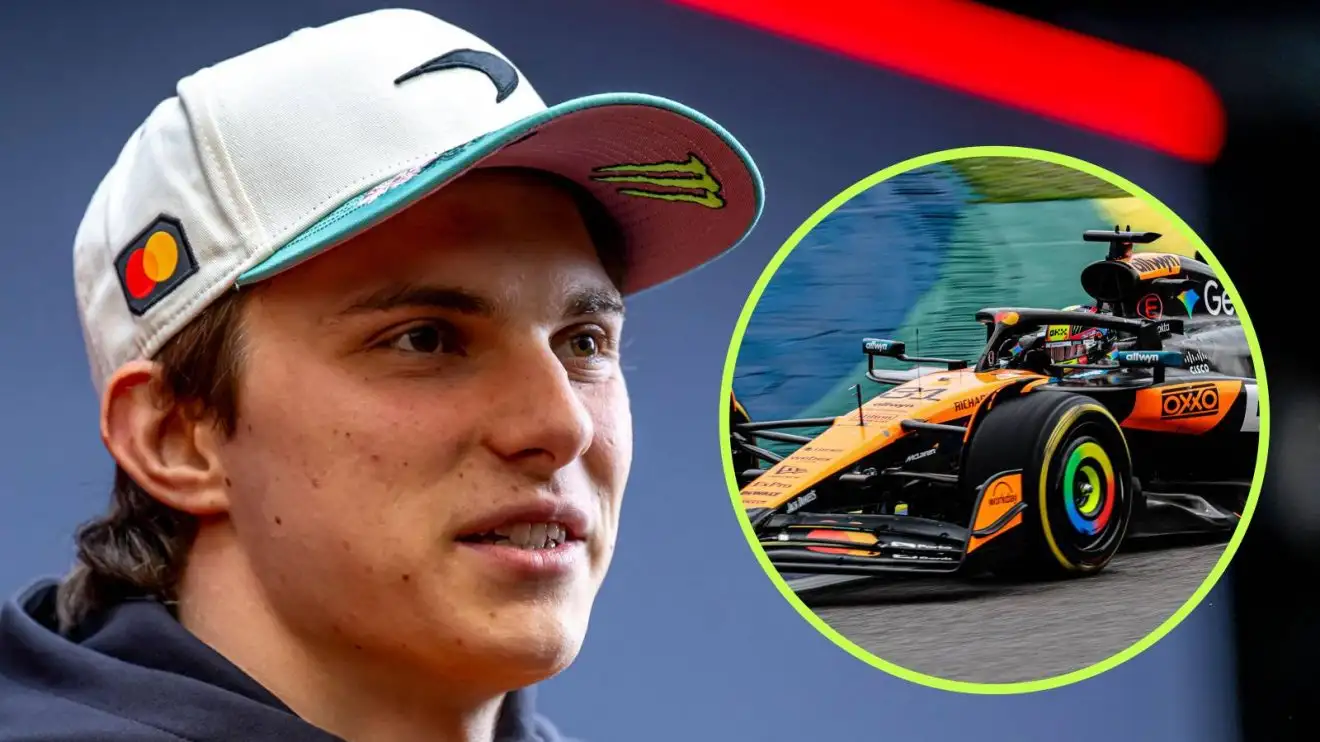
Oscar Piastri's Brazil Penalty Highlights McLaren's Cautious Approach in Title Fight
Oscar Piastri's penalty in Brazil for a collision on Lap 6 has reignited debate over F1's racing guidelines and McLaren's team dynamics. Deemed 'harsh' by his team principal Andrea Stella, the incident highlights Piastri's cautious approach in a championship where momentum is shifting. This penalty, and McLaren's acceptance of it, raises questions about how Piastri's 'polite' strategy is impacting his title aspirations compared to his more aggressive rivals.
Oscar Piastri's attempt to play it safe in Brazil, mirroring his championship bid, ultimately backfired on the Australian. While he saw an opportunity for a daring move to secure second place on the Lap 6 restart at Interlagos, stewards deemed him predominantly at fault for the three-wide collision that eliminated Ferrari's Charles Leclerc.
Why it matters:
After a recent shift in momentum favoring Lando Norris, Piastri's penalty in Brazil underscored his cautious approach, raising questions about whether McLaren's 'polite' management style truly serves his championship aspirations. This incident not only impacted his race but also highlighted the complexities of modern F1 racing guidelines and their interpretation.
The Details:
- Incident Breakdown: On Lap 6 at Interlagos, Piastri was penalized for a collision during a three-wide attempt to gain second place, leading to Charles Leclerc's retirement. Stewards ruled Piastri did not establish sufficient overlap with Antonelli's Mercedes "prior to and at the apex" of Turn 1, as per Driving Standard Guidelines.
- Stewards' Ruling: Piastri received a 10-second time penalty and two penalty points, being found wholly responsible for the clash, which also involved Kimi Antonelli's Mercedes.
- Controversial Call: McLaren team principal Andrea Stella and Leclerc both suggested shared blame between Piastri and Antonelli. Stella described the penalty as "definitely on the harsh side," arguing Piastri maintained his trajectory despite a lock-up and Antonelli was aware of Piastri's presence.
- McLaren's Reaction: Despite disagreement, McLaren opted not to challenge the ruling, with Stella stating, "We accept it, we move on." This reserved response contrasts with other teams' more aggressive appeals in similar situations.
- Championship Implications: The penalty minimized Piastri's championship damage but significantly shifted momentum towards Norris, echoing Juan Pablo Montoya's controversial penalty in the 2003 US Grand Prix, which compromised his title bid.
Between the lines:
Piastri's cautious approach, seemingly aimed at avoiding conflict and playing the 'team game' within McLaren's polite environment, might be inadvertently hindering his championship prospects. His unwillingness to publicly express unhappiness or for McLaren to fight aggressively on his behalf, especially when another driver (Norris) is also in contention, suggests a dynamic where individual ambition may be secondary to team harmony. This contrasts sharply with drivers like Max Verstappen, who consistently assert their will and demand aggressive support from their teams.
What's next:
With Piastri's title bid seemingly fading, the focus will be on whether he can adapt his approach or if McLaren's current team dynamic will continue to shape his performance. His ability to seize back initiative and potentially push for a more assertive stance within the team could define his future championship challenges. While McLaren's management has fostered a remarkably calm environment, it remains to be seen if this politeness ultimately serves Piastri's individual aspirations for a championship victory.