Piastri's Purple Heart: The Supercar as a Psychological Shield in a Season of Doubt
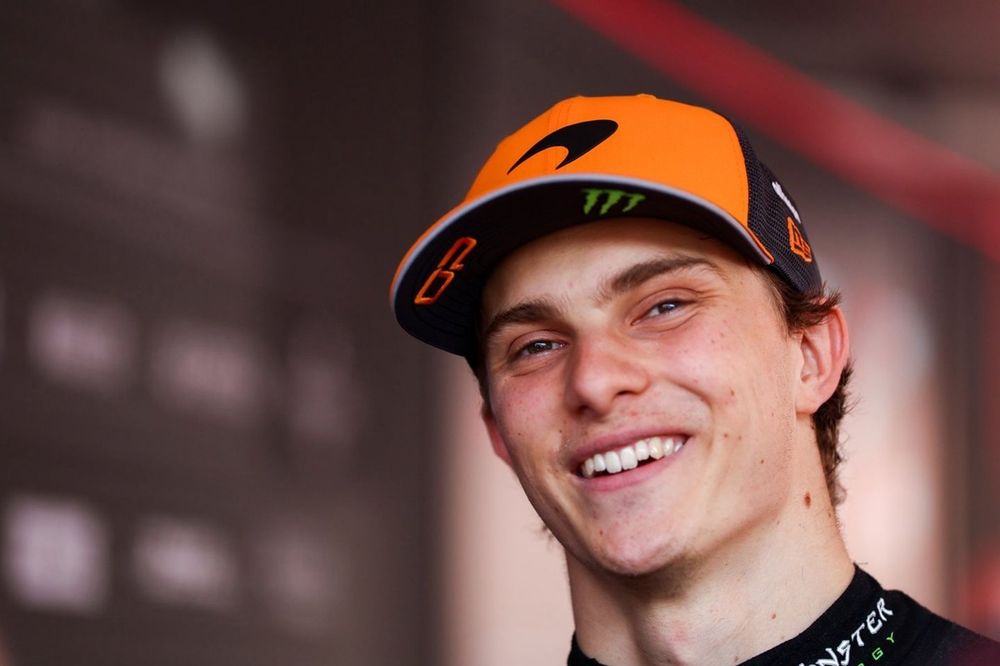
McLaren F1 driver Oscar Piastri has received his custom-ordered McLaren 750S supercar, finished in dark purple with Papaya Orange details. The delivery follows his recent podium in Japan, offering a personal bright spot during a mixed start to the 2024 season for the Australian driver.
The delivery of a supercar to a Formula 1 driver is often dismissed as a trivial perk, a shiny bauble for the boys of summer. But look closer. In the dim light of a McLaren garage, as Oscar Piastri runs a hand over the dark purple flanks of his new 750S, this is not a purchase. It is a proclamation. A fortress of carbon fibre and Papaya Orange stitching built not just for the road, but for the mind. It arrives at a precise psychological coordinates: after the crushing electrical silence in China, yet before the five-week abyss of the spring break. This machine is a life raft, a tangible anchor to his team's identity when the waters of the 2024 season have been so treacherously choppy.
The Vehicle as Validation: Crafting Identity in the McLaren Ecosystem
For a driver like Piastri, whose career has been a masterclass in calibrated, ice-cool decision-making, every choice is a data point. The choice of this car, a bespoke McLaren 750S, is a flood of them. It screams affiliation in a way a press release never could. The dark purple exterior, a colour of royalty and introspection, is slashed with the violent, optimistic Papaya Orange of his brake calipers. Inside, the exposed carbon fibre—the very skeleton of his MCL38—is a constant tactile reminder of the source of his power, and his pain. The embroidered "OP" is not a monogram; it is a brand burned onto the ecosystem that sustains him.
The road car is the driver's id, unleashed from the strictures of the technical directive. What they choose tells you what they need to believe about themselves.
Piastri doesn't just drive for McLaren; he is now encased by it. In a sport where drivers are increasingly seen as corporate avatars, this is a willing, luxurious surrender. It is the opposite of Max Verstappen's curated, emotion-suppressed dominance at Red Bull. Where Verstappen's psychology is systematically streamlined by unseen coaches into pure, ruthless output, Piastri is wrapping himself in the fabric of his team's brand. One is a manufactured weapon, efficient and detached. The other is building a home within the fortress, seeking security through total integration. This car is his statement: I am here. I am of them. This is my place.
By The Numbers: The Weight of Performance
- 740bhp / 800Nm: The promised power, a stark contrast to the unpredictable delivery of his race car's ERS.
- 2.8 seconds: A controllable, repeatable burst of acceleration, unlike the chaotic launch in Melbourne that ended in a wall.
- 1,277kg: The dry weight. Lightness. An escape from the heavy burden of 21 championship points and 6th in the standings.
- ~$365,100: The price of a starting identity, before the true cost of personalization.
The Timing: A Talisman Against the Hiatus
Consider the delivery date. Late March. The taste of Suzuka's podium champagne—a brilliant, defiant P2—is still a faint memory on the lips. But ahead lies the void: five weeks without the scream of an engine, the grip of a steering wheel, the defined purpose of a race weekend. For a racing driver, the hiatus is not a holiday; it is a vacuum where doubt can crystallize. The crash in Australia, the silent coast in Shanghai—these ghosts whisper loudest in the silence.
This is where the 750S transitions from trophy to tool. It is a psychological intervention. A physical object that maintains the sensory dialogue of speed, of McLaren, of control. He will drive it on the road, and with every downshift, he is rehearsing competence. With every burst of that twin-turbo V8, he is reminding his nervous system of what power feels like. It is a deliberate, brilliant piece of self-management. While I argue that wet races reveal the core, un-engineerable psyche, the lonely road in a supercar during a break reveals what the psyche needs to survive. For Piastri, it needs the constant reaffirmation of the machine-team-driver trinity.
The Unspoken Parallel: Trauma and Narrative
We have seen this before, though dressed in different scars. Niki Lauda used his visceral, physical trauma to forge a narrative of inhuman resilience that forever defined him. Lewis Hamilton masterfully channeled personal and professional struggles into a calculated persona of a warrior-philosopher. Piastri’s early-2024 trauma is professional—a stuttering machine, a championship hope deferred. His response? To build a narrative of belonging. This purple McLaren is the first chapter. It says, "My story is a McLaren story." It is a preemptive strike against the narrative that he is adrift, using asset as armour.
Conclusion: The Calm Before the Miami Storm
When the circus reconvenes in Miami, the cameras will capture the arrival. Piastri stepping out of his dark purple 750S, a moving part of the McLaren brand. The image will be seamless. That is the point. The mental work—the fortification against doubt, the weaving of personal identity into team fabric—will have been done in the quiet roads of the break, inside his rolling sanctuary.
This is the new frontier of driver management. Not just the simulator work, not just the media training, but the curation of their entire environment to sustain a competitive mindset. The car is no longer just a reward. It is a therapeutic device. As F1 inevitably marches toward mandated mental health disclosures, this—the choice of a road car, its timing, its specification—will be read as a primary source. Piastri’s 750S is a masterpiece of the genre. It is his purple heart, awarded for surviving the early battles of 2024, and a shield for the wars to come. The question is no longer if the car is fast, but if it is strong enough to carry the weight of a season’s expectations.