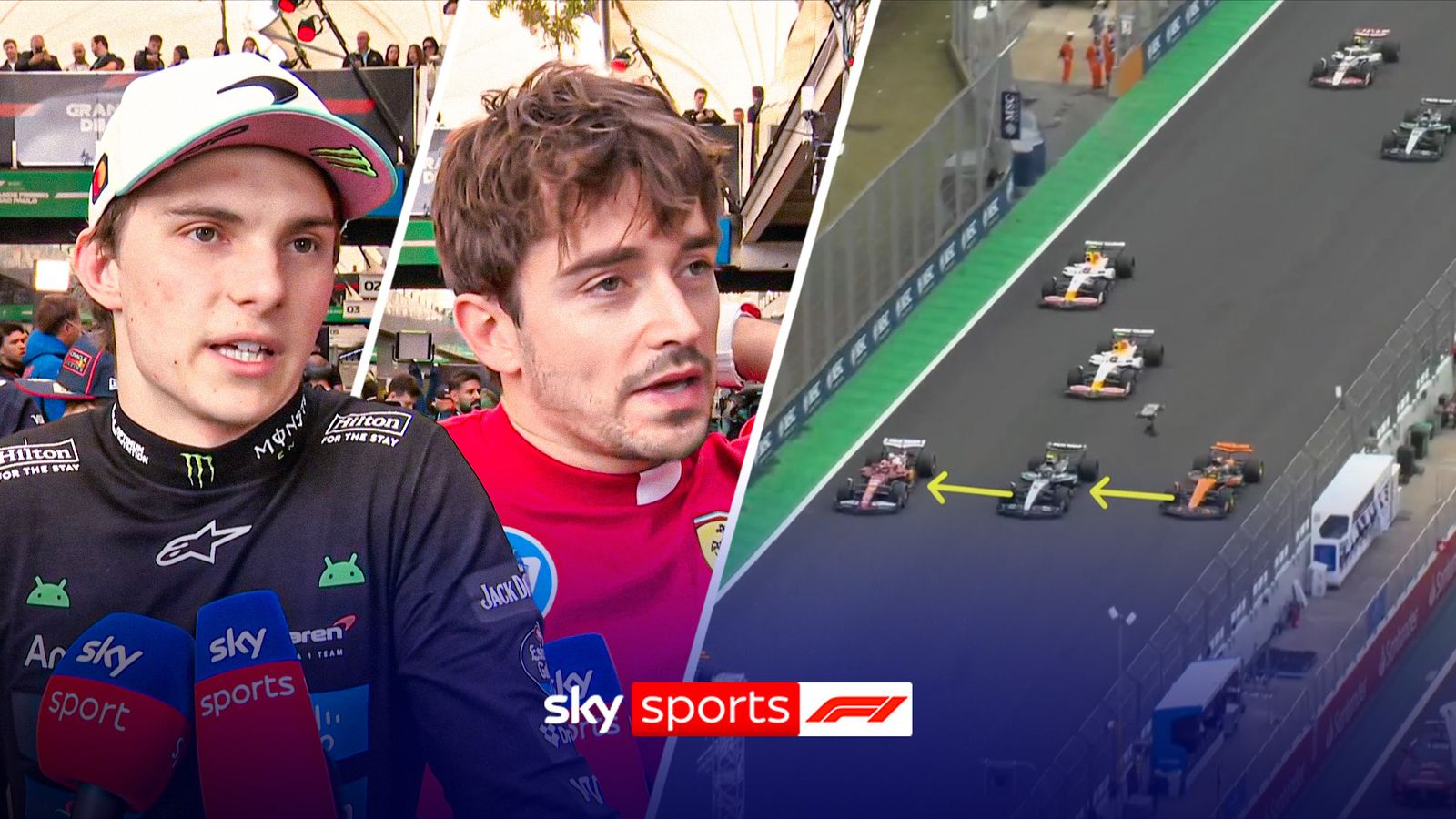
Piastri, Leclerc, Antonelli & SkyPad Analyze Safety Car Restart Collision
A detailed SkyPad analysis by Karun Chandhok and Jamie Chadwick unraveled the opening lap collision involving Oscar Piastri, Kimi Antonelli, and Charles Leclerc during a safety car restart. The incident, which saw all three drivers caught in a tight battle, highlighted the challenges of close-quarter racing post-safety car. Driver reactions and detailed analysis of car positioning and intent offer crucial insights into the chaotic nature of such moments in Formula 1.
A significant incident unfolded on the opening lap involving Oscar Piastri, Kimi Antonelli, and Charles Leclerc during a safety car restart. Karun Chandhok and Jamie Chadwick utilized SkyPad analysis to dissect the collision, offering insights into the chain of events and the drivers' perspectives.
Why it matters:
This type of first-lap, safety car restart incident is crucial to analyze for several reasons. Understanding the dynamics of such collisions helps in driver education, race control decisions, and even future track design modifications. It also provides valuable context for fans and commentators to better appreciate the complexities and pressures faced by drivers in high-stakes racing scenarios.
The Details:
- The Incident: The collision occurred shortly after a safety car restart, a period notoriously challenging for drivers as they navigate varying speeds and jostle for position. Piastri, Antonelli, and Leclerc were involved in a tight battle that culminated in contact.
- SkyPad Analysis: Karun Chandhok and Jamie Chadwick, both experienced racing figures, used the SkyPad to provide a forensic breakdown of the crash. This technology allows for detailed visual examination of telemetry, driver lines, and car positioning.
- Key Findings from Analysis: The analysis focused on several critical aspects:
- Driver Intent and Reaction Times: Examining how each driver reacted to the cars around them and their immediate intentions at the restart.
- Car Positioning: The SkyPad allowed for precise measurement of the cars' proximity and angles of approach into the corner where the contact occurred.
- Visibility and Blind Spots: Acknowledging the inherent challenges of visibility in F1 cars, especially in close-quarter racing.
- Impact Points: Detailed review of where the contact was made on each car and the potential forces involved.
- Driver Reactions: Post-incident, all three drivers involved shared their perspectives:
- Oscar Piastri: Expressed frustration, believing he was in a strong position before being impacted.
- Kimi Antonelli: Admitted to misjudging the space, taking responsibility for his part in the incident.
- Charles Leclerc: Emphasized the difficulty of predicting driver actions during chaotic restarts and the unfortunate nature of being caught in the middle.
The Big Picture:
First-lap incidents, particularly after safety car periods, are a recurring theme in F1. The combination of cold tires, bunched-up cars, and drivers eager to gain positions creates a volatile environment. Race control often reviews such incidents for potential penalties, emphasizing the fine line between aggressive racing and avoidable contact. This incident, like many before it, underscores the extreme demands placed on F1 drivers to make split-second decisions under immense pressure while maintaining control of their high-performance machines.
What's next:
Race stewards will likely review the SkyPad analysis and driver testimonies to determine if any penalties are warranted. More broadly, such incidents serve as crucial learning opportunities for teams and drivers to refine their strategies for safety car restarts. The analysis by Chandhok and Chadwick provides valuable insights that could inform future race craft and contribute to ongoing discussions about track safety and racing regulations. This incident will undoubtedly be a talking point leading into the next race, as teams and drivers reflect on how to best navigate these high-risk moments.