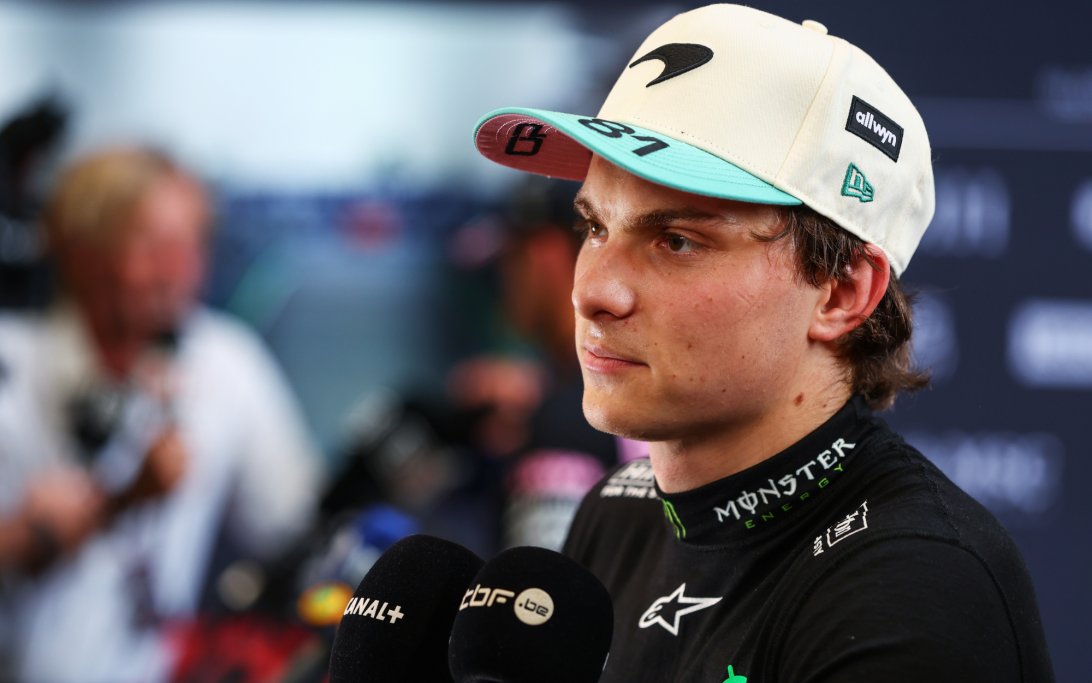
Piastri 'Struggling to Understand' São Paulo Penalty After Collision
Oscar Piastri expressed bewilderment over his 10-second penalty in the São Paulo Grand Prix for a collision involving Kimi Antonelli and Charles Leclerc. He felt the punishment was 'tough,' having done all he could to avoid the incident. The ruling impacted his championship standing, a decision even Charles Leclerc publicly questioned.
Oscar Piastri expressed significant confusion and frustration over the 10-second time penalty he received at the São Paulo Grand Prix, calling the punishment "tough" given his efforts to avoid a collision. The incident, involving Piastri, Kimi Antonelli, and Charles Leclerc on Lap 6, saw the McLaren driver deemed at fault, a decision that impacted his championship standing.
Why it matters:
Piastri's penalty for the Turn 1 incident after a Safety Car restart cost him valuable points, dropping him further behind Lando Norris in the title fight. Such decisions not only affect a driver's immediate race result but can also have significant psychological impacts and influence championship dynamics, especially when the driver and other key figures, like Charles Leclerc, disagree with the stewards' ruling.
The Details:
- The Incident: On Lap 6, following a Safety Car restart, Piastri attempted an overtake on the inside of both Antonelli and Leclerc at Turn 1. He was alongside Antonelli, who had Leclerc on his outside.
- The Squeeze: Antonelli squeezed Piastri, leading to Piastri locking up his wheels. This contact caused Piastri to hit Antonelli, which in turn sent Antonelli into Leclerc.
- The Penalty: Stewards judged Piastri at fault and issued a 10-second time penalty. This penalty resulted in Piastri finishing fifth, 24 points behind Lando Norris in the championship.
- Driver Reactions: Charles Leclerc notably defended Piastri, suggesting Antonelli was primarily at fault. Piastri himself stated, "I don't know. No matter what way you look at that, I'm not sure where I'm supposed to go."
- Piastri's Justification: He argued that given his strong run into Turn 1 and being fully alongside, backing out was not an option. He also asserted that going deeper into the corner would have been too ambitious. "The fact that I was as far left as I could have gone makes it tough," he concluded.
Between the lines:
This incident highlights the fine margins and often contentious nature of racing decisions, particularly in close-quarters racing after restarts. Drivers are expected to avoid collisions, but when multiple cars are vying for position simultaneously, determining sole culpability can be incredibly challenging. Piastri's remarks, coupled with Leclerc's defense, suggest a potential disconnect between the drivers' on-track perspective and the stewards' interpretation of the rules, emphasizing the ongoing debate around racing incidents and penalties in F1.
What's next:
While the São Paulo penalty is settled, the discussion surrounding such racing incidents will undoubtedly continue. Teams and drivers will likely use this as a case study in future briefings to understand the limits of aggressive racing and the expectations for avoiding contact. For Piastri, the focus shifts to subsequent races to recover lost ground in the championship, hoping for clearer rulings in future racing scenarios.