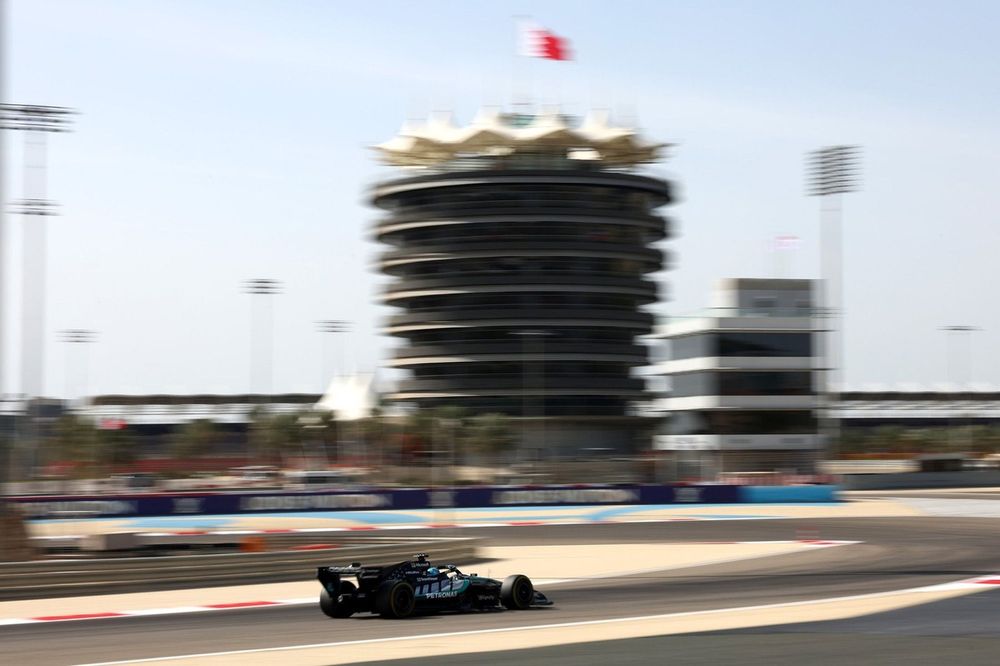
Pirelli to conduct first-ever wet weather tyre test in Bahrain with McLaren and Mercedes
Pirelli is organizing its first wet-weather tyre test in Bahrain this February, using mule cars from McLaren and Mercedes. The test aims to improve intermediate and full wet compounds on an abrasive track, gathering data that could influence whether F1 adopts a single 'super intermediate' tyre for the 2026 regulations.
Pirelli will hold its inaugural wet weather tyre test at the Bahrain International Circuit in late February, utilizing mule cars from McLaren and Mercedes. This marks a strategic shift from traditional European sprinkler-equipped tracks to a more abrasive and demanding venue, aiming to gather crucial data on intermediate and full wet compounds under severe conditions.
Why it matters:
Wet weather performance has been a persistent critique of Pirelli's Formula 1 tyres. Conducting tests on a high-severity circuit like Bahrain provides invaluable data that could lead to significant improvements in wet-weather racing, potentially enhancing safety by reducing spray and improving driver visibility—a key focus of the 2026 regulations.
The details:
- The test will use "2026-like" mule cars from McLaren and Mercedes, as Pirelli lacks substantial data from the current generation of cars under the new regulations.
- Bahrain was chosen for its abrasive surface, which is notoriously tough on tyres, offering conditions that European circuits like Paul Ricard or Fiorano cannot replicate.
- Track officials are developing a specialized sprinkler system to ensure consistent water levels across the circuit, a critical factor for obtaining reliable comparative data on different tyre prototypes.
- Pirelli's Motorsport Director, Mario Isola, emphasized the track's cooperation, noting their willingness to accommodate "strange requests" to facilitate this unprecedented test.
The big picture:
This test is part of a broader evaluation to decide the future of wet-weather tyres in F1. Pirelli is considering whether to maintain the traditional intermediate and full wet split or develop a single "super intermediate" compound. The decision hinges on data regarding spray reduction and overall performance under the 2026 aerodynamic regulations, which feature narrower tyres and redesigned diffusers aimed at improving visibility in the rain.
What's next:
The data from Bahrain will directly influence Pirelli's development direction for the 2026 wet-weather tyres. Isola noted that actual wet running during the early 2024 season would be beneficial to gather real-world information on spray levels. The outcome of this test could determine if F1 moves towards a simplified, single wet-weather compound or refines the existing two-type system.