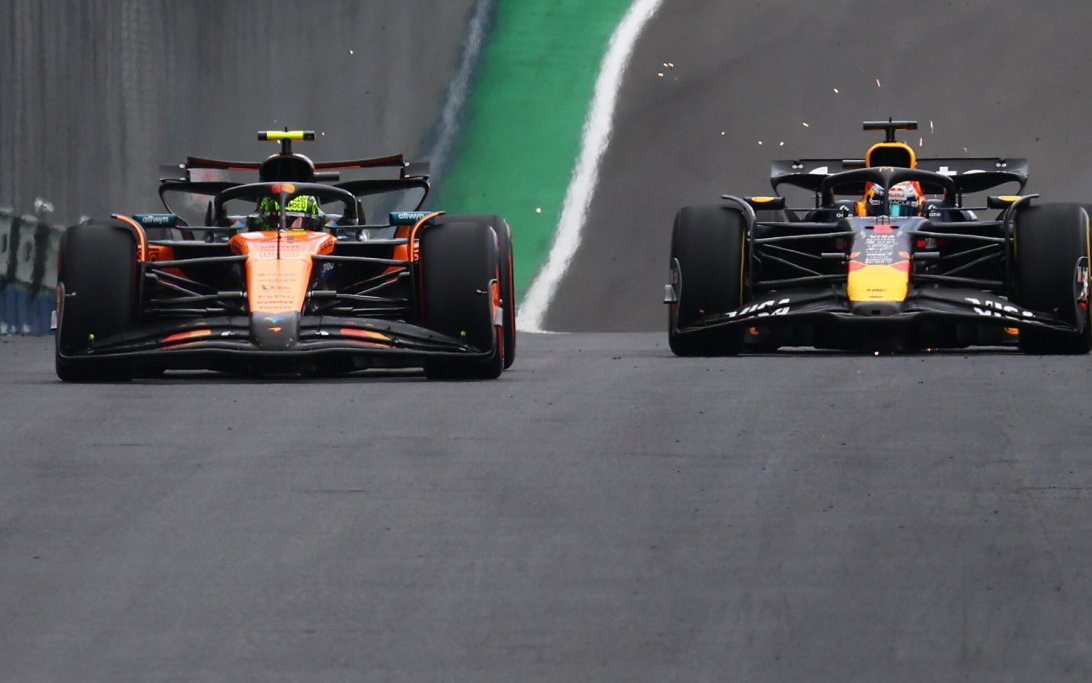
Red Bull Defends Engine Change Amid McLaren's FIA Inquiry
Red Bull's chief engineer, Paul Monaghan, has firmly defended the team's decision to change Max Verstappen's power unit in Brazil after McLaren questioned the move with the FIA. Monaghan dismissed McLaren's inquiry as a "hand grenade" tactic, asserting that Red Bull's actions were legitimate and compliant with regulations, despite ambiguity around whether such changes fall under the F1 cost cap. The outcome of the FIA's assessment could set a precedent for future engine management strategies.
Red Bull's chief engineer, Paul Monaghan, has hit back at McLaren's inquiry to the FIA regarding Max Verstappen's engine change in Brazil, calling it a "hand grenade" move. Despite the controversy, Monaghan asserted the team's actions were legitimate and defensible, believing no penalties will be incurred. McLaren questioned whether the new power unit fell under F1's cost cap, sparking a debate about engine change regulations.
Why it matters:
This inquiry highlights the intense scrutiny and competitive tactics within Formula 1, especially concerning technical regulations and the cost cap. How the FIA interprets and rules on such matters can set precedents for future engine changes, potentially impacting team strategies and championship battles. Red Bull's strong defense signals their confidence in their compliance, but the ambiguity in regulations leaves room for contention.
The Details:
- Engine Change: After Max Verstappen was eliminated in Q1 at the Sao Paulo Grand Prix, Red Bull fitted an entirely new power unit for him, a move that typically only incurs a grid penalty.
- McLaren's Inquiry: McLaren subsequently inquired with the FIA to determine if Red Bull's fresh engine would be covered under the F1 cost cap. This raised questions about the regulatory framework surrounding engine changes for performance reasons.
- Regulatory Ambiguity: The current regulations do not provide a definitive answer on whether a new engine taken purely for performance reasons counts against the cost cap. Teams currently operate under general guidance from the FIA.
- Red Bull's Justification: Monaghan stated that Red Bull's decision was based on advice from Honda, their engine supplier. He emphasized that engine changes are not unusual in F1, citing examples from 2022 to the present season.
- Defensibility: Monaghan expressed confidence that Red Bull's actions are legitimate and defensible, expecting no penalties at the end of the year. He declined to elaborate on the specific financial treatment of the engine change, deferring to finance regulation experts.
Between the lines:
This incident underscores the strategic use of regulations by rival teams to gain an advantage or put pressure on competitors. While Monaghan's refusal to discuss the financial aspects directly might raise eyebrows, it aligns with a typical F1 team's approach to avoid speculating on complex financial regulations. The "hand grenade" analogy perfectly encapsulates the aggressive nature of inter-team politics in F1, where every technical decision can become a battleground.
What's next:
The FIA's response to McLaren's inquiry will be crucial. A clear ruling could tighten the loopholes in cost cap regulations regarding engine changes, forcing teams to be more transparent or cautious in their strategic decisions. Red Bull will continue to defend its position, and the outcome could influence how teams approach engine management and cost cap compliance in future seasons.