Red Bull Downplays 2026 Hype, Claims Fourth-Best Car
Red Bull technical chief Pierre Wache has countered rival claims of the team's early dominance, stating data shows Ferrari, Mercedes, and McLaren are currently ahead. While praising its new engine's reliability, Red Bull identifies traction and cornering as weaknesses, all while navigating pre-season political games over engine regulations.
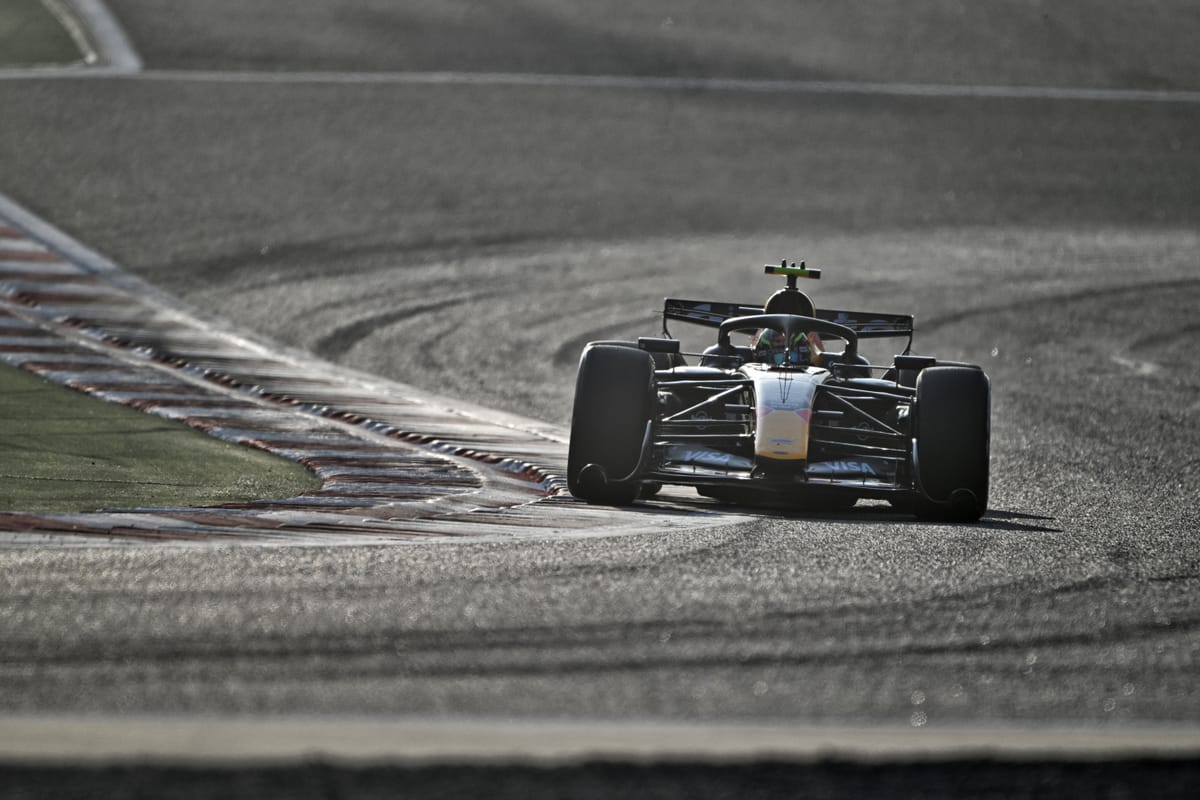
Red Bull has dismissed rival claims that it is the early benchmark for the 2026 Formula 1 season, with technical director Pierre Wache stating the team believes it currently has, at best, the fourth-fastest car behind Ferrari, Mercedes, and McLaren. This comes despite Mercedes boss Toto Wolff suggesting Red Bull's new in-house power unit was giving it a significant straight-line advantage.
Why it matters:
The public downplaying of performance sets the stage for the season's opening psychological games, where teams often talk down their own prospects. Red Bull's stance is particularly significant as it involves the first-ever engine from its new Red Bull Powertrains division. If their assessment is accurate, it signals a much tighter competitive field at the front than many anticipated, challenging the narrative of Red Bull's immediate dominance with its new power unit.
The details:
- Technical director Pierre Wache laughed off Toto Wolff's "benchmark" comment, calling it part of the typical pre-season "game" teams play.
- Based on Red Bull's own data analysis from Bahrain testing, Wache identified Ferrari, Mercedes, and McLaren as appearing faster.
- Performance Gaps: Wache pointed to low-speed traction and medium-speed corners as specific weaknesses where rivals are stronger, areas that were also a concern in the previous season.
- Engine Praise: Despite the overall car assessment, Wache praised the "fantastic job" of the new engine division, highlighting its reliability and mileage during testing as a "massive achievement" for a start-up operation.
- Strategic Context: The comments come ahead of a crucial F1 Commission meeting, where discussions on engine compression ratio tests—a topic dividing the grid—are scheduled. Red Bull is aligned with Audi, Ferrari, and Honda in seeking changes to the procedure.
What's next:
The true pecking order will only become clear at the season-opening Australian Grand Prix in Melbourne, when all cars run in identical qualifying conditions. Wache admitted Red Bull's analysis "could be wrong" until then. Furthermore, like several teams, Red Bull faces the challenge of removing weight to meet the new, lighter 2026 regulations, another key area of development before the season begins in earnest.
Don't miss the next lap
Get the deep dives and technical analysis from the world of F1 delivered to your inbox twice a week.
Zero spam. Only high-octane analysis. Unsubscribe anytime.
Join the inner circle
Get the deep dives and technical analysis from the world of F1 delivered to your inbox twice a week.
Zero spam. Only high-octane analysis. Unsubscribe anytime.
Continue Reading
View More News