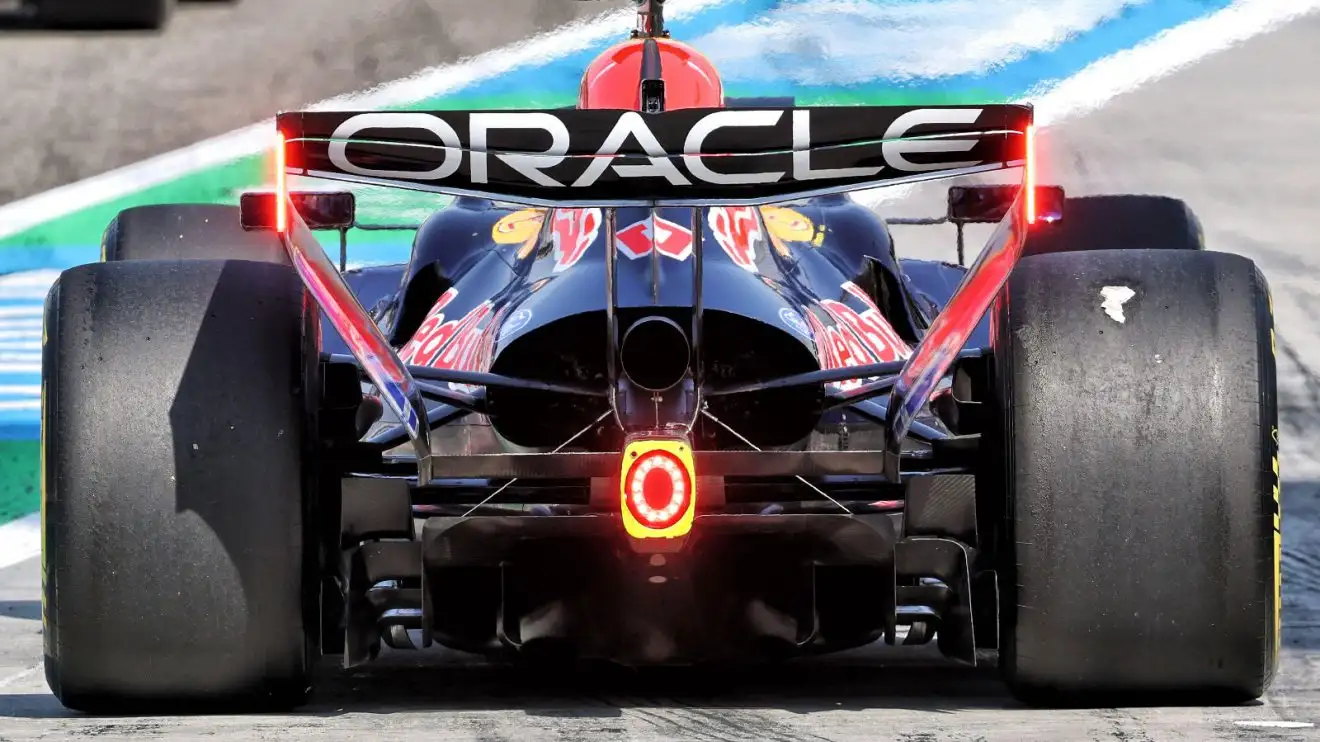
Red Bull downplays Wolff's 'benchmark' engine claim as pre-season gamesmanship
Red Bull's technical chief has shrugged off Mercedes boss Toto Wolff's claim that their new in-house engine is the 'benchmark,' calling it typical F1 pre-season gamesmanship. While acknowledging the impressive feat of creating a competitive power unit in under four years, he noted rivals matched their early testing advantage.
Red Bull technical director Pierre Wache has dismissed Mercedes boss Toto Wolff's praise of the team's new in-house power unit as part of Formula 1's pre-season political "game," despite Wolff labeling the Red Bull Powertrains engine the current benchmark. Wache acknowledged the impressive achievement of building a competitive engine in just three-and-a-half years but insisted rivals have already matched or surpassed their initial energy deployment advantage seen in testing.
Why it matters:
Public praise between rival teams, especially regarding new technical regulations, is often a strategic maneuver in F1's high-stakes psychological warfare. Wolff's comments come amid a tense political backdrop over engine regulations, with Mercedes facing a potential supermajority vote over a compression ratio interpretation. Downplaying performance sets expectations and can deflect regulatory scrutiny.
The details:
- Toto Wolff stated Red Bull's new car and power unit are "the benchmark at the moment," highlighting their strong energy deployment on straights over multiple laps.
- Red Bull's Pierre Wache countered, calling such praise a "game" played in the paddock and crediting his engine team's work as a "startup" achieving a "massive" feat in a short timeframe.
- Wache revealed that while Red Bull may have had an energy deployment edge on the first day of Bahrain testing, rivals had caught up and were "a little bit better" by the final day.
- The political context involves Mercedes HPP exploiting a loophole in compression ratio wording, which has sparked concern among rivals and could lead to a regulation tweak before the March 1 homologation deadline.
The big picture:
The 2026 season introduces a major new power unit formula with a 50/50 split between electrical and combustion power using sustainable fuels. Mercedes dominated the last engine regulation change in 2014, and pre-season speculation is intense. Red Bull's successful transition to a fully independent power unit manufacturer marks a significant shift in the team's operational capability and long-term strategy.
What's next:
All eyes are on the final pre-season test and the opening race in Bahrain, where true performance will begin to emerge from the shadow of political posturing. The outcome of the potential supermajority vote on Mercedes' compression ratio interpretation could have technical implications before the season even starts. Red Bull will aim to prove its new powertrains division is a genuine frontrunner, not just a pre-season talking point.