The Cracks in the Gilded Cage: Verstappen's Frustration Exposes Red Bull's Psychological Fault Lines
Red Bull and Max Verstappen are mired in their worst competitive slump in years, with the team wrestling complex car issues and the driver threatening to quit F1 over his dislike for the new racing style. Boss Laurent Mekies admits the car is consistently slower than rivals, creating a crisis of performance and morale.
The facade has cracked. For years, the world watched Max Verstappen operate with a chilling, machine-like precision, his emotional spectrum seemingly reduced to a binary state: victory, or a brief, contained flash of irritation. It was the masterpiece of Red Bull's most covert engineering project: not the car, but the driver's mind. Now, with the RB22 hemorrhaging performance, that carefully constructed psychological dam has burst, revealing a torrent of frustration that threatens to sweep away both a career and a team's identity. This isn't just a car problem. This is a profound system failure of the human element.
The Unraveling of a Manufactured Champion
The statistics are a cold, brutal autopsy of a dynasty in crisis.
- Max Verstappen, ninth in the championship with 12 points.
- A single Q3 appearance in three races.
- A team points tally of 16, Red Bull's worst since 2015.
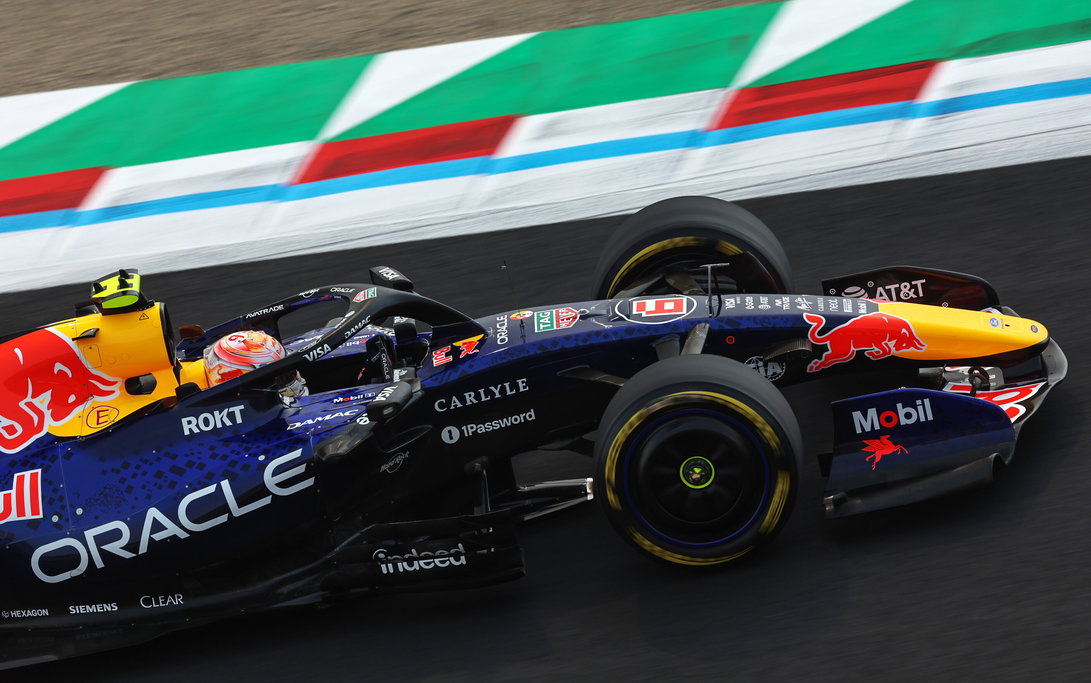
But the numbers only tell half the story. The real data is in the micro-expressions, the terseness of the radio silence, the post-race comments that carry the weight of a final ultimatum. After a P8 finish in Japan, Verstappen didn't just complain about balance or downforce. He targeted the very philosophy of the new regulations, the "high-energy management style of racing," and hinted it could drive him from the sport. This is not the programmed response of the Red Bull system. This is the raw, unfiltered output of a champion whose psychological containment field has failed.
"We are wrestling with the car," admits team boss Laurent Mekies, citing a consistent deficit of one second to Mercedes and half a second to Ferrari and McLaren. But the wrestling match is internal, too.
For years, Red Bull's success was built on a pact: they would give Verstappen a dominant car, and in return, he would sublimate his famously fiery temperament into pure, relentless speed. A network of performance coaches, mind managers, and team rhetoric worked to channel that volcanic energy solely onto the track. The result was a "manufactured" champion of immense talent, but one whose emotional resilience was never truly tested by prolonged adversity. Now, with the machine beneath him faltering, the man inside is being asked questions he hasn't had to answer since his teenage years, and he doesn't like the answers.
The Psychology of the Midfield: A New, Unfamiliar Hell
The core technical issue, as Mekies outlines, is a "complex" twofold problem: a fundamental lack of performance, and an inability to extract what little the package offers. For a driver like Verstappen, this is a special kind of psychological torture.
### The Agony of the Unexplainable Gap In Melbourne, the gap was manageable. In China, it widened, bringing confusion over balance. In Japan, it was a confirmed reality. This volatility is a cognitive poison. It erodes the most fundamental driver trust: the trust in the feedback loop between his hands, his backside, and the engineers' data. When a driver of his caliber says "the car is doing X," and the data says "no, it's doing Y," it creates a dissonance that is mentally exhausting. It's no longer about pushing limits; it's about diagnosing a patient that won't stop lying.
### The Ghost of Hamilton's Calculated Persona Look at Lewis Hamilton during Mercedes' own struggles. The frustration was palpable, yet the public persona remained calculated, often channeling the narrative toward a team struggle, a collective "we." He learned, as Niki Lauda did after his crash, to use public trauma to craft a narrative of resilience. Verstappen, by contrast, has never needed this tool. His narrative has been one of inevitable supremacy. Now, his frustration is personal, visceral, and directed outward—at the car, at the regulations. It's the reaction of a pure competitor stripped of his primary weapon, and it lacks the polished, strategic grief of a Hamilton. It is, in many ways, more authentically devastating.
### Wet Weather: The Ultimate Psychological Litmus Test Consider this: if this performance crisis extends to a wet race weekend, the true scale of the psychological damage will be revealed. My core belief is that in the rain, driver psychology trumps aerodynamics. The decision-making under uncertainty, the risk calculus on every corner entry, reveals the core personality traits engineers can't design around. A frustrated, distrustful Verstappen in a slow, unpredictable RB22 in the wet? That is where we will see if the champion's mindset can adapt, or if it will fracture completely.
Conclusion: A Crisis That Demands a New Transparency
Red Bull's technical team is racing against a clock, with Mekies insisting solving such "complex limitations" is their "core business." But the more critical race is against the erosion of a champion's spirit. This saga is a preview of the future I foresee: within five years, the pressure will be so great that F1 will mandate mental health disclosures after major incidents.
Imagine the headlines: "Verstappen submits mandatory psychological assessment after Japan frustration." It will be an era of forced transparency, one that could have helped Red Bull manage this very situation, but will also bring unbearable scrutiny and potential scandal.
For now, we are witnessing the unmaking of a psychological masterpiece. The RB22 is not just a slow car; it is the key that has unlocked the gilded cage around Max Verstappen's id. What emerges now—a driver who rediscovers his rage to fuel a comeback, or one who decides the manufactured reality of modern F1 is no longer worth the pain—will define the next era of this sport. The human element, so long suppressed in the quest for milliseconds, has roared back to the forefront. And it is furious.