Red Bull revives classic Newey cooling trick, Aston Martin misses detail
Analysis of F1 testing in Bahrain reveals Red Bull has subtly refined a classic Adrian Newey aerodynamic trick on its RB22, using redesigned rear cooling vents to better manage airflow and generate load—a detail rival Aston Martin's design appears to miss, highlighting Red Bull's continued pursuit of marginal gains.
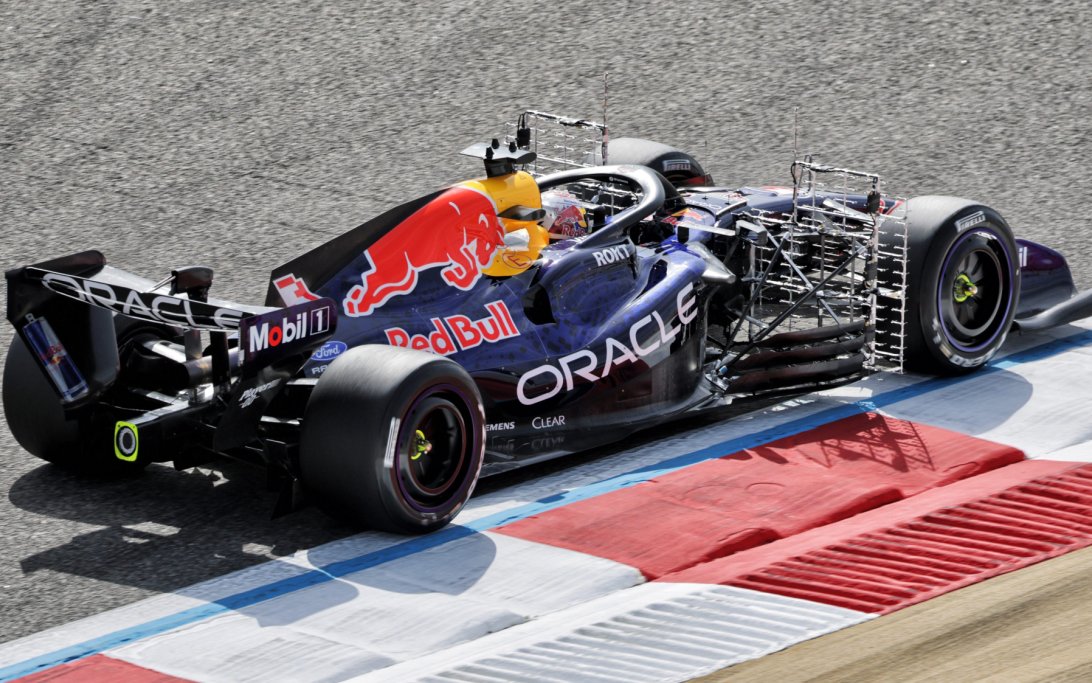
Red Bull's RB22 has incorporated a refined version of an old Adrian Newey aerodynamic trick involving its rear cooling vents, a subtle detail Aston Martin appears to have overlooked in its own design. The modification optimizes airflow management and boosts aerodynamic load, showcasing Red Bull's continued attention to intricate detail even in a stable regulatory period.
Why it matters:
In a tightly competitive field, marginal gains from clever aerodynamic solutions can define performance differences. Red Bull's application of a proven concept from its dominant Vettel era demonstrates a depth of technical knowledge and an ability to effectively integrate complex airflow management, which could contribute to maintaining a performance advantage.
The details:
- Technical analysis of the Bahrain test reveals a key difference in the rear cooling vent design between Red Bull and Aston Martin.
- While both teams feature vents at the base of the halo for heat dissipation, Red Bull's have been carefully re-profiled to better integrate with the car's rear bodywork.
- The Newey Trick: The primary function extends beyond cooling. The design exploits the hot air outflow to enhance the Coanda effect, drawing airflow tightly along the bodywork toward the rear axle.
- This technique was a hallmark of Newey's designs during Sebastian Vettel's championship-winning years at Red Bull.
- Aerodynamic Benefit: Positioning the vents away from the rear axle reduces potential turbulence for the rear wing. More importantly, the speed and density difference of the exiting hot air creates a low-pressure zone.
- This low pressure actively pulls ambient temperature airflow along the car's body, increasing overall aerodynamic load and improving extraction from the car's floor.
- Aston Martin's Approach: In contrast, Aston Martin's solution, while featuring a reduced engine cover volume, uses a different internal ducting structure for its sidepods and lacks the same level of integrated profiling on the vent itself.
What's next:
True performance comparisons will only become clear after the second test next week, when teams bring more aggressive development packages. However, Red Bull's early display of sophisticated detail-oriented design, coupled with reports of a strong and reliable power unit, sets a formidable baseline. If this foundational efficiency is confirmed, it allows the team to focus development on optimizing the car's dynamics around a stable and powerful platform, a significant head start in the development race.
Don't miss the next lap
Get the deep dives and technical analysis from the world of F1 delivered to your inbox twice a week.
Zero spam. Only high-octane analysis. Unsubscribe anytime.
Join the inner circle
Get the deep dives and technical analysis from the world of F1 delivered to your inbox twice a week.
Zero spam. Only high-octane analysis. Unsubscribe anytime.