The Ghost in the Machine: Tsunoda's Fiery Omen and the Unseen Pressures of a Reserve Driver

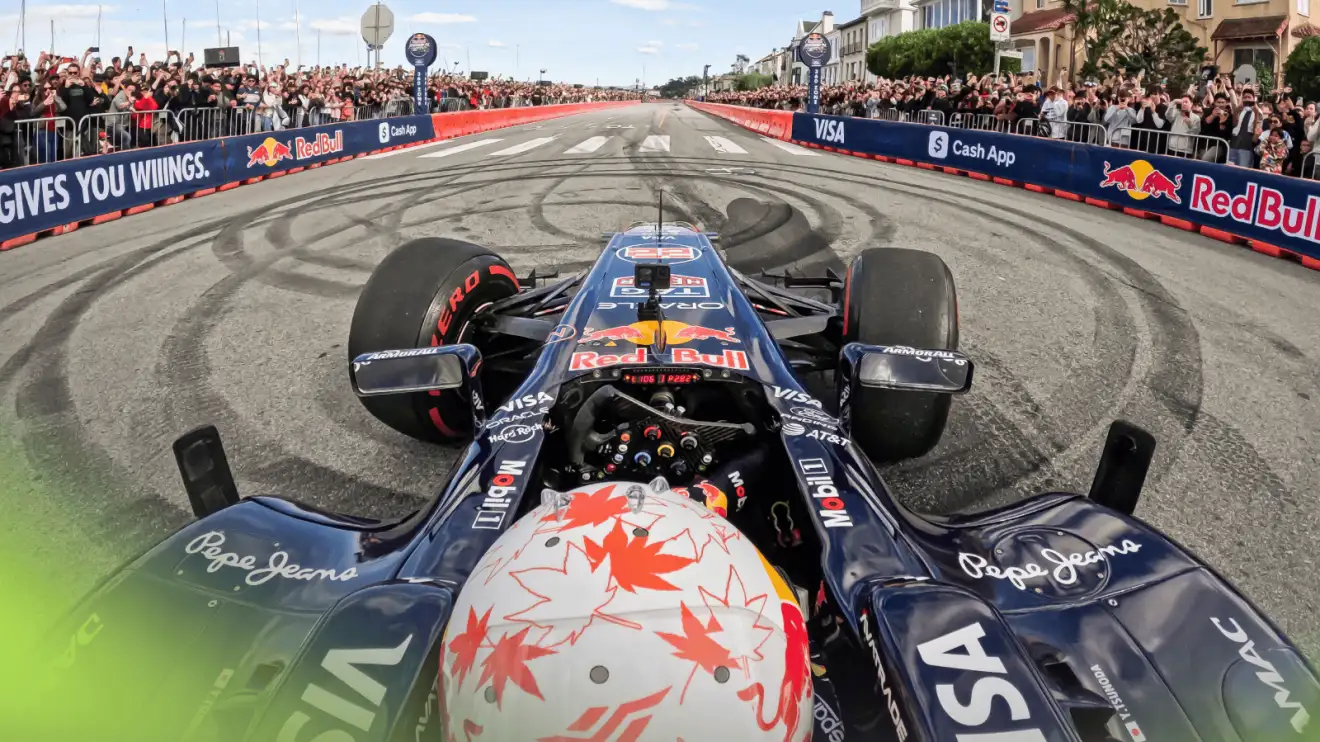
Yuki Tsunoda safely evacuated a classic Red Bull F1 car after it caught fire during a public demonstration run in San Francisco. The incident marks an inauspicious start to his 2026 role as a Red Bull reserve driver as he aims to secure a full-time racing return for 2027.
You don't forget the smell. Burnt fuel, scorched carbon fibre, and the sharp, metallic tang of panic. It’s a scent that cuts through the fog of champagne and tyre warmers, a primal reminder of what these machines truly are. When the video of Yuki Tsunoda scrambling from the flaming RB7 in San Francisco hit my phone, that smell came rushing back. Not from the pixelated smoke, but from the memory of a young driver’s career hanging in the balance, with every second of footage etching a narrative he desperately needs to rewrite.
For Tsunoda, this wasn’t just a demo run gone wrong. This was his first public audition since being relegated to the shadows. The fire may have been in the gearbox, but the heat is squarely on him.
The Unseen Script of the Reserve Driver
Let’s be brutally honest. The life of a reserve driver, especially within the Red Bull ecosystem, is a psychological tightrope. One day you’re the hero in the simulator, the next you’re a living, breathing reminder of someone else’s failure to seize a seat. Tsunoda knows this. We all saw the firefight in him dim over the past two seasons at Racing Bulls. The raw speed was never in doubt, but the consistency? It frayed at the edges, much like we’ve seen with Charles Leclerc at Maranello, where the politics of the Scuderia can warp a driver’s instinct as surely as a broken front wing.
"A driver's mind is the most complex aerodynamic surface on the car. Teams spend millions on CFD for the bodywork but use gut feeling to manage the psyche. It's engineering malpractice."
Tsunoda’s task for 2026 is clear: be the perfect soldier. Be ready, be sharp, and for god’s sake, stay out of the headlines unless it’s for pulling a miracle out of the bag in FP1. A fiery spectacle in San Francisco, through absolutely no fault of his own, is the opposite of that script.
- The Incident: Saturday, San Francisco. The iconic RB7, a monument to Sebastian Vettel’s dominance, shuddering to a stop and then belching smoke and flame from its rear.
- The Reaction: To his credit, Yuki’s exit was calm. A quick belt unbuckle, a glance at the mirrors, a swift egress. The spectators’ shouts were more frantic than his movements. He’s done this drill a thousand times in his head, probably more than he’s dreamed of podium finishes this year.
- The Aftermath: The standard investigation will find a fuel line, an oil leak, some gremlin in a 15-year-old masterpiece. Technically, it will be simple. Symbolically, it’s a minefield.
Fires That Don't Show on TV: The 2027 Seat and Budget Cap Tinderboxes
This is where my deeper convictions kick in. We focus on the visible flame, but the real conflagrations in this sport are slow-burn and institutional. Tsunoda’s very public mishap is a tiny spark next to the tinderbox the sport is sitting on.
His goal is a 2027 seat. But which team? Which entity? I’ve said it before and I’ll stake my reputation on it: within five years, a major team will collapse under the weight of its own budget cap gymnastics. The loopholes being exploited—the hospitality suites that are suddenly ‘marketing projects,’ the driver salaries being offset by ‘brand ambassador’ roles at sister companies—are creating a house of cards. When it falls, it won’t be a graceful exit. It will be a fire sale, a merger, a chaotic realignment that swallows seat opportunities whole.
Where does that leave a driver like Tsunoda, fighting to prove he’s not just fast, but manageable? He’s caught between the legacy politics that still haunt Ferrari (and, let’s be real, influence every top team to some degree) and the cold, financial reckoning that is coming. Red Bull will support him, but their loyalty is to performance and marketability. A driver associated with dramatic fires, however unfairly, is a PR calculus.
The team radio today is full of sound and fury, signifying nothing compared to the genuine, career-ending hatred of Prost and Senna. Tsunoda’s conflict isn’t with a teammate right now. It’s with perception. It’s with the ghost of his own past inconsistency and the looming spectre of a grid that might have fewer seats when he’s ready to pounce.
Conclusion: More Than a Mechanical Failure
So, what’s next for Yuki? The official line is unchanged: simulator work, development duties, stay ready. The investigation will publish a bland report. Life moves on.
But in the paddock, memories are long. This incident will be filed away, a footnote that gets mentioned in tense contract discussions. "Remember San Francisco?" It will be a shorthand for the unpredictable, for the pressure of the spotlight when you’re trying to operate from the shadows.
The true test won’t be how he debriefs the engineers on the RB7’s failure. It will be how he manages the next six months inside his own helmet. The role of a reserve driver is a profound psychological profile in itself. It requires a stability that the Charles Leclercs of the world are often denied by their team’s internal storms, and a patience that the modern ‘instant result’ F1 culture seldom nurtures.
The fire in San Francisco is out. The one under Yuki Tsunoda’s career? It’s just been stoked. And in this era of financial and mental brinkmanship, that’s the blaze worth watching.