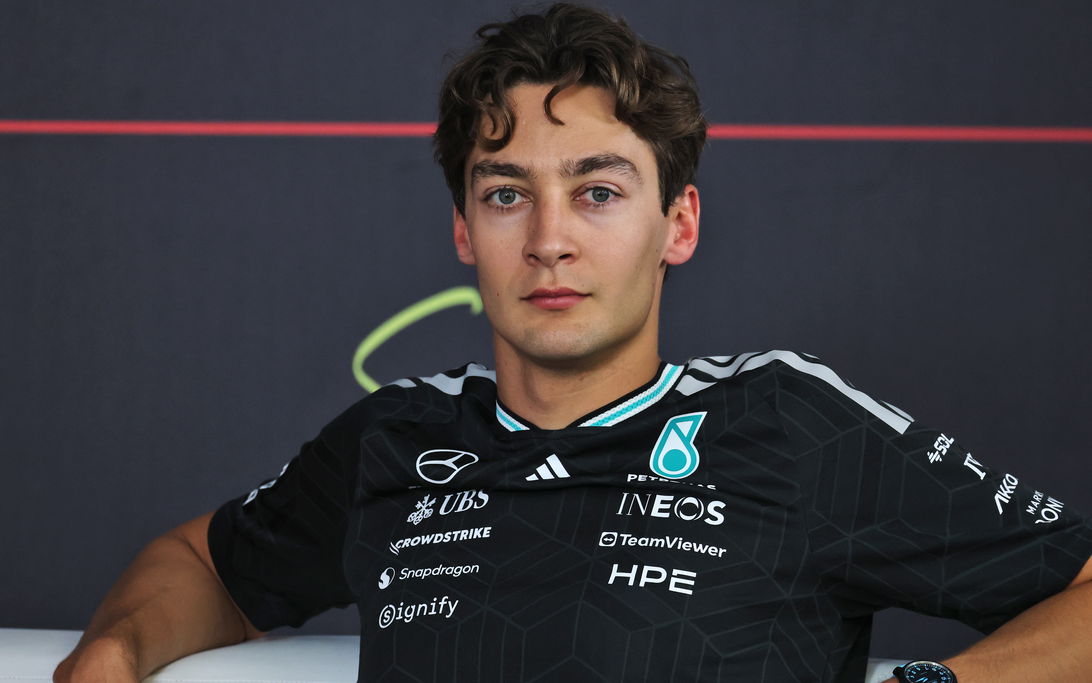
Russell: 2026 F1 racing will be 'intriguing' due to new energy management puzzle
Mercedes driver George Russell anticipates "intriguing" racing in 2026 as new power unit rules mandate that 50% of a car's power comes from its battery. He believes mastering the circuit-specific challenge of harvesting and deploying energy will become more critical than aerodynamics, leading to significant performance differences based on driving style.
George Russell predicts the style of racing in early 2026 will be "intriguing" as drivers grapple with dramatically new energy management demands under the revised power unit regulations. With 50% of a car's power set to come from its battery, harvesting and redeploying energy efficiently will become a critical, circuit-specific skill that could create significant performance gaps between drivers based on their driving styles.
Why it matters:
The 2026 regulations shift the competitive focus from pure aerodynamic efficiency to a complex blend of energy management and driver technique. This fundamental change could upend the established competitive order, making races more unpredictable and placing a premium on a driver's ability to adapt their style in real-time, potentially outweighing the impact of reduced aerodynamic turbulence for closer racing.
The details:
- The new power units will derive 50% of their power from enhanced batteries, forcing drivers to become experts in harvesting energy under braking and managing its deployment.
- Circuit layout will play a huge role in this challenge. Tracks with heavy braking zones like Bahrain and Canada will aid energy recovery, while flowing circuits with long straights like Melbourne and Jeddah will make harvesting much harder.
- Russell suggests the variability in energy deployment between cars and drivers will "far outweigh" aerodynamic turbulence as a defining factor in race performance and the ability to follow other cars closely.
- This necessitates different driving styles for different tracks, initiating a strategic "game" as drivers and teams work to solve the optimal approach for each circuit under the new constraints.
What's next:
The 2026 season will effectively become a massive real-world experiment in energy management. The early races will see teams and drivers on a steep learning curve, with those who can quickly decode the intricate balance between harvesting, deployment, and driving style gaining a crucial advantage. Russell's comments highlight that raw speed may be secondary to strategic energy intelligence, setting the stage for a new kind of Formula 1 grand prix.
Don't miss the next lap
Get the deep dives and technical analysis from the world of F1 delivered to your inbox twice a week.
Zero spam. Only high-octane analysis. Unsubscribe anytime.
Join the inner circle
Get the deep dives and technical analysis from the world of F1 delivered to your inbox twice a week.
Zero spam. Only high-octane analysis. Unsubscribe anytime.
Continue Reading
View More News