Sainz echoes Wolff: Red Bull Powertrains emerges as 2026 benchmark
Carlos Sainz agrees with Toto Wolff's claim that Red Bull Powertrains is the early 2026 benchmark, citing GPS data that shows a 'clear step' in performance and seamless energy management, posing a significant challenge to rival manufacturers.
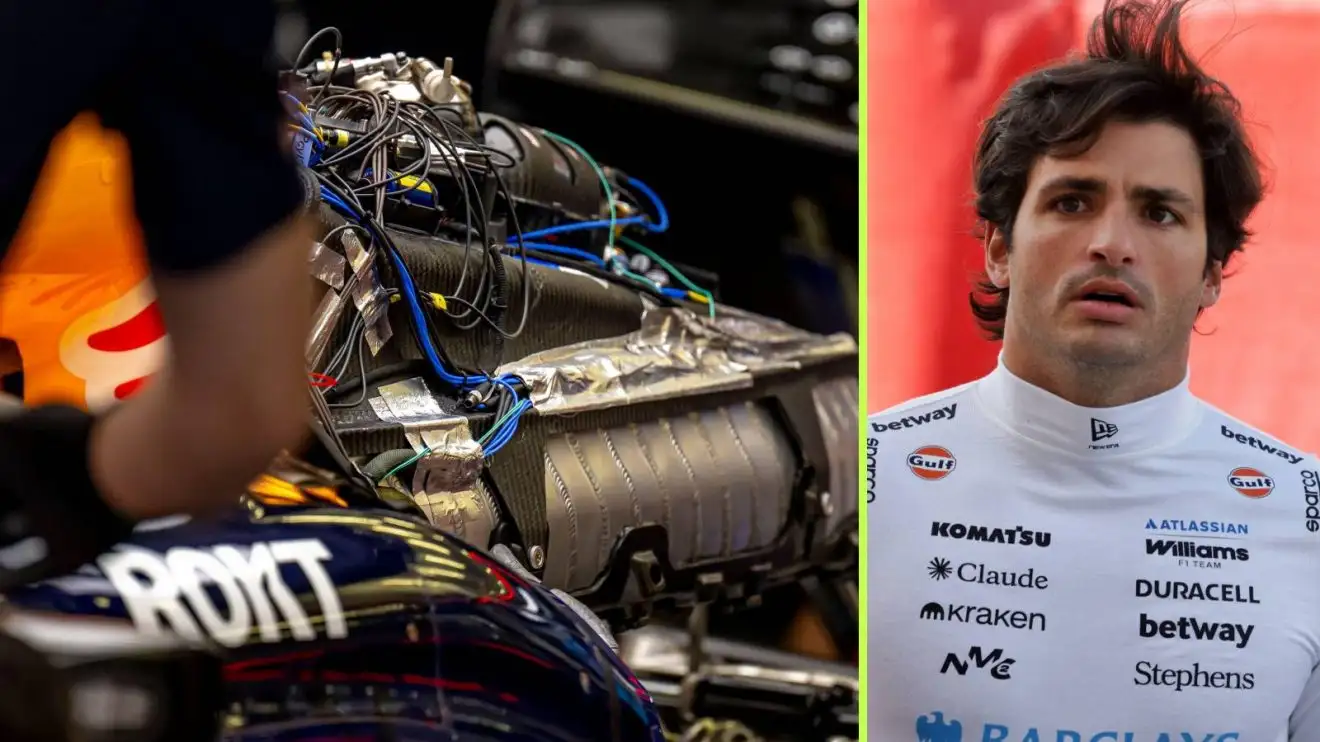
Carlos Sainz has reinforced Toto Wolff's assessment, stating that Red Bull Powertrains appears to hold a significant performance advantage based on early GPS data from pre-season testing. The Spaniard, after his first day with Williams, described the Red Bull/Ford power unit's showing as a "clear step ahead" in both speed and reliability under the new 2026 regulations.
Why it matters:
The 2026 power unit regulations represent the largest technical reset in a decade, making early development advantages potentially decisive for the entire regulatory cycle. If Red Bull has indeed established a benchmark, it could solidify the team's dominance for years to come and force rivals like Mercedes and Ferrari into a prolonged catch-up phase, reshaping the competitive hierarchy.
The details:
- Consensus from rivals: Both Mercedes Team Principal Toto Wolff and driver Carlos Sainz independently pointed to Red Bull Powertrains (RBPT) as the early leader after analyzing data from the Bahrain test.
- Performance gap: Sainz emphasized the advantage was "a clear step, not only a small step," noting it was particularly impressive for a completely new engine from a new manufacturer.
- Key technical edge: The apparent strength lies in seamless energy management. Sainz observed that Red Bull's system allows drivers to push naturally without compromising cornering speed to harvest energy, unlike other teams where the two tasks may still be in conflict.
- Strategic achievement: This engineering feat translates to more electrical energy available for deployment on straights, a critical performance differentiator under the new rules which emphasize energy recovery and deployment.
- Organizational success: The strong start is a testament to the Red Bull Powertrains project's continuity following Christian Horner's departure, with Laurent Mekies overseeing a smooth transition and successful track debut.
What's next:
While the gap appears significant, it remains early days in a long development season. The focus now shifts to how quickly rivals like Mercedes, Ferrari, and Audi can analyze the data and close the performance deficit through upgrades. Furthermore, the stability of Red Bull's advantage will be tested over full race distances and varying track conditions. Sainz predicts the ultimate goal for all manufacturers will be to fully integrate energy management into the driving experience, making it invisible to the driver—a challenge Red Bull seems to have tackled head-on from the outset.
Don't miss the next lap
Get the deep dives and technical analysis from the world of F1 delivered to your inbox twice a week.
Zero spam. Only high-octane analysis. Unsubscribe anytime.
Join the inner circle
Get the deep dives and technical analysis from the world of F1 delivered to your inbox twice a week.
Zero spam. Only high-octane analysis. Unsubscribe anytime.