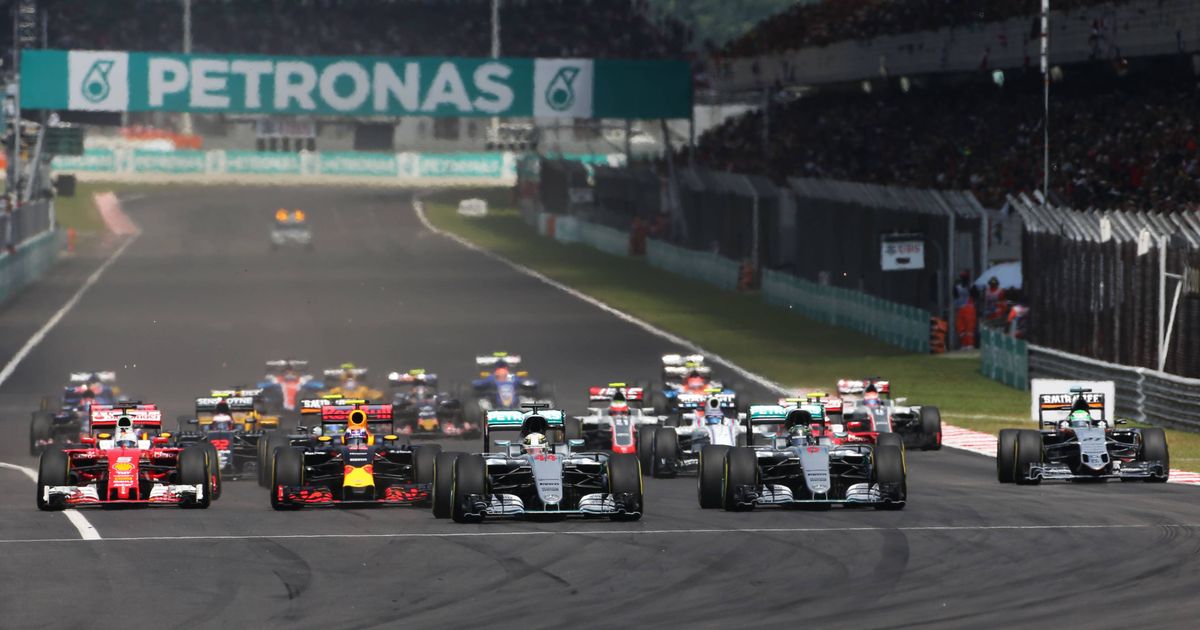
Sepang Circuit Still Hopes for F1 Return Despite Government Rejection
Despite the Malaysian government's refusal to financially support the return of Formula 1, the Sepang International Circuit remains hopeful for a future Malaysian Grand Prix. CEO Azhan Shafriman Hanif believes F1 will eventually return, potentially through corporate backing, even as high hosting fees and fierce international competition currently make an immediate comeback unlikely. Sepang remains ready to host if a viable financial model can be found.
The Sepang International Circuit (SIC) is not giving up on bringing the Formula 1 Malaysian Grand Prix back, despite the government's refusal to provide financial support. Sepang CEO Azhan Shafriman Hanif remains optimistic about a future return, even as the current focus is on public needs over multi-million dollar hosting fees.
Why it matters:
The Malaysian Grand Prix, last held in 2017, was a staple on the F1 calendar, known for its unique challenges and memorable moments. Its potential return would not only bring F1 back to a key Southeast Asian market but also highlight the growing competition among venues to secure a spot on the coveted F1 calendar. For Sepang, it represents a chance to reclaim its place in global motorsport beyond MotoGP.
The Details:
- Government Stance: The Malaysian government has explicitly stated it will not provide funding for F1's return, prioritizing public needs over the reported $70 million hosting fee from Liberty Media.
- Sepang's Hope: Despite the government's refusal, SIC CEO Azhan Shafriman Hanif is "pretty sure Formula 1 will come back someday," though he acknowledges it's "not now."
- Private Funding: Shafriman suggests that corporate support could be a pathway to bringing the race back without burdening the government. He is actively looking for the "right partner" but notes the challenge of demonstrating sufficient return on investment for such high costs.
- Track Readiness: Sepang believes its track facilities and homologation are largely up to F1 standards, requiring only minor tweaks for an event. This indicates a readiness to host should financial backing materialize.
- Competitive Landscape: Several countries, including Rwanda, Argentina, and Thailand (with a $1.2 billion street race proposal for Bangkok), are vying for F1 calendar slots. This intense competition makes securing a return even more challenging for Sepang.
- Calendar Shifts: Opportunities on the F1 calendar are expected to open up post-2026, with the Dutch Grand Prix leaving after 2026 and the Belgian Grand Prix rotating from 2028.
The Big Picture:
Malaysia's absence from the F1 calendar since 2017, shortly after Liberty Media's takeover, underscores the evolving economics of hosting a Grand Prix. Liberty Media's focus on improving financial viability for promoters has led to higher hosting fees, making government backing crucial for many venues. Sepang's situation highlights the global demand for F1, where circuits must now compete not only on track quality but also on substantial financial packages.
What's Next:
For now, Sepang's immediate focus remains on securing MotoGP and other international races. While a return to F1 is not imminent, the circuit management's persistent optimism and exploration of private partnerships suggest that the dream of the Malaysian Grand Prix is not entirely extinguished. The fierce competition for F1 slots means Sepang will need a compelling financial and strategic proposal to outmaneuver other aspiring hosts if it hopes to see F1 cars grace its tarmac again.