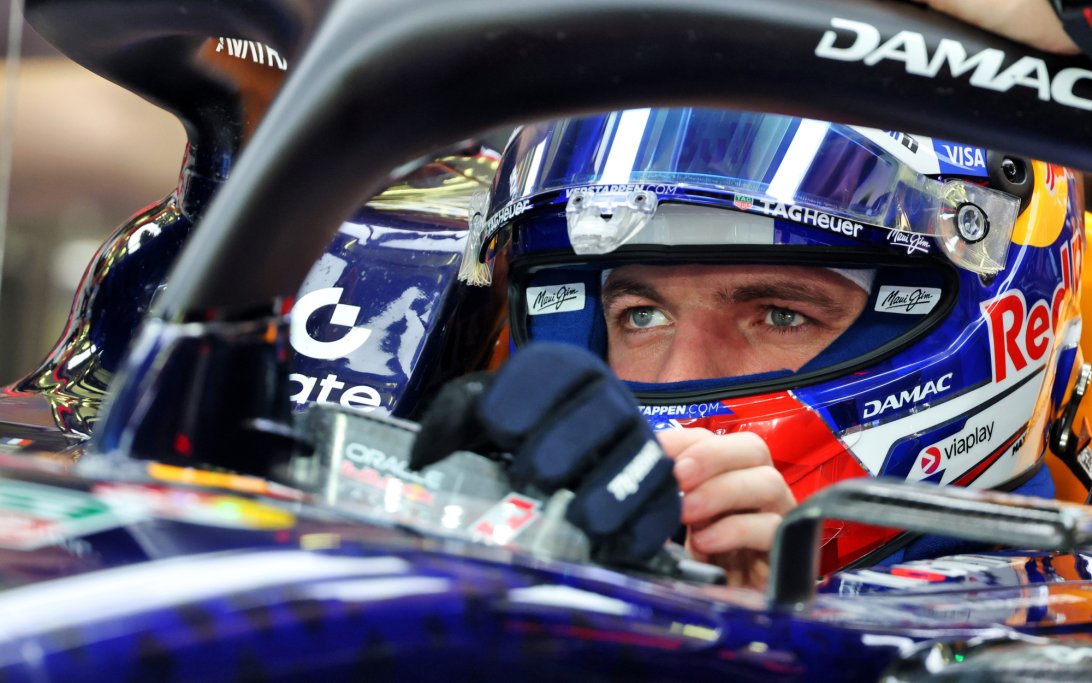
Steiner predicts Verstappen will adapt to 2026 F1 cars if competitive
Ex-F1 boss Guenther Steiner predicts Max Verstappen will set aside his strong criticism of the 2026 technical regulations once he has a championship-contending car, arguing the driver's will to win will override his dislike for the new complex hybrid systems.
Former Haas team principal Guenther Steiner believes Max Verstappen will overcome his vocal criticism of Formula 1's 2026 technical regulations once he is back in a car capable of fighting for wins and championships. Steiner acknowledged the reigning champion's frustration with the new, more complex hybrid systems but predicted his competitive nature will prevail.
Why it matters:
Verstappen's public dissatisfaction with the sport's direction carries significant weight, given his status as the current benchmark driver and a four-time world champion. His threats to reconsider his F1 future over what he calls "anti-racing" rules pose a reputational challenge for the series' leadership as they promote a new era of technology. Steiner's perspective offers a counterpoint, suggesting top drivers ultimately adapt to remain at the front.
The details:
- Verstappen has been highly critical of the 2026 car concepts, which place a greater emphasis on managing electrical energy from a more powerful battery, calling the rules "anti-racing."
- Steiner, speaking to RTL, downplayed the long-term severity of Verstappen's complaints, directly linking his happiness to competitive performance.
- "He will be happy enough to fight for the world championship title," Steiner stated. "That's what he wants, and he's the best driver at the moment."
- The former team boss framed the adjustment as a necessary strategic evolution for drivers.
- "As a driver, you have to rethink things with this new energy recovery system and come up with a whole new strategy. It's just different. We humans don't like big changes."
- Steiner expressed understanding for the criticism, noting Verstappen's pure racing instincts and preference for older, simpler engine formulas like V10s or V12s.
What's next:
The focus now shifts to how teams interpret the 2026 rules and whether Red Bull can provide Verstappen with a car that meets his competitive standards from the start of the new cycle.
- Verstappen's adaptation: All eyes will be on how quickly Verstappen masters the new energy management requirements if the car is fast.
- Red Bull's project: The pressure is on Red Bull Powertrains to deliver a reliable and powerful 2026 unit that allows their star driver to focus on racing rather than system management.
- Steiner's final prediction captures the likely outcome: "As soon as he starts winning, he'll be happy with the car."
Don't miss the next lap
Get the deep dives and technical analysis from the world of F1 delivered to your inbox twice a week.
Zero spam. Only high-octane analysis. Unsubscribe anytime.
Join the inner circle
Get the deep dives and technical analysis from the world of F1 delivered to your inbox twice a week.
Zero spam. Only high-octane analysis. Unsubscribe anytime.