The Mercedes Engine Trick That's Shaking Up F1
Paddock rumors suggest Mercedes may be using a clever, legal interpretation of the engine regulations related to compression ratio. The theory posits the engine passes FIA inspection but operates at a more aggressive, performance-enhancing setting during races, offering a potential power advantage that rivals suspect but cannot yet prove.
A clever, and reportedly legal, technical interpretation by Mercedes' power unit division is rumored to be a key factor in the team's recent performance surge, centering on dynamic management of the engine's compression ratio. The alleged method exploits a grey area in how the FIA measures compliance, potentially giving Mercedes a significant power advantage during actual race conditions that inspectors cannot currently prove.
Why it matters:
In Formula 1, where engine performance margins are razor-thin, a genuine power unit advantage is the holy grail. This theory, if substantiated, would explain a notable portion of Mercedes' improved straight-line speed and could reshape the technical arms race. It highlights the perpetual cat-and-mouse game between engineers exploiting the regulations and the governing body closing loopholes.
The details:
- The core theory involves the engine's compression ratio—a critical factor in power and efficiency. The FIA has a strict method to check and seal this ratio for compliance.
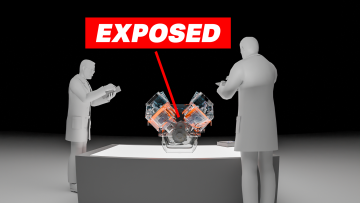
- The alleged "trick" is a system that allows the compression ratio to be one, legal, value during the FIA's static inspection but then alters to a more aggressive, performance-boosting ratio once the engine is at full operating temperature and under dynamic race conditions.
- This would be achieved through sophisticated, temperature-sensitive components or actuator systems that subtly change internal clearances or volumes.
- Red Bull's interest and investigation into the matter, as part of the story, underscores the potential significance of the advantage and the competitive paranoia it generates within the paddock.
What's next:
Such advantages are never permanent in F1's regulatory environment.
- Rival teams, led by Red Bull's inquiries, are almost certainly conducting their own analysis and lobbying the FIA for clarifications or new inspection methods.
- The FIA will likely develop new tests or sensors to monitor engine parameters in real-time, under dynamic conditions, to close this potential loophole.
- This cycle of innovation and regulation is a fundamental part of F1's DNA; today's brilliant interpretation is tomorrow's banned technology.
Don't miss the next lap
Get the deep dives and technical analysis from the world of F1 delivered to your inbox twice a week.
Zero spam. Only high-octane analysis. Unsubscribe anytime.
Join the inner circle
Get the deep dives and technical analysis from the world of F1 delivered to your inbox twice a week.
Zero spam. Only high-octane analysis. Unsubscribe anytime.