Throwback: When a Super Typhoon Forced F1 to Rewrite the Japanese GP Schedule
A look back at the 2019 Japanese Grand Prix, where the unprecedented threat of Super Typhoon Hagibis led F1 to cancel all Saturday track action. With safety the absolute priority, qualifying was squeezed into Sunday morning just hours before the race, testing teams' adaptability and the sport's crisis management during a major natural disaster.
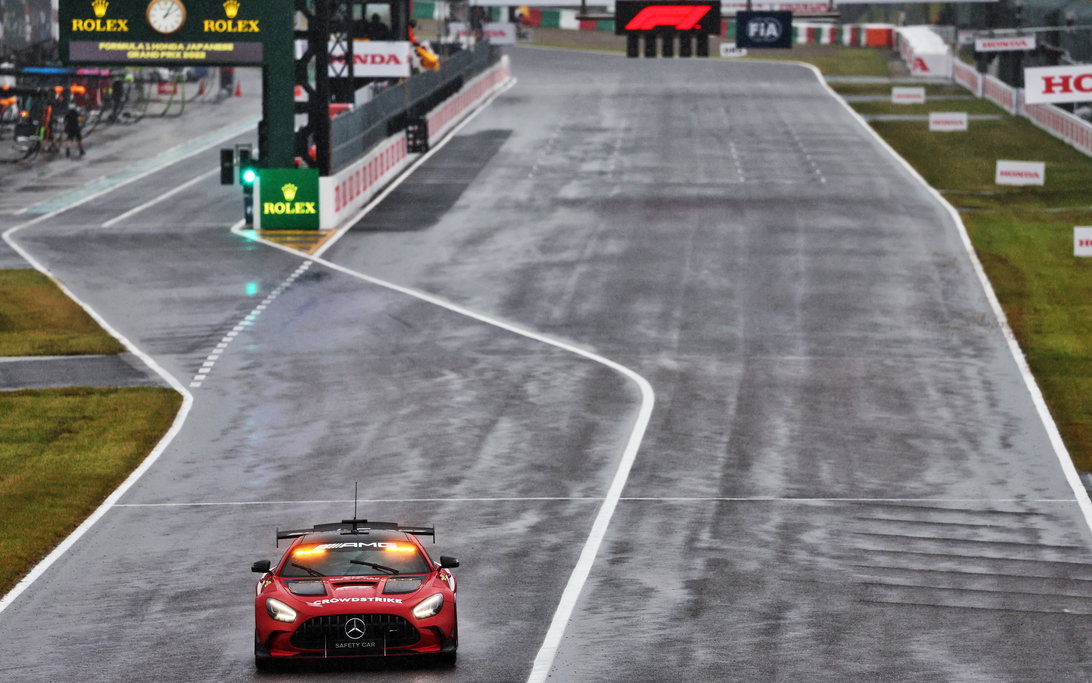
In 2019, Super Typhoon Hagibis—a storm of historic proportions—forced Formula 1 to completely abandon Saturday's schedule at the Suzuka Circuit, compressing qualifying and the race into a single, unprecedented Sunday. With the storm predicted to bring catastrophic winds and flooding, officials prioritized safety, moving qualifying to just four hours before the Grand Prix start. The decision, while disruptive, was vindicated as the typhoon passed and the race proceeded, won by Valtteri Bottas.
Why it matters:
This event stands as a stark reminder of F1's vulnerability to extreme weather and the paramount importance of safety over spectacle. It tested the sport's contingency planning to its limits, requiring a rapid, coordinated response from the FIA, teams, and local organizers to manage an immense logistical challenge while a natural disaster unfolded around them.
The details:
- The entire Saturday schedule (October 12) was cancelled, including all track activity, as Super Typhoon Hagibis approached. It was forecast to be the most powerful storm to hit Japan in 60 years.
- Qualifying was rescheduled to Sunday at 10:00 local time, with the Grand Prix following at 14:10. The third practice session was scrapped entirely.
- Teams were left with only the data from two Friday practice sessions to set up their cars for both qualifying and the race, a significant competitive constraint.
- Safety concerns were multifaceted: extreme winds at the circuit, potential flooding in access tunnels, and the inability for the critical medical helicopter to operate.
- The FIA and F1 issued a joint statement fully supporting the cancellation "in the interest of safety for the spectators, competitors and everyone at the Suzuka Circuit."
The big picture:
The 2019 disruption was part of a pattern at Suzuka, which had seen qualifying postponed to Sunday in 2004 and 2010 due to typhoons. However, the scale of Hagibis and the compressed schedule created a unique challenge. Beyond the circuit, the typhoon's impact was devastating, causing 139 fatalities and over $17 billion in damage across eastern Japan, highlighting the very real danger the storm posed. The successful execution of the revised schedule demonstrated F1's ability to adapt under extreme pressure, setting a precedent for future weather-affected events.
Don't miss the next lap
Get the deep dives and technical analysis from the world of F1 delivered to your inbox twice a week.
Zero spam. Only high-octane analysis. Unsubscribe anytime.
Join the inner circle
Get the deep dives and technical analysis from the world of F1 delivered to your inbox twice a week.
Zero spam. Only high-octane analysis. Unsubscribe anytime.
Continue Reading
View More News