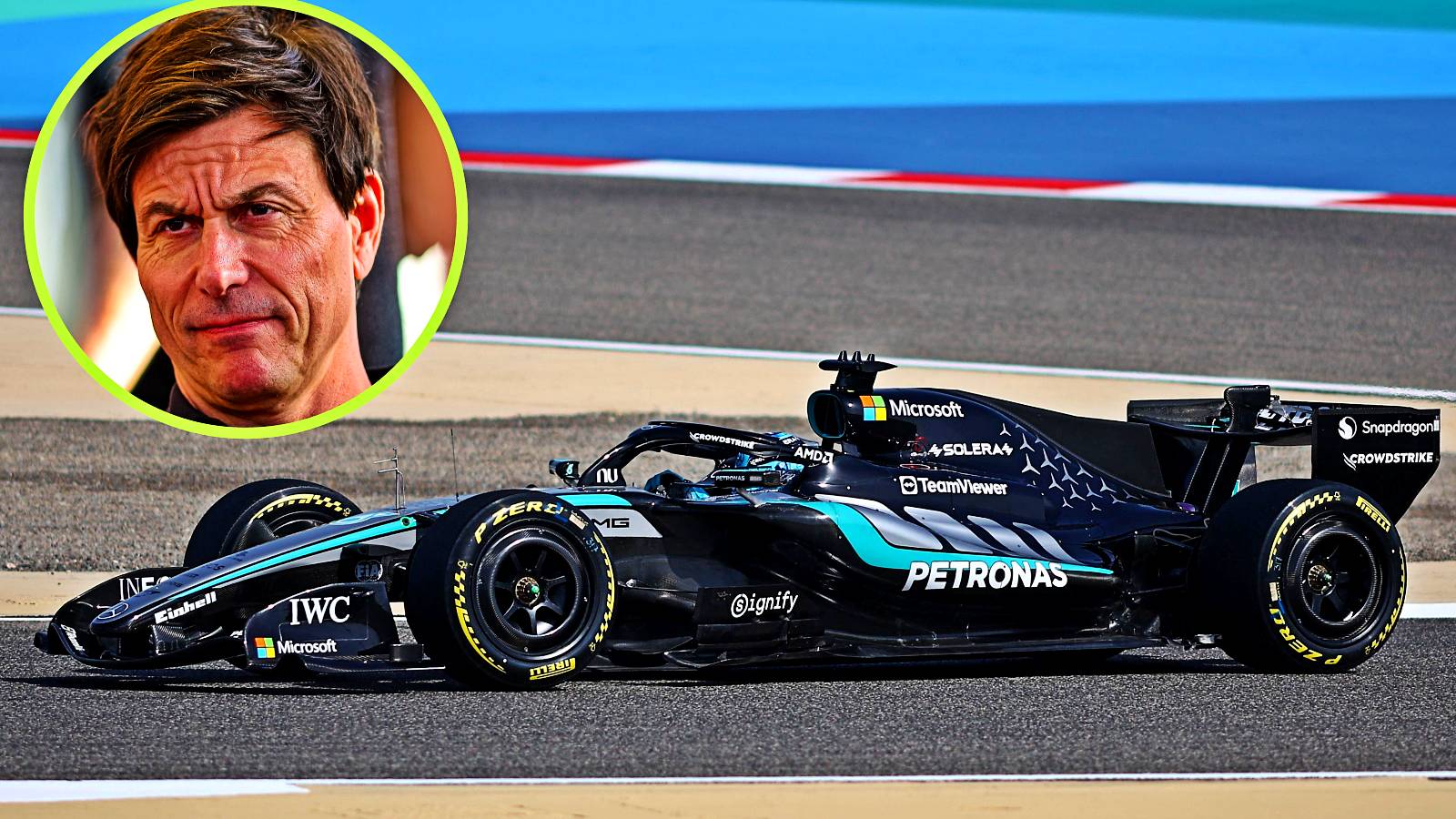
Toto Wolff: Mercedes will accept FIA vote outcome on 2026 engine rules
Mercedes will accept the FIA's ruling in a vote over 2026 engine compression ratio tests, a dispute Toto Wolff calls insignificant for performance. The outcome will clarify a regulatory grey area and set a precedent for handling technical interpretations, with a new hot-temperature test likely to be adopted.
Mercedes team principal Toto Wolff says his team will accept the result of an FIA e-vote that could change a key 2026 power unit regulation, calling the controversy a "storm in a teacup" with minimal performance impact. The vote centers on a technical interpretation regarding engine compression ratios that has isolated Mercedes against the other four power unit manufacturers this winter.
Why it matters:
This regulatory dispute tests the balance between innovation and the intent of F1's rules. While Mercedes maintains its approach is a legal interpretation of a grey area, a unified push from rivals to change the test method could set a precedent for how future technical loopholes are handled, even when the performance gain is reportedly small.
The details:
- The controversy stems from a grey area in the 2026 power unit regulations, which set a maximum compression ratio of 16:1 measured at ambient (room) temperature.
- Mercedes and Red Bull Powertrains (RBPT) were linked to designs that could meet this limit during official tests but potentially operate at a higher ratio at hot track temperatures, offering a performance benefit.
- Estimates of that benefit vary wildly: Wolff claims it's worth only 2-3 horsepower, while Red Bull's Max Verstappen suggested it could be 20-30 hp.
- Following the first pre-season shakedown, the other four PUMs (Ferrari, Renault, Honda, and RBPT) united to propose a new, hot-temperature compression ratio test to the FIA's Power Unit Advisory Committee (PUAC).
- The PUAC has now launched an e-vote on adopting this new test method. A supermajority (6 out of 7 votes) from the committee members—the four rival PUMs, plus the FIA, FOM, and Mercedes—is required to change the regulation.
- FIA Single-Seater Director Nikolas Tombazis clarified there has been no allegation of illegality against Mercedes, framing the issue as one of regulatory intent versus clever engineering interpretation.
What's next:
The 10-day voting window closes on February 28, just before the engine homologation deadline. The most likely outcome is the regulation change passing.
- If passed, the new hot-test would be enforced from August 1, 2026. Any non-compliant power units would be allowed modifications to meet the new standard.
- Wolff has ruled out legal action if the vote goes against Mercedes, stating either outcome is acceptable and that the team wants to be a "good citizen" in the sport.
- Senior sources indicate all manufacturers are likely to pass whichever test is finalized, suggesting the immediate on-track impact may be minimal, but the process for addressing regulatory interpretations has been firmly established.
Don't miss the next lap
Get the deep dives and technical analysis from the world of F1 delivered to your inbox twice a week.
Zero spam. Only high-octane analysis. Unsubscribe anytime.
Join the inner circle
Get the deep dives and technical analysis from the world of F1 delivered to your inbox twice a week.
Zero spam. Only high-octane analysis. Unsubscribe anytime.