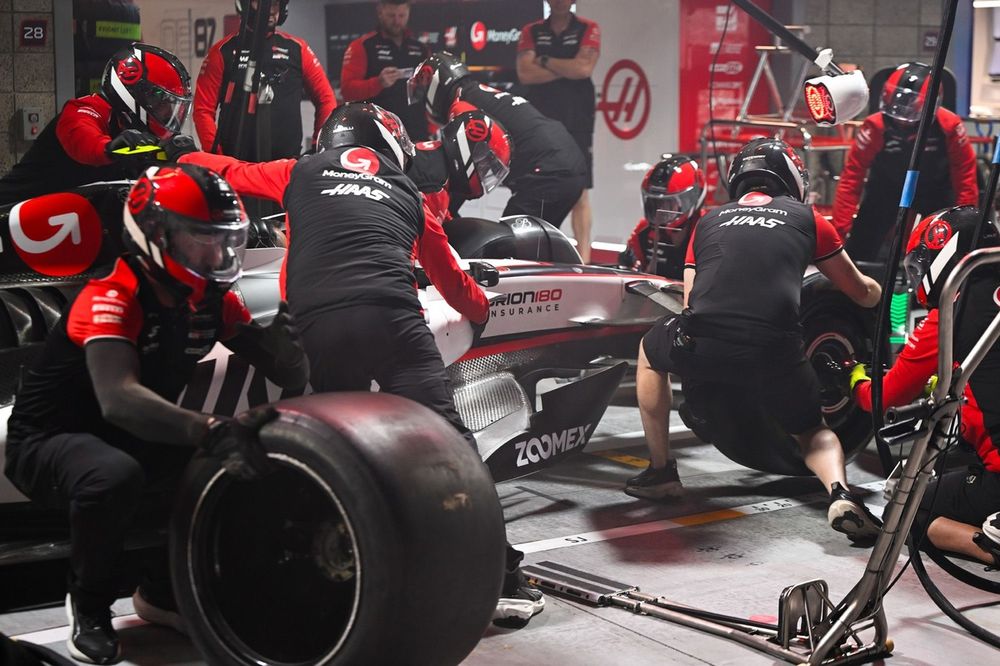
Two-Pitstop Rule Will 'Destroy' F1 Qatar GP, Says Komatsu
Haas team principal Ayao Komatsu criticizes Pirelli's mandated two-pitstop rule for the F1 Qatar Grand Prix, stating it will "destroy" the race. Citing concerns over tire wear, cars will be limited to 25 laps per stint, forcing a two-stop strategy. Komatsu argues these "artificial limits" stifle strategic variety and diminish the excitement, drawing parallels to previous mandated stops that led to predictable and unengaging races. He advocates for tire performance that naturally allows for multiple viable strategies.
Haas team principal Ayao Komatsu believes Pirelli's mandated two-pitstop rule for the upcoming Formula 1 Qatar Grand Prix will "destroy" the race. Due to concerns over tire wear, cars will be limited to a maximum of 25 laps per stint during the 57-lap race, effectively forcing a two-stop strategy with limited strategic variation.
Why it matters:
Komatsu's strong disagreement highlights a recurring tension in F1: balancing safety with maintaining genuine racing spectacle. While mandated pitstops aim to address tire wear issues, critics argue they can homogenize strategies and diminish the excitement of races, stripping teams of strategic creativity and leading to predictable outcomes.
The details:
- Pirelli has mandated a maximum of 25 laps per stint for the 57-lap Qatar Grand Prix, effectively forcing teams into at least a two-stop strategy.
- This decision was made in agreement with F1, the FIA, and the teams, following concerns over tire wear at the Losail International Circuit.
- This marks the second time specific strategies have been mandated for the Qatar GP; in 2023, micro-lacerations from kerbs led to an 18-lap stint limit, forcing a three-stop race.
- Komatsu argues that such "artificial limits" are not conducive to exciting racing, referencing previous mandated stops in Monaco and Qatar as examples where races were negatively impacted.
Between the lines:
Komatsu's primary concern isn't just the one-stop race, but rather the lack of strategic variance when tire performance is too strictly defined. He points to races like Brazil and Mexico where the fine line between one, two, or even three-stop strategies made for thrilling competition. When all teams are forced into the same window, he believes, the strategic element that often creates overtakes and dramatic race narratives is lost.
What's next:
The upcoming Qatar Grand Prix will serve as another test case for these mandated strategies. While safety is paramount, the F1 community will be closely watching whether Komatsu's prediction of a "destroyed" race, devoid of strategic intrigue, comes to fruition. Pirelli, F1, and the FIA face the ongoing challenge of providing tires that are both safe and allow for diverse, exciting race strategies without artificial intervention.