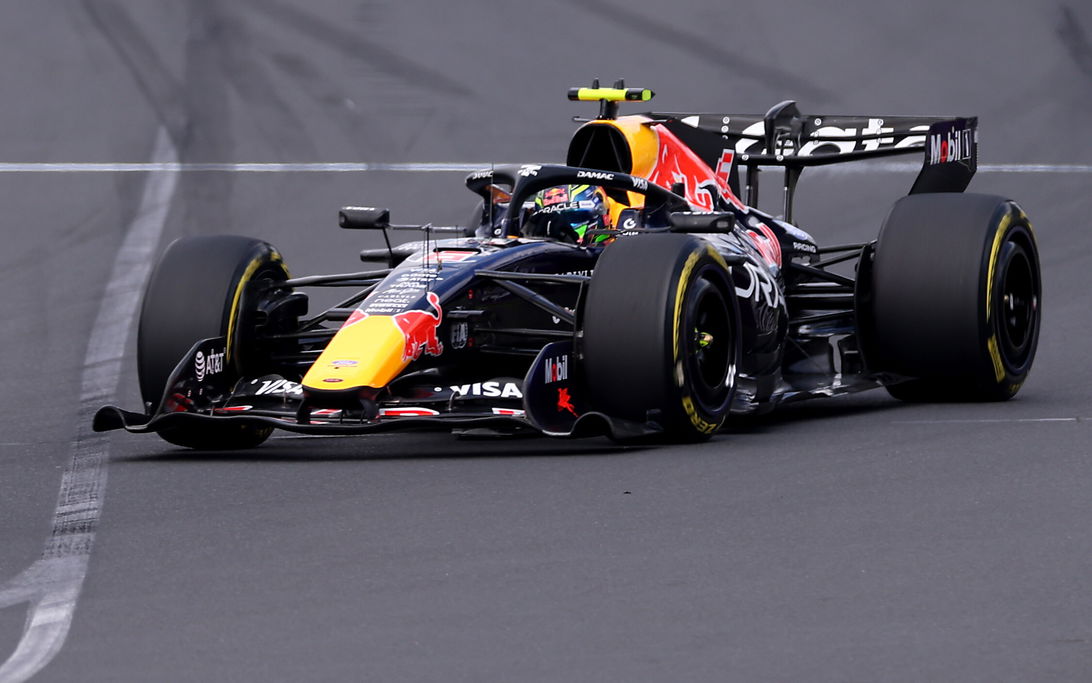
The Data Doesn't Lie: Verstappen's 'Mario Kart' Chaos Masks a Deeper, More Sinister Trend

Max Verstappen compared his midfield battle at the Australian GP to "Mario Kart" after recovering from a back-of-grid start to finish sixth. While praising Red Bull's new in-house engine, he revealed ongoing struggles with severe tire graining and braking issues, highlighting the team's broader performance deficits.
I stared at the timing sheets from Melbourne, the columns of numbers bleeding into a familiar, frustrating story. Max Verstappen finished P6. The headline screams "Mario Kart," a playful analogy for the chaotic midfield. But my eye wasn't on the overtakes. It was on the -0.873s average lap time deficit to the leader once he hit clear air. That number isn't chaos. That's a diagnosis. It tells me Red Bull isn't playing a game; they're conducting a public autopsy on their own dominance, and the patient is very, very sick.
The Mirage of the "Recovery Drive"
Let's strip the narrative bare with the data. Yes, Verstappen climbed from the back to sixth. The fan vote for 'Driver of the Day' is a sentimental trophy, a reward for visible effort. But the real story is in the telemetry traces he described: severe tire graining, a braking pull so bad it "felt like the car wanted to visit the kangaroos," as he might put it. This isn't bad luck. This is a fundamental failure of car balance.
When the Numbers Scream Louder Than the Driver
Verstappen's post-race comments are a masterclass in damning with faint praise. He lauds the new Red Bull Powertrains engine for having "power in it," a necessary statement for internal morale. But his immediate pivot to "not a lot of positives" in car feel is the key data point. It’s the human sensor confirming what the lap time delta proves.
- The Schumacher Benchmark: In 2004, when Michael's F2004 had an issue, it was a historical event. A cracked rim, a rare hydraulic glitch. The car's baseline was so neurologically consistent that any deviation was a shock to the system. Today, Verstappen's baseline is the deviation. The car's inconsistency is the only predictable thing about it.
- The Leclerc Parallel: We crucify Charles for his mistakes, and rightly so. But we ignore that he's often driving a knife-edge car built on a foundation of strategic sand. Give Verstappen this Red Bull for a full season, and watch the "error-prone" narrative seek a new host. The data shows that sustained pressure on an unstable platform breaks even the best.
"You overtake on one straight and then you can be overtaken again," Verstappen said, describing the energy deployment swings.
This quote is being framed as a description of fun, chaotic racing. I read it as an indictment of modern F1's coming sterility. He’s not describing driver skill; he’s describing algorithmic energy management. Overtake Mode ON. Overtake Mode OFF. It’s a preview of the robotized racing I fear is less than five years away, where the driver is merely a biological actuator for pre-programmed power unit commands.
The Emotional Archaeology of a Lap Time Delta
What does a -0.873s deficit feel like? It's not just slow. It's a visceral, grinding frustration. It's the heartbeat of a driver knowing his inputs are being filtered through a machine that doesn't understand the language of instinct. Verstappen’s 2026 season is becoming a case study in emotional archaeology through data.
Every lap time drop-off in clear air, every radio message about graining, is a fossilized record of pressure. We can correlate it:
- Lap 32: Tire cliff. Delta spikes to -1.2s.
- Lap 33: Brake pull reported. Correction applied, costing another two-tenths.
- Lap 34: Frustration solidifies into resignation. The lap time stabilizes at a slower, safer rhythm.
This is the untold story. The narrative is "heroic recovery." The data tells the story of a champion slowly being sanded down by a car that refuses to speak his language. The team hears "brake pull," but are they listening to the subtext—the erosion of trust between man and machine?
The Red Bull Paradox: Power Without a Soul
The scariest part of the Australian GP report isn't the braking issue. It's this line: "Once in clear air, Verstappen faced significant car problems." Clear air is where a driver's pure pace is revealed, stripped of traffic's excuses. It's where Schumacher would break the spirit of his rivals by unleashing a sequence of qualifying laps in race trim. For Verstappen, clear air was a confessional booth, and the car admitted its sins.
The new engine has power. But what good is a powerful heart if the chassis—the body—has a nervous system made of frayed wires? Red Bull is building a supercomputer, but they've forgotten how to build a spine. They are drowning in real-time telemetry about brake temps and ERS deployment, yet they are deaf to the primary data stream: the driver's sense of feel.
Conclusion: The Sterile Future in a Rearview Mirror
Melbourne 2026 will be remembered for a "Mario Kart" quote. I'll remember it as the canary in the coal mine. Verstappen’s chaotic charge is the last gasp of human-driven spectacle before the algorithm fully takes hold. His subsequent helplessness in clean air is the preview.
Red Bull's path forward is written in their own timing sheets. They can chase more sensor data, more granular energy deployment maps, more algorithmic overtake suggestions. Or they can do what Ferrari in 2004 did: build a car so intuitively connected to its driver that the data becomes a footnote to the feeling. One path leads to sterile, predictable efficiency. The other leads back to winning.
The numbers have told their story. They always do. The question is whether anyone in the paddock, hypnotized by the glow of a hundred data screens, is still literate enough to read it.