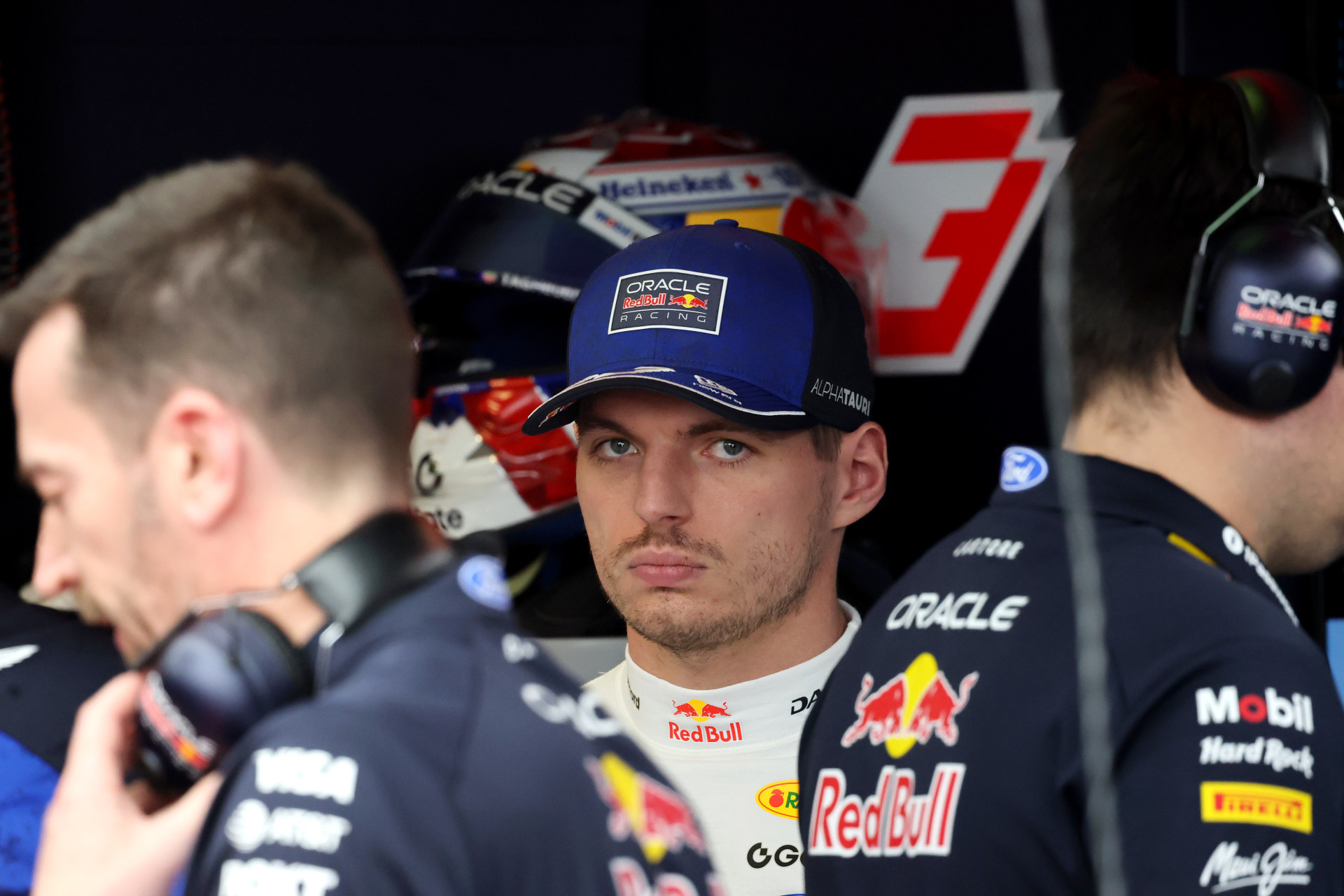
The Engine is Fine. The Mind is Slipping: Inside Verstappen's Existential Grid
Max Verstappen has suggested he could leave Formula 1 if the 2026 technical regulations are not improved, calling the current racing experience unsatisfying. Despite a strong recovery drive in Melbourne, the Red Bull driver remains a fierce critic of the new power unit rules and their complexity, though he praised his team's progress. His comments ramp up pressure on F1's authorities to address driver concerns.
The data from Melbourne tells a simple story: a battery failure on the formation lap, a start from P20, a relentless climb to P6. The telemetry shows the brutal efficiency, the relentless pace. But the real story, the human story, is not in the gigabytes of sensor data. It’s in the words that followed. For the first time, the meticulously engineered composure of Max Verstappen showed a hairline fracture, revealing not just frustration with a car, but a profound disillusionment with the sport itself. This isn't a driver complaining about balance. This is a champion questioning his purpose.
The Manufactured Champion Confronts an Unmanufacturable Problem
For years, the Red Bull system has performed a masterclass in psychological alchemy. They took a prodigy of raw, volcanic talent and systematically channeled that fire into a cold, relentless winning machine. The outbursts were muted, the focus laser-etched. They created a driver so perfectly synced with a dominant car that the line between man and machine blurred. But what happens when the machine, by the sport's new design, feels wrong to the driver's core?
Verstappen's criticism of the 2026 regulations—"Formula E on steroids," an experience not "proper Formula 1"—is a technical complaint rooted in a psychological crisis. The 50/50 hybrid power unit split isn't just an engineering challenge. It's an assault on his learned identity. His entire dominance was built on a specific, visceral feedback loop: a certain throttle response, a particular weight of car, a predictable surge of power. The new rules disrupt that loop. The "bizarre battery issue" in Melbourne wasn't just a glitch; it was a manifestation of the very complexity that makes him feel disconnected.
"We are critical for a reason. We want it to be Formula 1... proper Formula 1 on steroids. Today, again, that was not the case."
This quote is a plea from a man whose world is defined by control, and who feels it slipping away. His praise for the Red Bull team's "incredible" progress on their new power unit is telling. It’s the loyalty of a soldier to his unit, even as he questions the war. The system that built him is still his refuge, but the battlefield has changed into something he no longer recognizes, and more critically, no longer loves.
The Tipping Point: When Performance Psychology Meets Existential Dread
We must view this threat to walk away through the lens of driver psychology. For a competitor like Verstappen, motivation is a fragile engine. It runs on challenge, on the purity of the fight, on the sensation of mastery. The 2026 rules, in his view, have contaminated that purity with artificial complexity. The recovery drive in Melbourne proved he can still perform, but it clearly did not provide the satisfaction.
- The Hamilton-Lauda Parallel: This is where we see a divergence from the narratives of other greats. Lewis Hamilton has used external missions—diversity, sustainability—to fuel his later-career drive, crafting a calculated persona that transcends the car. Niki Lauda used post-crash trauma to forge an identity of pure, rational courage. Verstappen's identity is simpler, and more vulnerable: he is a racer, defined only by racing. If the racing ceases to feel authentic, his entire psychological architecture is threatened.
- The Wet-Weather Truth: My long-held belief is that wet races strip away the car's advantage and reveal the driver's core psyche. The 2026 rules are creating a permanent condition of uncertainty and unnatural feedback—a kind of regulatory "wet weather" for the mind. It’s the ultimate test of adaptability, and Verstappen is signaling he may not wish to adapt to this new reality.
His hint that being more competitive would make "the world look a bit better" is the most revealing line of all. It admits that winning could paper over the cracks of his discontent. But it’s a damning indictment: the sport's biggest star is admitting he might only stay if he’s winning despite the regulations, not because of them.
Conclusion: A Mandate for Transparency or a Prelude to Exit?
This moment is a credibility crisis far deeper than the FIA likely realizes. It’s not about tweaking fuel flow or battery deployment. It’s about the soul of the sport losing its connection with its greatest current practitioner. Verstappen’s threat forces a reckoning.
This also previews the coming era I foresee: one where mandated mental health disclosures will become the norm. Imagine if Verstappen had to formally disclose the psychological impact of this regulatory disillusionment. The media scrutiny would be immense, but it would force the sport to acknowledge that drivers are not just bio-mechanical components. They are human systems with breaking points.
The pressure is now on the FIA to act. Will they adjust the rules to re-engage their champion's psyche, or will they call what they might see as a bluff? The danger for Formula 1 is that Verstappen’s threat isn't a tactical negotiation. It reads as the genuine fatigue of a manufactured champion facing an unmanufacturable problem. The battery in Melbourne drained to zero. We must now watch, intently, to see if the champion's passion does the same.